Rough notes > Sig4
————————-
The Books Google Could Open
By Richard Ekman
Tuesday, August 22, 2006; Page A15
The nation’s colleges and universities /should support Google’s controversial project to digitize great libraries and offer books online. It has the potential to do a lot of good for higher education in this country.
The rapid annual increase in the number of new books and journals, coupled with far-reaching technological innovations, is /changing relations between academia and the publishing industry. In the recent past, college and university libraries collaborated with publishers in creating online collections of selected published works. But now many in the publishing industry are opposing the new digital catalogue of published works created by Google — Book Search — even as many librarians hail it as a way to expand access to millions of published works.
Only a small fraction of the huge number of books published today are printed in editions of more than a few thousand copies. And the great works of even the recent past are quickly passing into obscurity. ????? Google has joined with major libraries to make it possible for all titles to remain accessible to users.
/Book Search is a Herculean undertaking, digitizing both new and old works housed in some of the world’s top libraries — Stanford, Harvard, the University of Michigan, the University of California System, the New York Public Library and Oxford — and rendering them searchable through Google’s powerful Web site. Book Search does not permit users to read entire copyrighted works on screen; it simply makes those works searchable through keywords, quickly and at no cost, and allows readers to view several lines from the book. Users can look at an entire page from any book not under copyright protection.
This powerful tool will make less well-known written works or hard-to-find research materials more accessible to students, teachers and others around the world. /Geography will not hinder a student’s quest to find relevant material. Libraries can help to revive interest in underused books. And sales of books would probably increase as a result.
Book Search comes at a time when college and university libraries are hard-pressed to keep up with the publishing and technology revolutions. Budgets are stretched, and libraries must now specialize and rely on interlibrary loans for books in other subjects.
Student and faculty research has also been limited by what is on the shelves of campus libraries. A student can identify a book through an online library catalogue, but the book’s /content remains unknown. It must then be shipped — an expense that may not be worthwhile if the book isn’t what was expected.
With Book Search, it’s easy to imagine a history student at a small college in Nebraska using the Internet to find an out-of-print book held only by a library in New York. Instead of requesting delivery of the book, he or she can read a snippet of it from Google’s online catalogue and request it on interlibrary loan if it seems useful. Even better, the student can purchase the book in the same session at the computer.
Unfortunately, Book Search has vociferous critics. Some publishers have filed lawsuits [terrible] to stop the project, alleging that Google is violating copyright law. The legal questions will eventually be settled in the courts, but those of us who are researchers and readers of books and articles ought to be disturbed by the loss of trust among publishers and libraries, which a decade ago embraced technological innovation and collaboration.
/Project Muse, begun in 1993 as a pioneering joint effort of the Johns Hopkins University Press and the university’s Milton S. Eisenhower Library, makes available electronic “bundles” of current issues of journals to students and teachers in scattered locations. And /JSTOR — a coalition of journal publishers and libraries formed in the mid-1990s to create a reliable online collection of hundreds of older, little-used scholarly journals — has brought these specialized works back into common use.
Colleges and universities have conflicting interests in this dispute. Some operate their own publishing houses and hope to sell books. Some faculty members are authors and hope to earn royalties from sales. But the major interest of colleges and universities is as users of information — helping thousands of students and teachers find what they need and making these materials available. In this regard, the advantages of Google’s service are enormous, especially for smaller colleges without huge budgets for library purchases.
Unfortunately, this is not the first time that publishers have resisted an important technology instead of figuring out how to use it to their advantage. Music publishers a century ago tried to stop the manufacture of player pianos because they feared that sales of sheet music would decline. In fact, player pianos helped increase the number of buyers of sheet music.
New technologies and new ways of doing business can be disruptive, but they are inevitable. The transition to new technologies can be smooth or rough, depending on the attitudes of the institutional actors. The goal is to make more of the world’s information readily available to users.
The writer is president of the Council of Independent Colleges. He is on the advisory boards of two university presses and a university library.
Local activists cheer sex-slave vote August 1, 2007 Times Staff Writer,By K. Connie Kang / Times Staff Writer For Korean American activists, Monday’s passage of a House resolution ? calling on Japan to…The group took its name from the resolution. Lee and other activists had gone to Washington with former sex slave Yong-Soo Lee to… / Times Staff Writer
Local activists cheer sex-slave vote
Korean Americans call a House bill urging reparations from Japan to World War II ‘comfort women’ is a major victory.
By K. Connie Kang, Times Staff Writer
August 1, 2007
For Korean American activists, Monday’s passage of a House resolution — calling on Japan to formally apologize for its wartime coercion of women and girls into sexual slavery — represents not only an important victory but a lesson in grass-roots politics.
“We now have confidence in talking to mainstream politicians,” Koreatown attorney Daniel Lee, coordinator of the 121 Coalition, said at a news conference Tuesday. The group took its name from the resolution.
Lee and other activists had gone to Washington with former sex slave Yong-Soo Lee to witness the unanimous House approval of the measure, which had been the focus of a months-long campaign by human rights groups.
“We found out for ourselves that American politicians are sensitive to what their constituents say,” said Lee, a Huntington Beach resident. Working with volunteers from churches, community groups and the PTA, his group gathered thousands of signatures and bombarded lawmakers with phone calls, letters and visits to get the measure enacted. They also experienced the satisfaction of joining forces with other ethnic groups, such as Chinese and Filipinos, as well as mainstream organizations, including Amnesty International and the Los Angeles branch of the National Organization for Women, he said.
A Japanese government spokesman called the passage of the resolution disappointing. Chief Cabinet Secretary Yasuhisa Shiozaki added in a statement, “We will need to continue to explain our stance on this issue to the United States.”
Introduced by Rep. Mike Honda (D-San Jose), HR 121 calls on Japan to formally apologize and unequivocally accept responsibility for the Imperial Armed Forces’ coercion of young women and girls into sexual slavery during World War II. It also calls on the Japanese government to pay reparations. Though the resolution is not binding, supporters say such a stand carries a powerful message not only to Japan, but to the rest of the world.
Researchers say more than /200,000 girls and young women from Korea, Taiwan, China, Japan, the Philippines and parts of Southeast Asia were conscripted by the Japanese military to serve the Japanese troops from the 1930s to 1945. They were euphemistically called “comfort women” and worked in “comfort stations” established throughout Asia.
In an effort to persuade lawmakers, amid heavy lobbying by Japan, members of the 121 Coalition, composed of more than 200 organizations, had invited former sex slaves to testify before a congressional committee.
Yong-Soo Lee has visited from South Korea three times since February to participate in many activities, including a protest against the Japanese prime minister during his visit to the nation’s capital and to address religious and community groups in Los Angeles, San Francisco, New York and Washington.
Lee, who at 78 is among the youngest comfort women still living, said she wanted to share the “victory” with the victims who are no longer living.
A big celebration and a farewell party for Lee, who will be returning to South Korea, is scheduled for Friday evening in Koreatown.
Jonghwa Lee, an assistant professor of communication studies at Loyola Marymount University, said the next step is translating the spirit of the resolution into reality.
One tangible expression of that goal will be a global conference on the Japanese sexual slavery, scheduled for Oct. 3-7 at UCLA, the scholar said.
Jonghwa Lee said experts from 11 nations and former comfort women will participate. Through the conference, he said, advocates want to examine the “actual legal basis of demanding from the government of Japan legal reparations.” connie.kang@latimes.com
/ Helping the poor to save: Small wonder | The Economist www.economist.com/node/21541429 CachedYou +1’d this publicly. Undo
Dec 10, 2011 – People like these schemes because they are easy to understand, says John Schiller, a microfinance expert with Plan International. And returns … but what’s the plan CALLED? How to track it down.
/ http://en.wikipedia.org/wiki/War_reparations
——————————————– – – – – – – – –
/Taxing hard-up Americans at 95% – The Economist
www.economist.com/…americas…taxing–hard–up–americans/comments
Sep 7, 2013 – [inline|iid=43675]AFTER her son was born in 2008, Melissa Devilma—homeless, jobless and alone—needed help. The welfare system …
/ Shouldn’t Europe pay more for its own defense? By Graham Allison 6/l5/l4
/ Where Do Borders Need to Be Redrawn? What parts of the world should rethink their maps? Why and how? Maybe not sig.… But the gap in what defense experts call “tooth … America to provide a security blanket has an understandable … expenditures, including defense, the current arrangement … Ukraine crisis reminded Europe‘s leaders about threats …
/ South Korea to Publish White Paper on Japan Sex Slaves
South Korea plans to publish a white paper on women forced into sexual slavery by Japan’s military during World War II., the first such report in more than two decades that may fuel tensions between the North Asian neighbors. Also on mil4 and jap
—————————————————— – –
 ● Central Europe Commemorates 70th Anniversary of WWII Roma Genocide
Central Europe this weekend commemorated the 70th anniversary of a World War II attempt to exterminate all European Roma, a German Nazi initiative that cost the lives of 500,000 Roma and Sinti.
————————————- – –
/this is on unn4:
● 
Subscriber ContentRead Preview
Brutal Rise of Islamic State Turns Old Enemies Into New Friends
Analysis: Nations long at loggerheads, such as Iran and Saudi Arabia, find common ground in their wish to curb extremists dominating part of Iraq and Syria.
- o Interactive: Strange Bedfellows: United Against Islamic State
- o U.S. Assesses Risks of Radical State
- o U.K. to Toughen Anti-Terror Measures
————— – – –
Schumpeter: Got skills? | The Economist www.economist.com/…/21613279-retooling-vocational-e… Cached The Economist Loading… Aug 23, 2014 – FOR decades vocational education has suffered from the twin curses of low status and limited innovation. Politicians have equated higher … also on c4
/this is on pov4: http://www.economist.com/news/finance-and-economics/21618900-coaxing-does-more-boost-saving-compelling-beyond-cows
/ The Capitalist Cure for Terrorism Essay: Military might alone won’t defeat Islamic State and its ilk, writes economist Hernando de Soto. The U.S. needs to promote economic empowerment and entrepreneurship to give the Arab world another path, he says.
/  Graphic: What the U.S. Gets for Defending Its Allies and Interests Abroad
President-elect Donald J. Trump will enter office inheriting a vast system of global alliances and commitments. While he has characterized them as a series of separate deals, they make more sense if viewed together and as investments in a global order that serves American interests in several key ways.
——————————————————- – – – – – –

Donald Trump’s call on Tuesday night for a rebuilt military is about vanity, not safety. 3/l7
——————————– – – – – – – –
The other Japanese internment America still hasn’t fully acknowledged
Evelyn Iritani
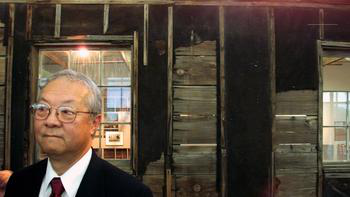
In March 1944, 13-year-old Isamu Carlos Arturo Shibayama, his parents and five siblings were taken from their home in Peru and shipped to New Orleans on an American troop ship. Stripped of their identity papers, the Shibayamas were admitted to the United States as “illegal aliens” and sent to a…
————————————————- – – –
● Sig ! :

How Homeownership Became the Engine of American Inequality
————————————————————- – – –
/ In Zimbabwe, Mugabe’s fall appears to mark the end of Africa’s postcolonial ‘Big Men’ era
Ann M. Simmons and Laura King sig !!
/ As Strongmen Steamroll Their Opponents, U.S. Is Silent By DECLAN WALSH
Across the world, autocratic leaders are engaging in increasingly brazen behavior as they dispense with even a fig leaf of democratic practice.
/ Despite Mueller’s Push, House Republicans Declare No Evidence of Collusion By NICHOLAS FANDOS House Intelligence Committee Republicans are ending their investigation of Russian meddling in the 2016 election, saying the Trump campaign did not collude with the Kremlin. 3/12/l8 l.a. times. Disgrace
http://www.latimes.com/business/la-fi-housing-costs-migration-20180503-story.htm repave
Which is more dangerous the far right or the far left? – …
https://www.quora.com/Which-is-more-dangerous-the-far-right-or-the…
The far right. Because the far right‘s enemies are powerless individuals, but the far left’s enemies are powerful corporations and groups. The far left tend to gather together in groups and talk to each other a lot and then they talk more and then they organize another meeting to talk but they disagree about what they should be talking about so they …
/ I saw flaws: but a sig post: https://www.economist.com/britain/2019/10/12/the-sad-decline-of-thatcherism
/ / sig – but scroll way down https://www.bing.com/images/search?q=oecd&form=HDRSC2&first=1&cw=1129&ch=541
/ https://www.bing.com/images/search?q=conservative+vs+far+right&FORM=HDRSC2
/ Bangladesh ramps up its persecution of Muhammad Yunus | The Economist:
Skip to content. I could skip it.
●Menu
Top of Form

Bottom of Form
Asia | Reviled rival
Bangladesh ramps up its persecution of Muhammad Yunus
The campaign against the Nobel prizewinner is part of a wider crackdown
Oct 13th 2022
SaveShare
Give
When he became the first Bangladeshi to win the Nobel peace prize in 2006, Muhammad Yunus’s compatriots celebrated in the streets. The model of small, high-interest “microloans” to the poor that Mr Yunus pioneered in the 1980s had /helped millions of people around the world lift themselves out of poverty. At home and abroad, the entrepreneur was a much-loved household name.
Listen to this story. Enjoy more audio and podcasts on iOS or Android.
At home, at least, that has changed. In today’s Bangladesh, Mr Yunus is less celebrated than hounded. This month he is due to be hauled before the country’s anti-corruption commission to face questions about his business. Along with a growing list of his associates, he risks being barred from leaving the country.
The summons from the commission is the latest salvo in a decade-long campaign waged against Mr Yunus by Sheikh Hasina Wajed, Bangladesh’s prime minister. Her government claims that the aim is to root out corruption. But the probe into Mr Yunus is testament to /rising authoritarianism in Bangladesh, which is increasingly circumscribing the space for the civil society the country once sought to nurture.
Mr Yunus’s fate hints at the changing status of social enterprises and non-governmental outfits in Bangladesh. Starting in the 1970s, successive governments keen to boost the country’s development embraced the work of organisations such as Mr Yunus’s Grameen Bank. But eventually they /began to worry that such groups were amassing too much power of their own.
Sheikh Hasina began probing Mr Yunus’s business more than a decade ago, when a Norwegian documentary alleged that he had diverted donations from Norway’s aid agency in the 1990s (an investigation by the Norwegian government found no evidence to support the claims). The prime minister may have worried that Mr Yunus, who had briefly dabbled in politics in 2007 during a period of military rule which Sheikh Hasina spent in prison, /might turn into a viable political opponent. She accused him of avoiding taxes, lambasted him as a “bloodsucker of the poor” and launched a probe into Grameen Bank, Mr Yunus’s micro-lending business, as well as into his private finances.
As Sheikh Hasina tightened her grip on power, her suspicion of Mr Yunus deepened. In 2011 /the government ousted Mr Yunus from Grameen on the basis that he had passed the compulsory retirement age of 60 (he was 70 at the time). Three years later /it took over the bank’s board of directors entirely. In 2012 plans to build a bridge across Bangladesh’s Padma river were temporarily derailed when the World Bank withdrew its $1.2bn funding commitment, citing corruption by Bangladeshi officials. The prime minister later claimed that Mr Yunus, angry about his removal from Grameen, had lobbied America to persuade the World Bank to pull out of the project.
Sheikh Hasina doubled down on the claims earlier this year when the bridge, built with help from China, was at last opened: she told Bangladeshis that Mr Yunus should be “dipped in the river”. The government said it would investigate why the World Bank withdrew from the project. (Mr Yunus denies any involvement.) In July it launched a separate probe into accusations that Mr Yunus embezzled millions from workers at Grameen Telecom, a not-for-profit firm. (Grameen Telecom and Mr Yunus deny the allegations.) The probe has since been widened to include a slew of other companies and organisations using the Grameen name, including several based abroad.
The timing of the recent probes /appears to be motivated by Sheikh Hasina’s worry about political competition ahead of an election next year. Since August the government has filed criminal charges against thousands of critics and members of the opposition, according to Human Rights Watch, a pressure group. Mr Yunus’s international standing makes him a /potent threat to the prime minister’s power, reckons Asif Nazrul of Dhaka University: “If the international community looks for an alternative to this regime, Dr Yunus could be very important in that process—if he wants.” Mr Yunus has shown no such inclination since his abortive foray into politics back in 2007. But Sheikh Hasina seems unwilling to take the risk. ■
This article appeared in the Asia section of the print edition under the headline “Reviled rival”
AsiaOctober 14th 2022
● Bangladesh ramps up its persecution of Muhammad Yunus
————————————————————– – –