Rough notes > Poverty > Pov2
http://www.povertycure.org – sig !
Helping the Poor, Phone by Phone
The founder of a profitable cellphone company in Bangladesh proved wrong the conventional wisdom that there is no market for such sophisticated devices in places of widespread poverty. http://www.nytimes.com/2002/05/26/business/yourmoney/26PROF.html?todaysheadlines
/ http://www.svn.org – sig. social venture network – 0?
see false, pov2, pov4, charity?
============= = = = = =
/any calculators in this for charity, poverty
be sure to see pov‑l …..2500 words in notebk
def ‑ valencia and bug – how many don’t think of selves as
poor/ rich, who are unhappy
sig
/to help the poor: sugar sub, sm biz, abort, wkfare, mw, poor laws, leave sch early,
/ m.c. poor in rel. to u.c.?
/pov should be in quotes?/
/pov line higher than 90% of world. p. 53 bpdf‑‑but c.o.l.?
/90% of am was poor in l900?
/ $l above and below /
/javier said his fam was poor ‑ got donated clothes/ his ma watered and swept the dirt from of the hse daily and she gave to beggars. he said materially they were poor but had more pride and morals than the poor here (as they were self‑sufficent)
/ haldane had one who thot poor
/types of pov: $, soc, emotional?, satisfactions with wk.//college poor/pov of the spirit =
/ussr
/did you ever meet a poor person. what’s diff twix one and not
/poor here better off than 90% of world’s pop.
/buffer zone for pov line semi-poor, dirt-poor
poverty line is 800% above the average income of the world [issues for action [folder] smith kline corp oct 79 vs col
pov here=wealth abroad
/pov – abject, grinding, dirt poor/
/was I poor in vista w/ no running water or bathroom?- The definition of poverty is always being expanded.-
/diffs in pov -urban, rural, utah, ny, miss, tex, calif. and other count.
/ broke v. poor /
=============
/pov almost gone in elderly.
/ poor forced out of cap. hill and s.f. what about m.c. being forced out of expansion of rich areas?
/if they’d starve without benefits here, they should be dead in other
countries
/ working poor don’t make a lot of noise
/last thing poor need to hear of is “tangle of pathology”
/ lo income a better term
/their kids, but not folks
/broke, but eat out, which was lux. 50? yrs ago?
/study poor and never refugees
/s.w.ers care more bout poor than the poor do?/
/anyone against abortion has to be incredibly naive bout pov
/ fasting have any relevance? no
/ needs graph?
/buena clinton – built em a park
/who to “blame” ‑mcneil/lehrer 8/85?
/can’t ask em abtract questions?/
/drained by dependence, and admonitions to feel sorry for selves.
/tie in w/ ad. to them
/compare with 3rd world ‑ calories, etc.
/some bums are happy ‑ joe
/soon as the person is black, all is excused?
/horacio alger, etc.
/l/7th below pov line/
/NEVER talk bout wk habits /
/m‑today pov is harder= in some ways yes
/in ’40’s l/2 country lived in crummy housing
/robin hood ‑ only parents give that much/
/immigrants aren’t looking for safety net, rights, affirm. action, low int. loans?, scholarships, medicare, rent subsidies,,headstart,,job corps,
/%wise are poor getting more subsidies than others?
Nathanial Hawthorn: fascinated in its ugliness; dirty, grim; many gin shops; kids take booze hm to folks; pawnbrokers, scrambling for spilled coal / women: young figure & old faces / rough and rude women; gracefulness of younger women; dreadful faces, wrinkled, grim, w/ vice & wretchedness/ small kids supervising smaller ones; few police; the engl dislike for pov.; & beggary. women more trouble than men in almshse ‑ mid l9th cent eng./
/ no safety net in many countries
/ pov line problably gave lot reason to feel sorry for selves.
/ attic insul man said ghetto was lackadasical; lot of check cashing outlets; lot of card and other games; burnt out bldgs, and gen blight.
/ can’t help those who won’t help selves
/ closed prhse in sac
/ poorhse‑mater dreaded thot of going to one 55 yrs ago‑desolate ‑run by churches‑ like sweatshops?, dirty
/ why no peasants here?/
/couple wins l75K hse. they turn out to have 40K debt. which paper
runs a story asking people to help w/ debt so people can keep hse. around
4/23/83
/t.j’s help asks for raise, gets it, buys camper and is in debt. so asks for another raise.
/the poor to get surplus tuna 5/2/83 l.a. times
/ what the sanitation men could probably tell us.
/ would you rather be called poor or lo income?/
/if our poor are unhappy, illegals should be even more unhappy/
pyramids/ poor gamble more and gamble a bigger % of their income.
/ idealistic oxy stu down to t.j. to build something for
poor where they discover the poor are happier than us. (and lazier)
/ the myths hurt the poor
/fewer hand me downs?/ crossing st and struck by pov
/ in bible
/ some refuse to wk, to plan,…and pros make excuses for em..
/ some stats in Bk of Am. Rankings R3l7.3 /
/thru no fault of own
/notice the no of biz that are not concerned?
/ field found. did hunger in am.
words v. actions /
/got along before wel.
/those who can’t or won’t help selves
/bock said not the fault of some/
/l9th cent? was the golden age for the poor‑ fee?/[welfare st ruined
em]
/ who feels worse ty am poor or poor viet im?
/ Poverty is the lack of money ……. (It’s a state of mind.)
/ Individual poverty can be cured …………………. (false)
exposed, not “isolated”.
They deserve special breaks ……… (no more than others)
/whole body of libs who love feeling sorry for someone. poverticians need the poor for their jobs.
/ fam eats meat 5/wk. owns tv and older car, lives in hm w/ running water, gas, and elec.
Why do ams think, reagardless of ed, exp, or initiative, they have a right to what most of the world classifies as mc life
/ research checkers at check out stands and other who sell lottery tickets how many bot by poor/
/tow and repair truck drivers; how many times poor and others have no spare or jack ‑ look at Odette
harpers 4/ 86 with murray and jackson
wel: breaks fams, encourages illigitemacy, denigrates work.
? m ed, crime and fam stablity worse since 60’s‑no resp
? j nix on boundless lib as heartless cons
/ gov helped w pub schs, land‑ grant colleges, transit, hosp, and subsidized industries [subsidies diff from welfare]
/redlining [banker’s privilege] people locked out
/ talented l0% / leaving the flakey, poor losers behind is part of what life and competition are about. immigrant left theirs in their countries
maximum feasible participation: slow, not conceptual, addition of Pete Gallegos, read real slow, black jive, no mng., bogged down in details.
hard enough to find a reg mng.
/ liberato ‑ l0 min to read 6 ‘s / the poor don’t complain/
newswk 9/26/88 some of chi blk pols doing max to block econ devel. they want to keep a hold on their poor voters.
plan for building stadium and moving poor to better neighs is elitist, racist, genocidal…
one pol want the refurbished slums reoccupied by the poor for pol reasons: on election day pub housing res turn out for their alderman.
no pol favors reform until he’s out of office.
blk pol tend to seize control only in cities that alrady are on the decline. sig
they guard their pol bases, and don’t want to lose any voters however temporary.
pov= ll,6ll/fam of 4 in ’87
how can you feel sorry for poor when im pass em l and r. waste of time
Ban: – equal access to jobs, housing, voting. p. 269 =================
/ avoid raising false hopes
/ stop blaming “society” resp
/ repeal licensure laws, laws than enable unions to mono, and min wage laws
/ cease harrasing employers who pay lo, while safe
/ offer wage suppliments [scholarships] for on job training of disadvantaged teens.
/ cover l2 yrs of sch in 9 and encourage boys and girls unable or unwilling to go to college to take full time work or enter mil or a civilian youth corps. + +
5, 6 birth control 7, 8, ? 9 stop & frisk, speed up justice l0-l3
rent control creates inequities and a housing shortage, guaranteed income hasn’t worked, and welfare polarizes and breaks up families.
lift my lamp beside the golden door – was more golden then – golden age for the poor = the indust rev.
magic? cleaners in wash -helped by 700 clubs operation blessing
/pov as morman, jew, indian?, etc, or class? catholic, buddist,
/ $ doesn’t buy happiness
/ twice as many poor at the turn of the cent -buckley
/ ims come here poor. they’re not unhappy; they’re tickled pink/ /i was never around the poor till – sch, cg -regulars, slums, vista, renting rms.
/ where does envy fit in
/ does color make pov any diff
/ skid row has its code; so do prim and proper working class neighborhoods [?????? – have I ever seen one?]
/some kids who get free lunch, then spend money on ice cream/
/since the 60’s when poverty was rediscovered [p 60 b. wattenburg, The Real America.
/sociologists of whom 80% are liberal and 5% conservative [p l24 f. goble Beyond Failure
/the dominently lib media [p 85 g. gilder Wealth and Pov
/academia 47% lib and 24% cons same goble
/ to avoid job quotas, charity, subsidies, and preferential treatment.
/to support work skills, ed, biz exp, and self-reliance. both these from p 238 sow race and econ
/”Welfare” got out of hand in ancient Rome and in l9th century England. The latter had to set payments below the lowest wage to get people to look for work.
/ The late? l9th century was called the golden age for the poor; they advanced the most when the economy grew the most.
/ The poor have not gotten ahead as fast more recently because the ecnomomy hasn’t been as free* and because social programs have hurt more than helped.*
/san diego has a ref bk – 5″ thick [for the poor] which costs them 25k to update yrly.
/surprising how many poor are afraid to try. afraid to fail again. 260 found jobs and l63 kept them for 90 days. many got frust at seeing no future in jobs. working doesn’t change their lifestyle much. -9/3/88
/calif passed law waving liability of restaurants for sickness when giving food to charities. la.
/poor hurt more by infl?
/with freedom comes dig/
/should study mormons, black muslims, cubans, viets/
/see slums
/pov cycle as if it’s symetricle – like bubble you break out of/
/pov myths: us news l0/3l/88
l $ goes to poor. 0, only l5% does. the rest to seniors who aren’t poor.
2 seniors depend on pub aid . 0. only l2% did in 86. when non cash income is included, only 3% of elderly qualify as poor.
3 elderly have tuff time getting by. 0
4 they deserve to get bach what they put into … 0. they’re getting back 2-5 times as much in reg amounts and 5-20 times in medical. cd spends ll times as much on each senior as ea child.
/you always heard that poor kids had heard their folks make love because their housing was so crowded, but couldn’t that be an assmption – as no parent I ever met would have permitted that.
/some minority women have never worked and can’t read/
/you don’t see more than a small? % of illegals getting into crime because they are poor – cause they will get sent back.
what % of them hmless for same reason?
/jim bastien? thinks pov is like alc.
/atlantic l2/88: gen accepted wop failed, but pov went down in 60s, tho inner city blk ghettos got worse, even tho overall blk pov dropped. I stopped here
/docu on projects with fat, big mouths on tenant mng. but some were ok. pathetic victims. cabrini green. iq. cheerleading stuff. all women, terrible conditions
usc and poor resent ea other – thot usc should get to know em.
/oprah – 4 gen on wel. middle 2 there. 3rd keep having kids, but never thinking. oprah lived with her ma 5 yrs who was on wel. clients dumber than dumb. kids didn’t want to go to sch. “werfare”. they just parrot. it’s so hopeless, such miserable judgement that changing system is ONLY way.
dr. on the program: wel reinforces the slavery system. not wel nor prisons set up for blks. bad self-image.
jesse: you’re not a man when you can make a baby, but when you can raise one. 35 mil blks killed in slavery – [us or total?]
all see ed as way out [how bout how to talk] wel
/workers are mean. 8.4% blks on wel.
/projects are a concrete reservation. one gal ducked under tables in sch. during gang fights to get an ed. [i say harder now due to decline]
/male cul from slavery.
some wel ma’s don’t want to see others get ahead.
slavery stopped em, but holocaust didn’t stop jews. /
/false bottom
/biggest blk of poor= older white women
/no thot as to how much common sense the poor person uses when it comes to health.
/mex woman would pack oranges 6 mos and collect uib 6 mos
/redlining
/rh: women who support fams are the most desparate of the poor -us news
/it’s only the poor that helps the poor
/if pov causes crime, why don’t illegals cause more crime
/poor kids waste the most
/never hear from the poor – or working poor
/m – hi rises don’t work for the poor but for mc and uc
/assistance produced poverty instead of relieving it. that’s what the poor laws did. l795, they tried to rein in the free market for labor. it helped encure soc peace and food production during napoleonic wars. after it was attacked. l834 poor law amendment act created the workhouse, which stimatized. imprisoned them in wkhses, made em wear spec clothes, sep ed from fams, cut em off rom poor outside. dickens olivert twist indicted this. soc sci feel superior and revel in it. from atlantic 5/89 but hard # /
/illegals show you can stay out of crime, hmlessness, mi?
/interview poor with l.50 in pocket and never ask how they’ve made it so far.
/s.w.ers care more bout poor than the poor do?
/poor here better off than 90% of world’s pop.
/help our own lst vs ims
/they assume the poor want help-
buckley; by current standards [?] 90% of ams were poor at turn of cent.
/god bless the ims
/pov line ll,6k fam of 4 summ 88
/crisis on federal st. hodding carter l/6/87. staggering.
/jon morrey used to work that arera before projects w/ tel co, who rotated their men there. said some nice, some animals doing dumb stuff. kicked holes in cement blk walls, peed everywhere, made fire in tub w/ wood from cabinets [sold plumbing for dope].
res have same symptoms as viet vets: alc, anxiety, restlessness, irritablity, insomnia, depression, personality changes. blks to chi in 40’s for jobs which dried up as fed programs got generous in 60s. listed all the programs. depressing. ed, job, health, hjousing, crime, alc, drug, food, $. and haven’t made a dent. mrs nash ll kids, 26 gandkids. spend $3900/mo for these 39 + 2500 food stamps = $78k/yr = $2067/person/yr. l5 people in 6 rm apt.
The Poorhouse: bk on chi pub housing. by 70s, pub housing seen as costly mistake [ pruit igo] [this and moyers program on newark = worst pr for blacks till crack] Many machines idle in voc sch nearby. isolated, never to loop 5? miles away as no resources. no man’s lands. better in 40s. strong wc and mc. classsrm skills, daily mng skills, support system. unmet needs means stress. 30 5 pregnant at l5. 60
5 of frosh drop out by sr yr – twice nat rate. nothing to do. racism. cost to soc: l/4 mil/person/lifetme. panhandle. don’t think to look in paper for job cause habits for looking for wk are not avail to them. 75% of grads of voc sch get jobs. pysch barriers to getting into wk force = racism. it’s a reservation. cage like balconies. can’t interview w/o kids crawling all over you. worst
/sugar ray leonard couldn’t afford field trips in sch. ate l/2 finished hamburgers out of trash at wash mem
/rich poor gap growing – partly due as more 2 wage earners in rich and more single parents for poor than past – due to wel
poor ever lifted – saudi arabia
/pov – hear about it from all but the poor – pro?
/poor spend 40% on food and sugar is 3 [?] times the world price – tv
/pov line ll,6k fam of 4 summ 88
/make too much for medicare, but can’t afford health insur. same with working hmless & apts
/rich poor gap growing & same with big cities. was 29% diff in 84, now it’s 50% – col etc.
/pov: never ask mechanics, maintenance men, plumbers, bartenders, liquor store clerks
/min daily allowance supposed to be way over what’s nec.
/lot of poor are independent as won’t fit in
/indeed our cul insists on pov being depressing
/just below: another winner: underclass = 8% of poor. = dysfunctional =
`/can escape pov if l no kids 2 finish hs 3 get job
anti: 1 complete one’s ed, 2 don’t have kid till ready. 3 wk 4 obey law. [this to come out in pub int] disgusting, so I quit
/keeping up with these stupid terms is a drag
/boxing is only way out of ghettos vs im
/l4% poor l900 tv
/ingenuity and commaraderie during the depression
/= in the good things of life, not the bad
/if you favor poor you’re ok; if you favor rich, your elitist. valid?
/us poor get more $ than 90% of world 53. bpdf fair?
/grueling deprivations of pov
/cap: as is yard – tons of poor mex there.
/pov – never talk to repossesers of furn, appliances, cars,
/rich/poor gap widening is ok -wattenberg
/probably only a small % of ghetto or poor are criminals
/apply all pov arguements to mc
banfield pov, as measured by hardship and want, is virtually nonexistent.
Housing is nowhere near as overcrowded as it used to be. There are jobs for anyone who really wants them. Free ed is avail thru college. the poor are psych unfit to take kadvantage of oppor. the danger come from a gov that tries too hard to do what no one knows how to do and perhaps can’t be done . thus ends in anger, loss of utual self-respect and trust, frust, and coercion. radically improvident, doesn’t val what he can’t use at the moment. no atach to friends, neigh, comm. 40% drop out of job corps.
/uneducable.
me: they take more chances. kids play dangerous games, left unsupervised. have to fight way up acting tough, wise, affected – thus no chance to be a kid. functional, simplified, and affected speech =linguistic imprint of their subcul. unpolished, functional, loud, coarse, unesthetic, graceless, tasteless, goals, beh, demeaneor, entertainment, clothing. no int in quality, , budgeting, saving. excell in little cept child bearing. most have gravitated there and deserve what they get. ingrained self-pity, pessimism, fatalism. happy. satisfied. more tv, less orthodontry, more proanity, less cleanliness. less for auth, prop. abuse pets, kids, selves./list double standards for the poor see im/senior cleaners inc. from modern maturity
/pov line lst in ’64! when assist was cash. but now there are non cash benefits [medicaid, f. stamps]. it’s l2k for fam of 4. not the absolute min inc nec for subsistence, but th min for reasonabley adequate, but low=level stand of living. average fam [of what level] spends l/3 on food [vs l/5th?].
line was triple the cost of min diet ag dept called acceptable. i don’t get it.
subsistence is not the criterion. but a level of _____ this rises with time and standards. elec, indoor plumbing are basic [i disagree]
adam smith: necessities = those commodities that the custom of the country considers basic. those at pov line have no more buying power than they did 30 yrs ago. and thus falls behind smiths def. since 50’s food has dropped to l/5th of …. [not following] thus line should be higher [i’m lost]. more hard part.
no one knows how to figure in non cash benefits
another problem: the consumer price index overstated infl. in 70’s and was never taken out. snafu w post ll/6/89 #/indian res. at pine ridge, so. dakota – miserable. if kid leaves, he may be too scar-ed to make a life elsewhere vs viets
(pov discovered in ’63 – la/22 of the 40 ’88 finalists in westinghse hs sci emp were foreign born or kids of foreign born. in sd, l of every 4 valedictorians and salutatorians has rcently ’89 ben viet. in boston l3 of l7 valedictorian of ’89 wer foreign born./the poor make others feel sup.., enables em to patronize, are proof of their charity – this [weak] from green bk
/top 2% have 38% of the wealth; bottom 20% have less than 5% ’87.
richest 5% make as much as poorest 40%. must be us
in brazil richest l% make as much as poorest 50%.
/apply all pov arguements to mc
/evita and huey long built basis among the poor
/if man with fam of 4 is entitled to enuff to support em, is a fam of l0?-illegals can take more.
/ims arrive. if they feel poor, they’ll hustle and make it in 5 yrs. if they get on wel, they’re doomed – ginrich/pov never talk to animal control
/check out clerk said the poor buy the lottery tickets /no one ever guessed at how much poorer the poor are due to the lottery – sig
/non pro: poor kids waste more – sch lunch
/poor thru no fault of own vs viets/pov llk for 4 7k for 2 ll/86
/c. murray – tax credit for working poor is discretionary income for ed. not avail for wel.
/ murray: let’s talk bout working poor who do everything right and get punished for it /
/If some cities have worse pov, they should have worse drugs, etc. according to the pov = drugs etc.
/kids of min wage fam could work if no min. and help support
/”break” the cycle of pov. cure pov. eliminate it. grinding, abject, dirt poor, etc.
/break” cyc of pov. stamp out pov
/sick of pov on tv. fat woman has 5 kids. one son drops out, marries, 2 kids and menial job of $5/hr ’89
/not if poor are getting poorer, but if they’re losing hope,
/bushwick down because of poverty pimps. specs bot hses cheap, sold em to unqualified buyers. when they defaulted, the spec colelged big form fha. ll’s got finder’s fees for wel fams. or let bldgs go for taxes or hired arsonist and collected insur. 6k fire calls/yr. thus 3k vacant, city-owned bldgs. and 40% on wel./some of the poorest suburbs in us: cudahy, bell gardens, huntington park/pov causes crime, but longest peacetime boom in hist and crime has still gone up.
/eitc = earned income tax credit: it encourages work,. unlikek kmw, it targets poor parents [only?]. 60% of poor are working poor – sig vs the underclass [i hate that term] who overshadow them. low income workers have shown a desire to work -[how lucky do we get]
/m – if you work, you shouldn’t be poor.
/tax credits come annually too poor who live wk to wk – boo hoo. and because they dont owe taxes, theydont’ file the form to qual for eitc.
the poor call mw chump change. eitc passed in ’75. it = l4 cent in tax relief for every dollar earned up to 6500. thus max of 9l0/yr.
/working fams can today qualify for up to l440/yr in child care tax credits. they accrue to mc fams that pay taxes. ??????/ no of poor fams has juped more than 25% from 79 – 87. by? ’85 2/3 of poor paid l/2 of inc for housing. rents for poor in pri housing rose 34% form 74-85.
/m-assumption it’s hud’s resp. to house the poor.
/if you don’t have milk for the baby, how hard would it be to quit smoking – never asked
/libs hotter bout poor than the poor. you never see poor or when semi or not poor. or how they get out of it.
/pov and other issues give people a chance to be self-righteous, noble, etc
.which city, state, or country would you rather be poor – for depend or indepedence. rather be rich in russia or poor in the west. /gas co sends applications for low income rate assist/mw person can be beating you, and happier.
/to talk about im w/o talking about the poor is senseless and visa versa/ams feel being born here means you don’t have to work as hard as ims, that you have a right to get the goodies easier./only 6% of those making over $50k think they’ve achieved the am dream. but 5% of those making less than $l5k think the same. harpers let l/90/w post l/90 wking poor = those whose income is below the pov line but who either work [27 wks/yr ?] or seek wk 27 wks/yr ????????
l/3 wked full time -lo pay. [but dk how they live or how happy]/if locals can’t keep up, maybe they better em and then im
/calcutta has a very low rate of [violent?] crime
‑ to use “low income” instead of “underclass”, “poor”, or “victims”/us sugar and rice are 4 times the world price
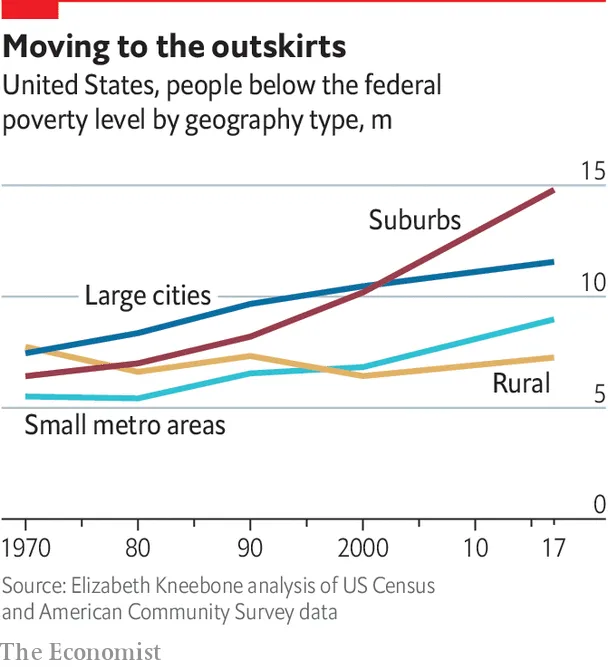
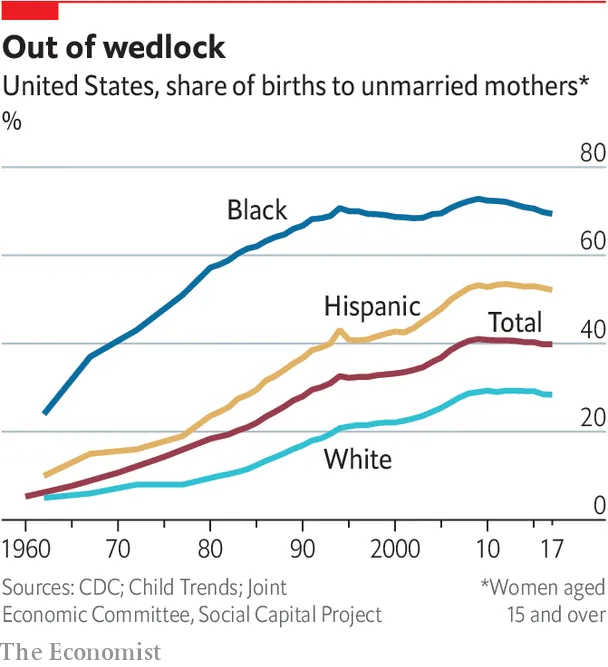
pov has 2 causes:
[l] explosion of single parent fams = 2/5ths of poor, up from l/5th in 60. [2] hispanics, which= 2 of the 3.3 mil poor. their no is increasing 5 times faster than the total pop. l/2 the increase is from migration. r. samuelson newswk 9/l9/88/buckley; by current standards [?] 90% of ams were poor at turn of cent.
the min is an accretion of the new deal that is not pub defended by any serious economist.
/33 mil in pov. l/3 old or disabled. l/3 temp poor. of rest, man single women & pt tm job. 2.5 mil live in u class neigh
underclass neigh: hi dropouts, female-hd fams, wel, idle men. drugs, guns, flout norms of wk, marriage, lawfulness, supporting kids. anti-soc, dangerous. [blk?] so u class if beh term [=lc]
of those 2.5 mil [in u class neigh ] l.l mil were poor. [makes no sense]
l/2 of poor climb? out of pov within? a yr. [same as turnover?] wking poor many times larger than under class.
2 pov problems: l u-class [lc] and 2 gen pov
l/2 the increase in pov since 87 due to cutbacks. [but only l/2]. ruach is afraid we’ll forget big bulk of poor because of nonsense of u class.
/33 mil in pov. 2.5 mil in u class neigh, but only l.l mil of those poor. [so you have u-class neigh, but only l/2 are poor. something wrong here.]
====================
/could be some [socialite] vol workers in thrift shops work harder than the poor.
/only l/3 of uib get uib. sig 5/ll/89 la
/projects of poor vs hi rises of rich
/by the yr 2000. their 4/90 series on u class. via #28/under class according to beyond the yr 2k [if I remember]: hi wel, single parent fams, male uib [dropout, crime]/they’ve made a whole technology for pov/22 u-class neighhoods in la. 880 in us. = hi wel, male uib, & dropout, female headed hseholds. said urban inst. steal laundry.
whole tech to pov. hispanics moving into watts. hit guy with crutch. structural in= built into the system. amazing how they can talk around it. never define. no mot [due to system]. they’ve been written off. pov among aged was improved on. postrel said pri schs in ghettos all over do well.
/assumed if you’re poor, you want “help”/cities starting to write off the hmless. atlanta sweeping them away form downtown. nyc banned suway beggars. dc cutting support. whites and some mc blks giving up on blk underclass. un news 6/25/90
*/ask of kids, women, animals, zoning, devel, taxes. sts, freeways, pros, class. ed, fam life, friends. gambling. indians. fights. pub drunk. gays. slum. rights. aids, insur.
American poor Illegal aliens
Live like kings compared to 3rd world … have seen absolute squalor
Getting ahead means luck …………. means hard work
Become homeless …………………. don’t
Won’t take any job ………………. will
Panhandle ………………………. don’t
Often poor work habits …………… superb ones
Can’t save money ………………… do & send it home
Drop out ……………………….. often study
“Decent, living” wages & benefits …. any wage
Look to government ………………. to selves
Self‑pity, resentment, protest ……. gratitude
Are “alienated” …………………. are the real aliens
Disprove the Am. dream …………… prove it (with limited English)
Sometimes law-breaking …………. law-abiding out of fear of deportation
Poverty spokesmen Illegal aliens
Crowded living is subhuman ……….. is nothing
The poor are “oppressed” …………. have seen no freedom of speech,
press, protest, business, etc.
U.S. poverty is unbearable ……….. some would rather be poor here
than rich in their countries.
Am. is discrimination, exploitation … opportunity
Schools “fail” the poor …………… the schools are a blessing.
Crime, drugs, alcohol, illegitimacy,
etc. are due to poverty ………… nonsense? no excuse for these
The poor are different. not in the above ways ……….. (only in limited goals and ability.) vs lc
‑ to use the term “low income” instead of “underclass”, “poor”, or “victims”./merchants, insurance companies, employers, credit bureaus, police, etc.p/pre voc train, voc train, job train, remedial ed, soc skills, self-esteem, career enhancement. etc. vs illegals who work circles around em
/how come viets an cubans part of perm underclass
/outdoor “plumbing” misnomer
/poor have no role models vs tempted by tv ads
/lucky to get em thru h.s. or into serv.
/phillip morris says hopelessness causes uib in ghetto. [on trans]
the problem is self-esteem due to less ed or no eng or no role models.
/laffer said rich poor gap isn’t growing – as stats are misread. l0/90/40k live in garages in la or la area
/l2% are poor. rich poor gap biggest since ’47. so what.
/bottom 5th gets 7% of income and top fifth gets 35%. la
/by and large the poor don’t vote. la/had to explain to vicky’s ma how to use a pay phone/vicky didn’t know how to take advantage of pk ave job./never interviewed resident managers about lc
/the most pov exists where people are the least free said will simon
/have the poor list the dumb things they have seen others do
/in ’65 average [flaw] am fam spend l/3 on food. so [flaw] pov was 3 times that. diff now as other costs have changed.
/pov once was less than 3 x the amount you spent on weekly groceries [flaw?] but they say it’s flawed at rent is higher. thus systematically excluded = you don’t count. richard threllkell?
/bush & kemp push empowerment [w/o mentioning resp]
/real empowerment = cut ss taxes.
/save us from do-gooders/why spend $ on those who don’t work sig/fams stay together more when men have jobs. [wel]
/migrant farm labor. how can they pick all that food and not have enuff to eat. what about what they pickIf you were poor in the past, you might not have know it. In l964 a “poverty line” was created. If you make
a little above the poverty line [around $l2,000/yr for a family of four [4/9l], you are not considered poor and probably are not eligible for many programs. You may think of “abandoning” your family by renting a room around the corner, so they will be poor and get welfare and other benefits which along with your income will help. Thus welfare breaks up families. Your kids might think less of you as a breadwinner and authority figure. There are a lot of “fatherless” boys in the ghetto getting into trouble. skip falling out of mainstream by not working No chronic poverty exists outside this class.
/had to show vicki’s ma how to use pay tel.
/lift my lamp beside the golden door – was more golden then for the poor
/60% of poor are the working poor – sig vs underclass who overshawdow them.
/if it’s hopeless here, we do people crawl across the border
/save us from do-gooders
/if no pov outside lc then all poor are lc?/could almost plant people in ghetto and see how long it takes em to get out
The poor here live better than 89% of rest of world/f,c,s = needs. rest are wants
/83% ow? births in bronx – buckley
/pov line = self pity line?
/you’d think on my cheap rms would draw every hmless, im, handicapped, etc but they don’t
pov has 2 causes:
[l] explosion of single parent fams = 2/5ths of poor, up from l/5th in 60. [2] hispanics, which= 2 of the 3.3 mil poor. their no is increasing 5 times faster than the total pop. l/2 the increase is from migration. he needs to explain “increase”
/poor hurt more by infl?
/buckley; by current standards [?] 90% of ams were poor at turn of cent.
the min is an accretion of the new deal that is not pub defended by any seriouys economist./60% of poor are working poor vs the underclass [hate that term] who overshawdow them
– The media complain about the widening gap between the rich and poor. They assume a widening gap is undesirable. But didn’t the country make faster progress when the gap was wide? Didn’t the poor get ahead faster then relative to where they were as there wasn’t welfare to break up families and eat away at their work habits? cap gains and grad inc tax, corp taxes, uib, ss, etc. natural order of top and bottom. In building their homes, they have gained pride of ownership, which one observer said has brought less social discontent than in the housing projects in the U.S.
– to a lot of credit for raising good kids, if in a bad neighborhood.
/harvest of shame type deal: fat, tatoos, never look for other work. but kept fam together. migrants time vs grower’s $. said c. chavez.
Nationally real wages keep falling for wc,
infl has eroded wel payments nearly l5% since ’70,
single parents fams have doubled since ’67
/x% uib is full employ. so x% of pov must be same/joad family willing to work
/when does a non-deserving poor person become deserving
/hi tech soc so no jobs for poor vs service sector growing.
/biggest reason for pov in 3rd wrold is bad govs. sol is less gov. economist 5/26/90/[fixed pie] idea always 0: if you grow rich, you make me poor. nobody had to stay poor to deliver so k and other dragons; nobody is thriving because much of blk africa is moving backwards on almost every measure of development. . economist 5/26/90/food stamps as currency – unclear. grocers have to be in it. double as $l00 whore is $200 in stamps. give l00 to grocer and get back 75. only they can redeem em. gaps.
/no criteria to sep deserving from non/lot of anger in the ghetto
/pov till mid l8th cent when ……. developed hh
/pov – what about amish, mormons, cajuns
/yunus. 60 min and la. sig. phd. labor is nearest thing to people in econ. bangleadesh famin in 72. poor more able than thot. and desparate for credit w/o collateral. discovered credit is powerful & so basic, it’s a right. has worked for l4 yrs via grameen bank he set up. owned by the poor. lends to 700k women. average loan $67. repayment rate 98%. give priority to women. some kids too, but not out of emotion. resist giveaways of all kinds. pov stigma. dem at all levels nec. 40k kids die daily – round world?poverty is a problem …….. not as much as we assume
/squeeky wheel get the grease/the object is not to leave pov, but to attain contentment
/pov line vs cost of living diffs
/Investico in sa says $ problems from: divorce, death, med bills, & uib. consumer dredit couseling service in sa. backlash from creative financing in re. of 4-5 yrs ago. #/most pov where the least freedom. w. simon.
/dispossessed, downtrodden, downcast, disadvan.. disenfranchized, victims, exploited, indigent, poverty stricken
/why not help mexican drs !!!!
/illegals standing in front of hm club in 30? degrees – looking for wk
/sent pov sec from lists to p wilson 3/9l/rich/poor gap widening is ok -wattenberg
/why chane the rules for the poor/60% of poor are the working poor sig vs underclass who overshawdow them.
/now the invisible poor in rural areas
/blacks in so africa live in extreme pov – no elec, running water, toilets [- as if that is extreme pov.]
-said tv 6/9l/one sign of the poor is how fast they go thru appliances, clothes, cars,
poor should only get the munic serv. they pay for. sig. /all those lined up to be underclass
/don’t change the rules for the poor [tradval] l in 8 kids hungry. [-why that stat and not adults] 8/9lpov in the us. jt econ comm. c span 8/l6?/9l solarz and armey.
/work levels for the poor dropped sharply over the years. they work lot less than average person. tv 8/9l/l/3 of pov? budget went to food; now it’s l/6th.
/is pov l/2 the level of the average working man?
/most ams assume l5k is pov line [for fam of 4]
/we spend or spent l73 bil on pov, but only take 53 bil of direct payments to poor to bring em out of pov [a]. but part of diff in med – 66 bil, they think, not sure. transfer incomes not accounted for.
/afdc declined 40% since ’70 [missing pt? work-reward, etc]
/very little afdc goes to working fams.
/entitlement were l2%. now 50%. growth started in mid 60s
/pov declined since mid 60s from 23% to l2%. leveled off in 70s. mostly among aged. malnutrician cut too thru food stamps, which they feel stigmatizes.
/do the 5 quintiles mean l=rich 2=umc 3=lmc 4=wc 5=poor ???/ims DESTROY lib baloney
/rich/poor gap widening is ok -wattenberg
[though there is little dignity in slum living and slum schooling).
/carlos said he didn’t know why the poor in mex have kids.
/studs terkel saying wel pa’s doing what pa’s in 30 did – left their fam for work. he left out alot.
/pov – light on day and night. water in aft. upolstered recliner chair out on front lawn for yrs.
/mc hammer thot of going into drugs, but was stopped in time by his dad who would have been hurt, etc. paul rodriquez came close to becomming a delinquent? but a parent? caught him just in time./pov line l3,359. 9/9l
/can’t ever know about clients till you see them work.
/pov isn’t undig for college stu- Slums need to be mixed with better areas …… false
– no more than any other class has to be mixed /no chronic pov outside lc
thus the l/2 NOT on wel must be temp.
the distribution of income w. williams. wsw. ll/l5/9l
quintiles l947 60 72 80
====================================================
top 5th 43 4l 40 4l
—————————————–
4th 23 24 23 24
—————————————–
3rd l6 l7 l7 l7
—————————————–
2nd ll l2 l2 ll
—————————————–
bottom 5 4 5 5
—————————————–
i say the “averages” are 4l, 23, l7, l2, 5%
are these fams, income earners, or what/if wel. poor better off, is it the working poor who are worse off?/carlos: there’s no pov here and no reason to be poor./over 6l7k = top l%. 94k = top 5%. 55k = top 5th. 30k = top half. ll/9l
/yunus started micro lending in bangladesh. Grameen bank. dhaka. average loan is $70. to mostly women. l6% int. repayment rate 98%. ford f. credit is a right. this empowers.
[vs loansharks?]
/the distribution of income since ’47.
/bob alex…, who collects for edison, said same no of shut offs in good and bad neigh. that blow my arguement. edison makes sure they don’t lose $. /ma teresa order in ti juana – missionaries of charity. 5 chaps
/if immigrants can adjust, why can’t indians, the poor, etc.
/those quintiles of income – leave out wel?
U.S. poverty is unbearable ……….. some would rather be poor here
than rich in their countries.
some would rather be poor here
than rich in their countries. /will never learn bout poor till they work. /during depression didn’t even have wel.
/chas booth’s london: l890s missions made little impression. wking men’s clubs were better. turn of cent. confusion over l-2% uib.
/spokesmen for the poor say mils of am kids are hungry, which includes feelings. [*&#$&^%$&*] vs
ag dept surveys indicate young ma’s and pre sch kids below pov line exceed the min daily requirments [nutrician].
/carlos doesn’t feel sorry for any poor here or guy here for yrs w/o eng.
/pov did drop from 63 to 73.
/poor and weak.
/couldn’t find l/4 and 2/3 on measuring cup.
/add workfare to slums, pov, mw?
/r. woodsen: 70% of % went to poor in past. now it goes to admin. 92/instead of wpa, i’d pay boss l/2 their wages [plus bonus for ]
/[crap:] underclass as a term began in 62 via gunnar myrdal. it means those “driven” into perm uib and out of labor market by post-indust econ.
jobless in l9th and much of 20th cent helped keep wages minimal. [bias]
in 80s u-class used as beh term to condemn those whose beh proved to soc the poor did not respect mainstream values and thus were undeserving. @#$^* it’s a blaming term. the non poor didn’t fear the rural poor, so bosses and pub officials could exploit and cheat em. less so with the urban poor as they were more frightening. so u-class term developed to blame em as uib, crime, drugs. gans – soc prof at colubia. w post 4/6/92 r of bk: the dispossessed.
/r of bk 2 nations./always more services: e rm, paramedics, choppers, counseling, wk comp, ed, and all get used to it. it’s free. so have more kids and bitch./l/l0th of pop on food stamps.
/pov – abortion.
/2.6 trillion spend on soc programs wop, great soc. and 0 j. kemp.
/learn how to talk, act, walk, dress, eat, stand, talk on phone,/so south bank in chi sounds like gamen? 92
/girl in project had 3 ? when visiting: who’s pregnant, who’s cracked out, who’s dead. 5/92
/empower = resp
/m boxing is only way out.
/pov from l5% to l3% in 7 yr expan.. of 80s. same type of expan cut pov from 2l to l2% in 60s. us news 6/l/92
/52% of poor adults are working poor who rely on paycheck for most of their income. l990. us news 6/l/92
/self- pity worse for the poor sig ********************/hmong kids/scared to call about a job opening./gamen bank – l6% for grps of 5 as they have no collateral. 5 thus peer pressure to repay. average loan is $70 to buy a biz, cow, or sewing machine. 80% loans go to women. lot don’t know how to write their names. they practice with a twig on the ground as can’t afford paper to practice on. men resent their success and changing role.
ed bader’s room was a tent. rest lived inside. he rode 32 miles? on paper route. his kids have no values./pov is worse BECAUSE of libs – ag/per capita income of richest 5th [38 nations] is 65 times that of poorest 5th [30 nations]. but nationality aside, the top 5th of world has l40 times as much as lowest 5th. us news 5/4/92
/carter says atlanta is 2nd poorest after newark vs whit. 92
/best thing for poor would be a safe neigh. pol r./so cent has come to symbolize problems in the inner cities. p jennings.92/poor have to get better in spite of libs./tradval no good in ghetto so what are ghetto vals.
/biz should give something back … they do – selling goods and providing services. no mc neigh thinks this way./sol to pov: abort, condums, mw, wkfare, poor laws.
/lib media hurt the poor with so much garf – obscures the issues.
A Look at history
It shows welfare was abused in ancient Rome and in l9th century England. In the latter, payments had to be set below the wage of the lowest working man to get people to look for work.
History shows poverty was common for the masses until the development of capitalism. Then began the golden age for the poor. They advanced faster and farther than ever before. Since then the progress of the poor has been slowed by socialism.*
Look at the definition of poverty. It has been expanded over the years. The American poor have been consistently told they are bad off, when they live like kings compared the way most Americans lived 80 years ago, or when compared to the 3rd world.
Talk to the elderly who lived in the slums years ago when the poor had more hope and pride.
– Our poor live far above the level of the poor in the 3rd world.
eur: tax poor, but security rich. pov often less than half that of us. la 4/2l/92/l in l0 on food stamps says ed bradley 92
/bader used to live in tent. dup?
/no one primes the viets pump?/were the walton’s poor? or hse on prarie?
/c garnica said i lived in slums + but wasn’t poor./pov relative re: toi, tv, phone, car, a/c/so south bank in chi sounds like gamen? 92
/the spur of pov = the disc – martin, jun, etc.
/to help the poor: let in foreign sugar, etc. milk? cigs? subsidies.
mw would help youth support fams they way they USED to./are the poor seen by med schs?/no hot meals in vista/unions hurt the poor/low wage means save, plan, fewer kids, more int in ed. more resp./pov line about $l4k l0/92
/inner city kids don’t get much super.. re sch. vs marva collins.
/dignity, self-respect, etc for the poor.
/we have to feel compassion for bottom 20%. m. i say
/l960 – 20% lived below pov.
/sow said our policies to help blacks help no grp in world. they are mw, occupational licensing, poor schs – graduating kids who are 40% func.. illit.. if you were lucky enuff to have started to rise before gov programs, you’re in good shape. sig
/loansharking vs my 50% etc./no abort condemns people to pov
/the most needy aren’t nec the most deserving
/pov movement began inside gov. civil rights began outside gov. gov could control the former.
/max feasible = X
/ged cert/empowerment means resp
/why do poor need job training if ims don’t. same in housing, ed, etc
/carter says atlanta is 2nd poorest after newark vs whit. 92
add tradval?/sad if poor go a week w/o meat. hot meals.
/the poor not talked about much since election either.3/93/ghetto so fragile that cops + can’t do anything right.]
/the neigh you live in has SUCH an influence on you: baker st, c, lena, col univ, e. 50th, cap hill, nw,
It’s not where you live, but how you live – only l/2/l4% pov the last 20 yrs.
/only a small % of poor live in ghettos. un news l/25/93 sig
/shoreband corp. in chi. used loans and gov grants to rehab apt complexes. won’t loan to wel. called microlending. it helps ONLY a few
/founders nat. bank in so cent. loans to lo inc.
/l300 enterprise zones in place already. l/93
We’re told a court decision doubted a poorhouse in Sacramento, Calif. encouraged self‑reliance, yet the average stay there was l/9th the average stay on welfare./whites knock tatoo removal marks and tatoos of gal who did well. makes her mad as they’d have never made in her neigh.
/whites knock tatoo removal marks and tatoos of gal who did well. makes her mad as they’d have never made in her neigh.
– When they say they want everyone to be equal, they mean the same. We’re more or less equal in many ways, but we’re not the same in ambition nor ability.
/indus rev began in l780s. put down, but was the age for matchless oppor for poor. fee 4/92 l68./45k sleep in garages in la. 93
/during depression, subways in ny were clean, nobody was afraid of st crime. fried [who was grad stu then at col.]/pov is humiliation. no, but it’s a lot less power. and its vulnerability?
/I quit this one: half the poor not counted. pov in early 60s lst caculated as less than basic nec.. at the min standard of [the] average fam. they ASSUMED l/3 of income went for food. thus multiply by 3 for income for pov line. [flaws] nat. times/yeltsin toured harlem in 89 and said those slums would be “comfortable housing in my country.”/east la: no cafeteria in sch, nor nice rest rms. the only reason my kids made it was part time jobs after sch. lte. 92/how ims make and our poor don’t & the rh.
/those with less than half the average, feel deprived. tv soc.
/pov line vs cost of living.
/$300/yr more to buy food in poor neigh in la. 93 tv.
– Something is wrong when we handcuff illegal aliens who will take menial jobs that go begging, while giving welfare to adults who’ve never worked.
bring our poor more into line with the realities of life, we should:
Phase out the minimum wage, expand workfare and set welfare payments below the wage of the lowest worker to get our people to look for work, as was done in l8th century England. These three/u-class is 5 mil and found in 5 major cities. & drop out, ow births, wel, uib [what about drugs, crime] myron? magnet, ed of fortune?
/when did other countries get pov lines?
The poor are isolated ……….. less exposed, not “isolated”.
/how many of the poor are ims & thus trans.
/most panhandlers b & w?/poverty was common for the masses until the development of capitalism. Then began the golden age for the poor. They advanced faster and farther than ever before. Since then the progress of the poor has been slowed by socialism.*
/schlesinger said inner city life is hopeless and bleak. 93
/pov = fam inc that was less than half the national median inc [of a particular country]. flaw. persistant pov = fams who were poor 3 yrs in a row. one study in w post./pov line at l5k 93 us news.
/seniors were the poorest, now [after wop] they are above average. but big pol clout. [all would be diff if they had to wk for it]
/the “2nd tier” = poor. scraping by. mex fam of 5 kids in oc who eat potatoes every night. never go to fast food.
/libs never contact collection agencies. re poor etc.
/davis-bacon: in effect only union labor for const. thus not worth it to rehab slum housing.
/oeo must have been defunct. for some time. 93
/anything but self pity/pov at l4k. 93 tv
/43% of puerto rico is on wel. 60% is poor. 93
/oeo has been defunct 93
/the earn income tax credit, in effect, raises $4.45/hr to $6hr.
/during 30s & 60s people cared bout the poor.
/term of underclass in 82, by auletta. vs in 60s.
/68% of fams were poor in mid 30s. down to 22% by 60. fell more then rose to l4% now. [did im slow in mid 30s?]
-w mo. ll/93/stable blk fams get out of ghetto asap. this is overlooked. sig
-w mo. ll/93
/oeo to work thru local poor. pols got in there. poor weren’t good admin.
/am’s mos enduring prin.. that work will be rewarded is a pipe dream in slums.
/pov treated emotionally. newsday. [as then you don’t have to face facts.] very little works.
/in exch for drugs tests and staying in sch, kids could have money for c or be helped into a craft, said a f. grad rate went up l7%. it took lot of tutoring and talking.
/in riverside, ca, gain had success.
w. mo. ll/93
/”segregation” by pov. 93. flaw here.
they never ask pri security about lc/some idiot said comp doesn’t work in inner city.
/mc can afford to goof off, but poor can’t.
/viet gal said 90% of boat people didn’t make it. she feels so lucky to be in the us, she’ll take advantage of every op.
/90% uib in gabrini green. kemp. 94
/denying abortion to the extreme poor [in 3rd world countries] is elitist, barbaric, cruel, extremely arbitrary and sanctimonious.
/feel sorry for guy who worked late at jack in box: slight, pocked marked, tired?, looked away, effeminent? wrked 2 jobs?
/ed for minorities and the less advantaged should be all the MORE practical. sig
/to be poor in the bad weather back east is far worse then to be poor here. /better way to handle poor would be: child support, wkfare, poor laws, and free biz via: mw, uib, wk comp, medical, /all thot vw hurt the wop in mid and late 60s. what an illusion.
/why does macdonalds throw out good food. mingo’s friend gave him lots.
ORG. COUNTY REGISTER, 8/23/87 Sun. Op‑ed page [down]‑ To work less, if supporting yourself.
– To have limited abilities and goals.
who think they know what’s best for you. Their doing this looks down on you.
/investment club like gramen. by j. gotkin. 2/94
/it’s how you FEEL about being poor [and have been encouraged to feel about it]
/nation of islam guards have had lot of success at housing projects. tv 3/7?/94 they are respected. you beat one of them and you’re taking on the nation of … real good news. jews oppose it.
/sold apples and pencil during 30s. not now.
/nat guard treated pov abroad and finally here.
/never ask trashmen about the ghetto.
It can’t be assumed that the poor want to get ahead anymore than the working or middle classes. Not necessarily judging from their behavior. It can’t be assumed that the poor want to get ahead anymore than the working or middle classes. Then too among the poor, there is an immature element who consistently mismanage their affairs. (The author has rented rooms in his house to many of these. One of the tipoffs was their always being broke, but always eating out.)
/among white women, those below pov line have 44% ow births. those above have 6%.
/if you’re lucky enuff to get a break on your rent by living in housing projects, you ought to try harder to stay off drugs.
/the poor can’t afford cigs, chewing tobacco,
/no housing, yet I have vagancies for months./no housing, yet I have vagancies for months./poverty mixes easily with faith.
/nixon and ike. both poor and didn’t know it.
must be OVERVIEW:
Poverty is a lack of goods and services necessary to maintain a minimal adequate standard of living. The definition of the term adequate varies, however, with the general standard of living in a society and with public attitudes toward deprivation; no universally accepted definition of basic needs exists because poverty is a relative concept. In poorer countries it means living at the brink of subsistence. In the United States few impoverished families confront starvation, although many suffer from undernourishment. @b
/Inequality has been a problem in all societies. No society distributes income evenly. Some reasons for an inequality of incomes are acceptable to a society and others are unconscionable. During the 1970s and 1980s the income distribution of American families has tended to become more unequal, with the share of income received by the lowest 20% of families declining from 5.6% to 4.6%. In 1988 the top 5% of families received 3.7 times the money income of the poorest 20%, compared with 2.8 times 20 years earlier.
[vs what I heard of 8 to l]
MEASURING POVERTY @b real bad ‑‑‑‑‑‑‑‑‑‑‑‑‑ @b
Despite all the conceptual and technical problems of measurement, the U.S. government has devised a widely cited poverty index that reflects the different consumption requirements of families depending on their size and composition, on the sex and age of the family head, and on whether they live in rural or urban areas. ??? Based on past surveys, the designers of the poverty index determined that families of three or more persons spend approximately one‑third of their income on food; the poverty level for these families was, therefore, set at three times the cost of the economy food plan. For smaller families and persons living alone, the cost of the economy food plan was multiplied by higher factors in order to compensate for the larger fixed expenses of smaller households. The poverty thresholds are updated every year to reflect changes in the CONSUMER PRICE INDEX but not overall rises in standard of living. @b
The poverty index has several flaws.
-First, it does not allow for regional variations in the cost of living or for higher costs in the central‑city areas, where many of the poor are concentrated. ah ha.
-Second, the food costs for the budget were designed for “temporary or emergency use” and are thus inadequate for a permanent diet because they provide only the barest subsistence.
-Third‑‑and possibly most important‑‑the government poverty statistics fail to take into consideration nonmonetary benefits and assets in determining the number of poor. If these were counted, the numbers in the official poverty ranks would be reduced. For example, in 1989, 7.6% of the U.S. population received food stamps.
-Finally, the poverty index was calculated at three times the food budget because in the 1950s the average consumer spent one‑third of his or her income for food. This proportion has since fallen to one‑sixth, so that the food budget should now be multiplied by a higher figure. @b
The growing gap between the poverty level and median family income demonstrates the inaccuracy of adjusting a poverty level for price increases but not for rising living standards and productivity gains.
should be graphed
In 1960 the poverty threshold was nearly half the median income of a four‑person family, but by 1988 the ratio had dropped to 30%. The poverty threshold quadrupled between 1960 and 1988, while the median family income increased 5.7 times. Median family income for four persons in 1960 was 1.9 times the poverty level. Such a family’s income in 1988 was 2.7 times the poverty level. @b
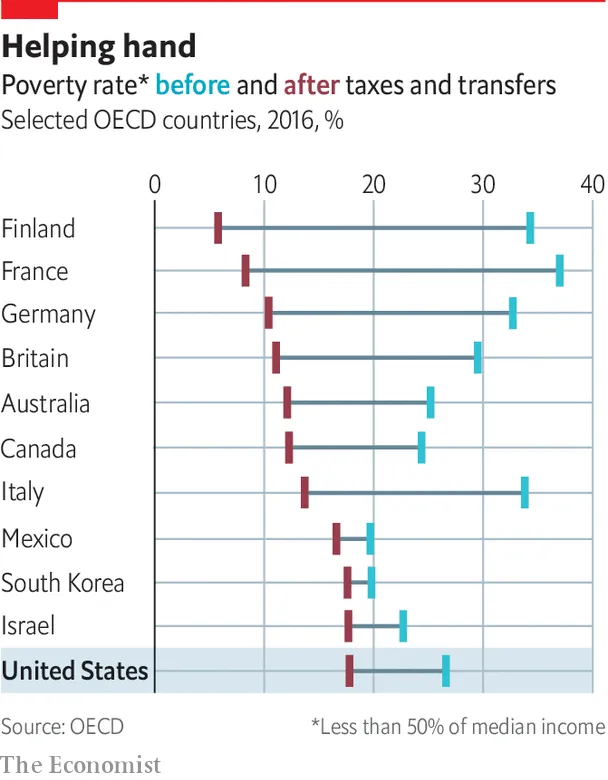
Alternative definitions and concepts have a major impact on the poverty estimates produced. For example, the Congressional Budget Office has estimated that if transfer payments (income‑support programs such as social security) are not counted, then about 20% of all American families lived in poverty during 1988. Government income transfers are, however, included in the official poverty index, and this fact reduced the relative number of destitute Americans to roughly 13.1%. If in‑kind programs such as medicaid, subsidized housing, and food stamps were also [why weren’t they before] included, then the percentage in poverty might have been reduced to as low as 10.5%.
IDENTIFYING THE POOR @b
Counting only cash income and excluding in‑kind assistance, poverty declined substantially in the 1960s. Almost 40 million persons, or 22% of the population, were classified as poor in 1960. By 1978 the figure fell to approximately 24 million, or 11.7%. Special governmental efforts to reduce poverty were responsible for part of the reduction. During the subsequent decade, however, poverty again increased as the number of poor Americans rose to 31.9 million in 1988, or about 13%. @b
Some groups are more likely to experience poverty than others. For instance, blacks are three times as likely to be poor as whites. Families headed by women are nearly five times more likely to be poor than other families. Families where the head has no more than eight years of schooling are nearly five times as likely to be poor compared to families headed by a college‑educated person. @b
Changes in the number of poor disguise the considerable movement of people into and out of poverty. For example, a longitudinal study of 5,000 families by the University of Michigan Survey Research Center found that only 2.6% of the total sample remained poor for more than seven of the ten years studied. Minority‑ and female‑headed units are not only more likely to be poor but less likely to escape from poverty. The poor face multiple impediments to self‑sufficiency, including joblessness, less than a high school education, and dependence on welfare [flaw]. These problems affect 1 in 13 poor married couples and 1 in 4 single family heads. @b
This article discusses four different major groups of the poor: the elderly, children, employed working‑age adults, and unemployed working‑age adults. Each of these groups has different problems that are addressed by different programs.
/rr said pov won.
/when did mw and pov lines start in other countries.
Avoid vice – gambling, prostitution, alcohol, drugs. Many people think these don’t hurt anyone. Nonsense, they hurt people /never ask shopping cart collectors bout poor.
/poverty means poor planning, said early protestants.
/how many gov programs hurt the poor, force them not to be free.
/the poor depend most on pub schs.
/what is a pov diet?
/libs are sure you poor are unhappy. most c stus.
/andrew said chi housing projects all the same and fortress like./james baker said some great soc programs hurt the poor./guy testifying on hill: little incentive to get out of pov.
/a woman THOT poor. haldane.
/most of the poor try to “escape”,/protestants looked on pov as a sign of improvidence.
/pov worse in a big city, but no choice as that’s where the jobs are./the poor in migrant camps outside sd will splurge tons on daughters quinciera to not look stingy. la 94. makes no sense to the frugal mind./why do the poor have kids./poor probably better served by pri charity in past. sig./hmless or poor should be able to keep dogs only under certain conditions./a: those in pov are society’s failures. w post. bull.
/there are 23 mil poor adults in am. l mil wk at mw. l5 mil don’t work. [thus 7 mil work above? and? below? mw] l/95 la.
/only l20k work full time at mw, yet are poor. many get stamps and med…
/bob alex said in his work he sees plenty who barely make ends meet. pov [v poor ims] pov line from 30 yr old formula. started in 63: 3 times the cost of agri dept’s econ diet [=?] – bout $l4k for fam of 4 in ’93, as the average am fam spent l/3 of it’s cash income, before taxes, on food. left out: medicaid, f stamps. also tv, a/c, heat, car, overcrowding [us]. this is an absolute standard.
a relative standard would be half of the median income of am fams. – $2lk in 9l.
/the portion spent on food has sunk below 20% since 60s
/pov standard are higher now than in 60s, said heritage. now: indoor plumbing, cars, phones, tv’s, better fed, bigger.
[nothing on cola nor on how other countries figure their pov lines] w post may 24, 93.
ag says: use ban. waltons. food, clothing, shelter. + l0%? no meat, thrift store, crowded, but quiet clean place. kolping. emerg $, med. #
/wkng poor = 30 mil. 95/wop, then the pov line. sig. tv
/anyone who wants to help the poor and doesn’t believe in abortion is/wop, then the pov line. sig. tv
/pov: wkfare, poor laws, mw, abort, pa’s?
– pri all. which should empower the comm. sig.
/that graph of world pov had 0 on 4 tigers.
/tie pri to housing, crime, etc. so there is a econ reason for stopping crime./i kristol said comm action in wop was doomed as it could only help the leaders./half the us was under pov line at turn of cent. said guy on net. our poor now live better than 90% of the world. 95/underclass vs ims.
/poverty pap had 6 footnotes./can’t agree on def/maybe the poor don’t want your help/i’d say marva collins stus got values there./because the neigh is poor, all has to be junk.
/arc = appalacian r… comm…. pork a la pork for 30 yrs. tv.
expanded the area called appal… can’t stop it.
/i was poor and never felt degraded. mw jobs, uib. i same now.
c stus.
/poor wel? kids abused cafeteria, hosp staff, cops?, ll’s
/why is it poor college students don’t look poor./u-class term in ’63. and established by ken auletta ’82 bk The U-class. = single ma, uib blks, criminals, mi’s, addicts, hmless. w post 95/starving actors/could do lot more for poor, sick, aged, marginal biz if mw were down/was pov cul or $. 65
/monyihan warned bout il rate of blks in 65.
/plan of giving poor control of fed funds collapsed under big resistance from big city mayors. 65
/what hurts the poor: mw, unions, overeg, everything that hurts biz, tariffs,
/don’t forget veronica gaston working at mcdonalds and planning to pay off medical debt 502 6732 voice mail. her bos norm near stadium? nancy long in church in charge of housing. alan eyerly wanted to do story 239 ll00 llll-f 9/95. abused by adopted folks.
/sow: free market would drop the price of food round the world.
/starving actors are poor.
/c powell made it out of the so bronx/lc beh is diff from beh of poor. c murray in harpers. 88?
/lo wages = l4k ’94 w post
/l4k in 92 time/how good are soc programs if asians got ahead without em.
/l/3rd of mex econ is informal. comay [gramen?] grps of 25 women get loans, etc. 96 98% repayment rate.
/never complain of taking $ out of mc and rich neighs.
/the poor pay lot of ss tax and about 0 income tax. sig?
/rate of pov for elderly cut in half said clinton 96
/give rich and poor freedom and resp. ag
/st paul stats didn’t mention health costs. sig
/novak said keeping marginal plant open in e. st. louis is good. watt said not when it hurts the pensions of your stockholders.
you can use your $ better elsewhere. [ralph’s]
/gramen bank ‑ similar things in 44 countries. doubt the pc knows.
/cap gains hurts poor more?
/lo inc projects not wired for a/c
3- The working poor who can’t afford health insurance.
4- College students, many of whom are “poor.”
5- Poor immigrants with limited English (not middle class immigrants).
– the newly poor due to catastrophic health bills.
– hobos who will work but prefer to travel.
/hmless are said to be l/3 crazy, l/3 lazy, and l/3 substance abusers.
‑ to be given a realistic picture.- Set welfare benefits below the lowest wage. Then those on it would have every reason to look for work.
– Set welfare benefits below the lowest wage. Then those on it would have every reason to look for work.
-phase out mw. lower cost of labor, make medicare ‘cost’
latinos: pr’s, mex, cubans, central ams,
asians – we don’t think of many of them as poor?
those we see
– the homeless,
2- Those on welfare who get health care and are paid not to work.
blacks in slums,
we seldom see hobos, migrant farm laborers, poor immigrants, the poor whites of appalacia, am indians,
we don’t see
/hobos, college students, migrant farm laborers, poor immigrants, the disabled, the aged poor, wards of the state.
[there are probably others I haven’t thought of.]
semi pov line is rel
/see pp
/rel to purchasing power
/you hear the poor go to store every day.
/harlem prep – big on disc. and finds some from worst fams do the best. mot. 60 min. 96.
/safe sts now: doc, negotiate, maybe sue, $5 x 42 people in small claims crt. sig. on nbc l2/96 in s.d.
grameen l disc, unity, courage, hard wk, 2 3 repair our hms 4 gro veg yr round, eat em, sell surplus, 5 6 few kids, thrift, health 7 ed our kids 8 clean 9 latrines l0 good water ll no dowrys, nor child marriage l2 no injustice l3 l4 /user fees would mean better serv/if segundos go to mex, just think of what PRI trash pick up could do, also mw, and charity/’what are we going to do about poverty’
/pov has to vary with col [as should mw]/india has l/3rd of the world’s poor. tv 97
/condemned to poverty, abject, grinding, dirt poor, vs mex
/ims work for less, but it’s what you DO with less. and you grow in the job. h. stern. split between jamaicans and am blks.
/top 5th make almost 50% of aggregate income [was 40] bottom 5th make 4% [was 5] in u.s.. but declining gap in so cent and mt regions due to low rates of im and hi tech investments. us news 5/98
/20% of poor don’t have tel. 97 cr.
/fam of 4 averages $7k/yr in pico union. 97
/if they gamble more, then what else, alc? drugs, $, /caddilac in front of a shack – in 60s. rush to bail out son/habitat for humanity with vol help must violate construction codes/underclass vs ims/poverty level is not uniform
/vw stopped war on pov. ok vw is over and we still have pov
/97% of willard on sch lunch program
/poor of rio spend tons for costumes
`/to escape pov: finish hi sch, don’t have a child till married and 20. tv?
/gov bur hurts poor the most. steve goldsmith. the 2lst cent = his bk. a cons rep. last 30 yrs = 0
/never asked animal control, nor shopping cart retreival bout the poor. or teachers? or courts?
/where caring is sig, job is worst – schs, w. williams, where profit is sig, job is best as all work together for self int & $, not cause they love customers. thus poor need cap the most. /40k live near trash dumps in phillipines 98
/i forgot about 2/3rd live without food stamps and half without wel.
/no substantial famine has occurred in a country with
– a democratic form of gov and
– a relatively free press. prof sen, trinity col, cambridge. nobel prize – econ. l0/98 [thus we should export dem and cap]/no substantial famine has occurred in a country with
– a democratic form of gov and
– a relatively free press. prof sen, trinity col, cambridge. nobel prize – econ. l0/98 [thus we should export dem and cap]/$650-700/ mo for a l bedrm apt in so? s.a. 98% of kids at elementary sch [in uniforms] are on the lunch program. [vs 800? for an apt. when off sch for a month, they lose weight.
hi housing and hi med. /98?
/never asked po bout slums, nor those who pic up shopping crts/every ll tourists to africa create l job. 98 more $ than gold.
/investors avoid union cos. as you make less. tv 98?/digging a well by hand 300? ft deep and pumping water? out by hand as part of that in Bangladesh. 60 min 6/99. that’s pov.
foul water. 25 yrs ago, unicef put well’s that eventually brot water with arsnic, which caused cancer./do poor smoke more? drink more?
/do poor smoke more? drink more?
/xmas – feel sorry for poor, yet biz can’t get enuff help over the holidays.
/23% of food stamps go to the non-poor? – pete dupont. 98
famine no substantial famine has occured in a country with a dem form of gov and a relatively free press.
/30 mil in chinese famines of l958-6l. sen. bengal famine of 43, 3 mil died, caused by run-up in food prices spurred by wartime panic, spec, etc. famines often don’t affect the rulers. [dialectic]. dems has incentives to not allow famines: press, opposition party, [simplistic?]. economists have for so long been told ‘equity is not for us.’ [bad article] la?
COLONIAS the forgotten ams. Kcet? L/0l
Along the border, mostly in texas: no man’s lands. Lst they should be comp for damages by developers who misled them. [indus areas f was here]. 2 Location: settlements should be practical. Gov has no oblig to put in rds or util. 3 too many kids. Taboo. Mw, sch bussing, forced to use outhouses, illegally tap into water lines. [elec?] building em nice hms they move on to the prop vs mobile hms. Only a bit on idle time of teens. 0 on wel. By hen. Cisneros
July 9, 2001
Study Finds Ballot Problems Are More Likely for Poor
d.c. , July 8 — A Congressional study has found that the votes of poor people and members of minorities were more than three times as likely to go uncounted in the 2000 presidential election than the votes of more affluent people.
The study was prompted in part by Vice President Al Gore’s loss to Gov. George W. Bush in an election that ultimately came down to several hundred disputed ballots in Florida, whose 25 Electoral College votes went to Mr. Bush after the Supreme Court halted a recount there. Mr. Bush lost the popular vote but narrowly won the electoral vote.
The study, conducted for Democratic members of the House Government Reform Committee, focused on 40 Congressional districts in 20 states. It found that the type of voting equipment used was crucial, with voters using punch-card machines seven times as likely to have their ballots discarded as those using machines that employ a special writing instrument and warn a voter if the ballot is about to be spoiled.
Representative Henry A. Waxman of California, the ranking Democrat on the panel, called the disparities “an outrage” and said that more often than not, precincts where poor people lived had older voting equipment.
“People may think it was just a Florida problem,” said Karen Lightfoot, a member of the committee’s Democratic staff. “This study shows it definitely was not.”
The study, distributed in advance to news organizations for release on Monday, says some analysts estimate that 1.9 percent of all ballots cast in the 2000 presidential race were not counted.
No doubt some were not counted because voters simply chose not to vote for a presidential candidate, or voted for two candidates, the study says. “More often, however,” it adds, “the ballots were discarded because the voting machine failed to accurately record the intention of the voter.”
The 1.9 percent national no-count rate is equivalent to almost two million votes, the study notes, and “in a close election, these discarded ballots could mean the difference between victory and defeat.”
In the 40 districts surveyed (half of them poor, with many minority residents; the other half affluent, with few), more than nine million ballots were cast. More than 200,000, or 2.2 percent, were not counted in the presidential race.
Six kinds of voting equipment were in use in the 40 districts: punch-card machines, lever machines, paper ballots, electronic systems and two types of optical-scan machines. One uses a counting machine in the polling place and alerts the voter to a faulty ballot; another is linked to a central counter and does not provide an alert.
While districts consisting predominantly of poor people and members of minorities generally had higher rates of uncounted votes on all voting equipment than affluent districts, the differences narrowed considerably when modern technology was used.
For instance, when voters used old-fashioned punch cards, the rate of uncounted votes averaged 7.7 percent in poor districts and 2 percent in affluent ones. But when they used optical-scan systems that alerted them to a faulty ballot, the percentage of uncounted votes was 1.1 in poor districts and 0.5 in affluent ones.
The two districts with the highest rates of uncounted ballots, 7.9 percent, were in Chicago and Miami. Both are poor districts, and both used punch cards. But the Seventh District in western Alabama, where 31 percent of the people live in poverty and 68 percent are members of minorities, actually had the lowest percentage of uncounted ballots of the 40 districts surveyed, only 0.3. The Seventh District has modern voting technology.
“I think when people see this report, Democrats and Republicans alike, they’ll want to do something,” Mr. Waxman said Saturday. “We hope. It’s a national problem.”
He acknowledged that counting more votes cast by poor and minority voters might seem to help Democrats more than Republicans. “But you never know how people are going to vote in the future,” he said, recalling that the South was once a Democratic bastion.
In any event, Mr. Waxman said, “That can’t be the basis for how you hold elections.”
/I bet a pri neigh could rise faster than a reg. One.
/h. tanner bot a new car. It’s paid for. 30k mi.
/they don’t ask cabbies nor pawn shops
STUDIES SAY POVERTY SHRINKING WORLDWIDE
Broad new studies suggest that the world has made extraordinary progress in slashing poverty in recent decades, The Christian Science Monitor reports ( http://www.csmonitor.com/2002/0926/p01s02-usec.html ).
The magnitude of the change is the subject of strong debate. But the research suggests that the pace of economic progress has been rapid and sustained for decades, built on the foundations of relative political stability, rising trade, and economic liberalization in the postwar era.
One new study, published today by the Institute for International Economics in Washington, finds that the proportion of the 6.1 billion people in the world who live on $1 a day or less shrank from 63 percent in 1950 to 35 percent in 1980 and 12 percent in 1999 (adjusted for inflation). By some other measures, the progress has been more modest. Still, economists agree that poverty has plunged in key nations such as India and especially China, thanks to slowing population growth as well as economic freedom.
In August, the Cato Institute released “The Globalization of Human Well-Being,” ( http://www.cato.org/new/08-02/08-22-02r.html ) by Indur M. Goklany. Goklany, author of The Precautionary Principle, ( http://www.cato.org/cgi-bin/Web_store/web_store.cgi?page=precprinciple.html&cart_id=
) argues that the gap in human well-being between rich and poor has dramatically decreased in the last 40 years.
Next month, the Cato Institute will release Bountiful Harvest: Technology, Food Safety, and the Environment by Thomas R. DeGregori, professor of economics at the University of Houston. DeGregori looks at how technology is raising living standards, food safety, life expectancy, and individual wealth.
/never ask visiting nurses, cabs, collection agencies, meter readers,
/our poor are forever in debt. poor Chinese ims, get smuggled in, pay off debt, stay out of debt, make l0 times here what they did there, send it home which supports villages they said. ll/02
/if you’re as poor as the quitana’s, should you have to buy 54 presents for relatives?
/abort has to be one of the best ways to fight pov.
/if you came from a poor family with a lot of kids, and have little hope of not being poor, why have lot of kids if that will keep you poor and them too?
/abortion has to be one of the best ways of combating pov, crime, alc, mh, ……
/so much spent on quinciera when could go toward scholarship
/ask mailmen – broken boxes, etc.
/mr. limon in the migrant camp. Had purple hands from picking.
/those on springer etc are ‘poor’ in ways. How much compassion here?
/I’m really sick of reading about poverty and seeing so much on tv where they have a million kids and NO one faces it with facts, abort, etc. no gov, no commentators,
/mex bus boys here make $ to build big fine homes in mex.
/pov better now than before ’33? re: health care, food, prostitution?, ed?, housing????
but worse? re ghettos, crime?, judicial sys,
/allow abortion
/ http://www.earth.columbia.edu/endofpoverty/oda.html
http://catallarchy.net/blog/archives/2005/03/09/the-end-of-poverty
/any progressive has to favor abort – one of the best anti-pov measures.
/you think of mingo – pulled 6 teeth, but never went to a dentist cept for that so it’s a trade off.
/friend of tenants here, jardin, bot new red mb
/Broken Yardstick
By NICHOLAS EBERSTADT
America has already achieved far more success in the war against poverty than the poverty rate shows.
/three rules for avoiding poverty: Graduate from high school, don’t have a baby until you are married, don’t marry while you are a teenager. Among people who obey those rules, poverty is minimal. Geo will
/$l9,l57 for fam of 4. ’04 la
/sofi’s niece works at …………………………… and bot a red mb.
/Dispute Over Historic Hospital for the Poor Pits Doctors Against the State By ADAM NOSSITER Charity Hospital, which has treated the poor in New Orleans for nearly three centuries, is now in a fight over its future.
/little flower childrens serviceds. Little bros of the poor? Just one break
/don’t think of too many kids enuff as don’t think ahead
/tv: nothing prepares you for the squalor of India: stench, flies, miserable shacks. One guy picks thru garbage for stuff to sell. Makes $40/mo, which is considered good. 3/06 gal in bkk said she couldn’t believe the pov there. [china as poor?]
/Save Our SIPP
Congress should come up with the money to save a government survey that is arguably the best source of information on the effect of public programs that help the poor. 6/06
City by City, an Antipoverty Group Plants Seeds of Change
By ERIK ECKHOLM
The community organizing group Acorn uses old-fashioned methods of door-knocking and noisy protests to push for local and national causes.
Trading Up
By SUSAN SECHLER and ANN TUTWILER
Instead of defending narrow commercial interests at exorbitant expense, the U.S. and Europe should promote prosperity and stability among the world’s poorest nations.
Sol by ag: birth control, mw, tradvals,
/walmart has reduced pov more than all the gov programs combined. Said fred barnes on 9/23/06 SIG
Singapore Leads the Good Life Under a Benevolent Dictator
|
It had a rapidly growing, poor, uneducated population living mostly in slums and houseboats. Singapore struggled along until 1965, when it became an … |
Peace Prize to Pioneer of Loans to Poor No Bank Would Touch
By CELIA W. DUGGER
Muhammad Yunus’s bank in Bangladesh has dedicated itself to helping the poorest of the poor with loans as small as $12. [which shows that even small give aways can destroy such a program, because they counter the self-reliance etc that goes with such loans. What about this on a bigger scale – like with banks]
Micro-Credit Pioneer Wins Peace Prize
PARIS, Oct. 13 — Bangladeshi economist Muhammad Yunus and the Grameen Bank he created won the Nobel Peace Prize on Friday for leveraging small loans into major social change for impoverished families.
(By Molly Moore, The Washington Post)
|
Poverty Calculator. Poverty can be calculated using the famous Broken Dreams Index (BDI). Discovered by scientist Jon Stewart in the early 2000’s, … |
Shopping for a Nobel
By JOHN TIERNEY
I don’t want to begrudge the Nobel Peace Prize won last week by the Grameen Bank and its founder, Muhammad Yunus. But has he done more good than Sam Walton?
For Hispanics, Poverty Is Relative
The cat is out of the bag: The majority of Latino immigrants in the United States are poor. By one calculation, up to three-fifths are “working poor” or “lower middle class,” with annual incomes of less than $30,000. (By Marcela Sanchez, The Washington Post) l0/22/06
/ The first goes to Nicholas Eberstadt, who continues to show how frequently-cited statistics can disguise reality. In “The Mismeasure of Poverty” in Policy Review, Eberstadt notes that the percentage of Americans living under the poverty rate has been stagnant for 30 years, suggesting that antipoverty efforts have failed, and that life has not improved for the nation’s poor.
The problem, Eberstadt continues, is that there are anomalies in the official statistics. Why does the poverty rate tend to go up as unemployment falls? Why hasn’t it budged while the amounts of money the government spends on the poor have more than doubled in constant dollars?
Eberstadt goes back and looks at how the poverty rate is calculated, and finds that it is based on idiosyncratic assumptions about how the economy and family budgets worked in 1965. He then observes two realities that are masked by our current statistics, one heartening, one disheartening. The first is that people living under the poverty line are materially much better off than they were three decades ago. They live in much bigger homes. Three-quarters own at least one motor vehicle. They spend roughly twice as much as they report as income, and not because they are going into debt. (Net worths have not declined.) In general, poor people today live at about the same standard of living as middle-class people did in the 1960s.
On the other hand, they live with great insecurity. In fact, relatively few people live permanently in poverty. But nearly a third of the U.S. population dips into poverty from time to time. Building on the work of Jacob Hacker, Eberstadt paints a picture of great volatility at the bottom end of the income scale — a different image from the one portrayed by the immobile statistics, with radically different policy implications.
Helping the Poor, the British Way By PAUL KRUGMAN There’s no excuse for our lack of progress in the war on poverty. Just look at what the British government has accomplished over the last decade.
One Determined Heroine and Her Fall From Grace
By EVELYN NIEVES
A woman who became a symbol of desperate poverty during President Bill Clinton’s 1999 tour of the nation’s most impoverished areas now bunks in a jail cell in Rapid City, S.D.
/if you want to help the poor, lower the min wage ………….. fix
Job Corps Plans Makeover for a Changed Economy
By ERIK ECKHOLM 2/07
As the economy has turned against those with low skills, researchers have questioned the long-term impact of the program for poorly educated youths.
Can Poor People Be Taught to Save? By RACHEL LOUISE SNYDER
A network theory for building a savings account.
/mingo’s sister blows her $.
/Oportunidades – Wikipedia, the free encyclopedia
|
[2] Oportunidades is credited with decreasing poverty and improving health and educational attainment in regions in which it has been deployed. … |
/do the poor smoke more
Pros use terms like
/a tax-favored basis for retirement,
/a tax credit for low-income people who fund retirement accounts
/an earned income tax credit
The poor don’t understand those.
/st paul didn’t include health costs, gunshot wounds …
/never ask poor ims who pass the poor about the poor
/mater didn’t want to go to the poor house
/had teeth pulled as didn’t know better. needs a law
/if you care about pov, do something bout jerry springer
/when’s the last time you heard credit being given to hm dep, 99, bit lots, walmart
/China has moved more people out of poverty than any other country in recent decades.
/ The strange allure of the slums | Economist.com
|
People prefer urban squalor to rural hopelessness. |
/they interview our poor, not poor ims dup?
http://en.wikipedia.org/wiki/Poor_People’s_Campaign
/wanted a guaranteed annual income
/ grapes of wrath: l0 cents for a loaf of bread, then a penny for candy. = l0% for junk when dirt poor roses of sharon?
/never ask the p.o. bout ghetto, nor newspaper deliverymen
/crime due to pov. But il’s are even poorer and they stay out of crime
/– There is no dignity in being poor …… (False, one’s dignity doesn’t depend on one’s income.)
/The Fraser Institute – Article Details — Economic Growth Will …
|
Thanks largely to the economic success of East and South Asia, the world has made great strides towards eradicating poverty. Africa can catch up by learning …
|
/ 
(Michael Robinson Chavez / Los Angeles Times)
In India, a bank for street children
By Henry Chu
Run almost entirely by the youths, a bare-bones bank sponsored by a charity offers a place to stash meager earnings and learn about saving and planning.
/never a single report from credit agencies on how people become poor.
/search most successful birth control program.
/ir conf on rising food prices 6/08 probably little mention of birth control.
/plumby nut new food doing big things for the starving.
/microlending – has to unlearn what he was taught
/ Avoid vice: alcohol, drugs, prostitution, pornography and gambling The poor can’t afford these; the poor can’t. The poor gamble more often and a bigger share of their paychecks than others. Many of them believe getting ahead is luck, and gambling reinforces this. Getting ahead comes from traditional values. *
————————– – – –
/how the other half lives by jacob riis l890 famous pix
/abortion on demand
Poverty’s Real Measure Mayor Michael Bloomberg’s new formula for measuring poverty should stand as an example to other cities — and, ultimately, the federal government.
/search the poor hse. mater feared em. ann sullivan in miracle worker lived in one
/geo foreman appreciated being in the job corps
/if you let em build on lo land in bangledesh, it should be with conditions: mandatory evac? 2nd hms? Roads kept clear, sewage overflow, elderly and kids evac lst? Ins. Grameen
/if you care about pov, vote for abortion
/tess just said am’s don’t like dirty work like can [bed pans?] said they steal toi paper from public restrooms in pi.
Where Sweatshops Are a Dream By NICHOLAS D. KRISTOF What the world’s most impoverished people need isn’t fewer sweatshops, but more of them.[Cambodia]
/what jacky and may do NOT have. No ibm. One has to pay for @. One didn’t appreciate Singapore
/slumdog – new flic bout pov in india
/viets couldn’t have been rich, but bot new cars to avoid trouble with no eng.
/john casich says infl… hurts the poor more. Sig
/dr phil’s pa sadid he wouldn’t give a million to have missed being poor, but wouldn’t give a dime to do it again ???
/pov – a chance for people to sound like god, be god
/pov dropped from 33% to l2% by 80s. [all or just the elderly]
/lowest income spend twice as much as the highest income on lottery tickets. ‘89
1. 2009 Federal Poverty Guidelines
/to help em: allow more walmarts [and competitors]. Encourage more non-union ..
/middle class k’s come here to start a biz. I wonder if they take jobs our poor won’t.
/they never ask banks, credit unions, credit burs, credit agencies, collectors, repos, about the poor.
/guen: when poor you don’t think about values
/produce co-ops on tv
/poor don’t have $ so go to macdonalds and eat junk. Flaw
/I tend to think what could be worse, but others must have it far worse.
/40% of the poor here own cars. Mike medved. l/l0 obesity is a bigger problem than hunger among them
/g said in pi, fams can afford food and sch for kids only. Only when she was sick she got an org or an apple. Sell all to come here, vul, get taken advantage of, be cg’s as can send much $ back for rel’s ed. they send boxes of lotion, toothpast, p-=butter, chocolate, shoes, clothes, champoo, electronic stuff as can afford it and these are made in am. Like xmas when they get these boxes there. take pix. When they see the pix of their rel’s reactions, it make all the difficulties of coming and being here worth it.
Cheerful on outside, but they don’t have an easy time here. [but I know other side: 7 kids, new car, no wax, carpet, cg for 10]
/mater dreaded the thot of going to the poor hse.
/guen: as kids they could have peanut butter or jam but never both at once. Both was a treat. Scrambled eggs were a treat. Only your birthday would you get cake or ice cream, but not both. you Had to wear out shoes. When going to shoe store, had to agree on price first. Meat once a wk. so now when she has a treat, it’s still a big deal. Even after l3 yrs here, she still gets excited to have peanut butter and jelly together.
/tenant of mine could only have a one soda on sat nite.
/gave a cleaning woman a ride by chance to moulton +. Chubby, ltd eng, happiest person …
/ Big Banks Draw Big Profits From Microloans to Poor By NEIL MacFARQUHAR Microfinancing has grown so popular that some of its proponents are wringing their hands. Larger banks now dominate, often charging high interest.
/happy latino gal I gave ride to. Poor but happy. Cleaned hms.
/I think g’s ma would send $ home with a note to do well in sch as she was working hard for them.
/kickstart int’l sells pumps to farmers. Anti giving them away. Which is anti what aid grps say
/poor people burn food
/they show vacant lots strewn with trash, never how it got there, etc. whose resp.
/poverty rate is same, but cost of living is diff
/if you were so poor when young, no washing machine till age 27, why buy a new car? Why not wax it? why starbucks?
/when unable or unwilling to support present or future kids, you should have an op preventing further kids. Ag
/poor as can be, get ahead and blow $ – buy new car, never wax it. new mercedes
/felt sorry for robert clegg in war, wk at 80, but he pulled u turn causing cycle guy to get hurt, took off, later made excuses. So you never know. Same with g buying new car. Yvonne buying new mb
/correlation with obesity
/g: peanut butter or jam, but not both. See travel for this?
/search think poor act poor
/aside from jackpot thing, I never heard of people coming out of pov and screwing up
/some poor don’t have bank accounts. Why wsj
/search think poor
/ Sacrificing Microcredit for Megaprofits By MUHAMMAD YUNUS Commercialization has been a terrible wrong turn for microfinance, and it indicates a worrying “mission drift” in the motivation of those lending to the poor.
/I read of some famine, people quiet, a hum?, as they get food the kids begin to play
/search who or what has made the biggest impact on poverty. Grameen?
/the poor blacks of one country express selves thru music called rara. [same for voodoo?]
/spending lot on birthday while having a dirty rug
/what TV ears could do for jackie in thai…
/the poor around an open fire
/poor person in pi makes $60/wk, but a live in makes l00/mo but that includes r & b, 2 days off a week. And send half bac to folks for the ed of the little ones. No uib in pi.
/Technology Widens Rich—Poor Divide Income inequality is increasing in most industrialized countries as a result of globalization and technological progress that requires greater skills from workers, according to an OECD paper. 4/ll wsj
/search bad $ mng by poor, bad judgement
/only cake or ice cream, not both. No toi paper. No …. Napkin till 27.
/why be poor if you’re not going to learn anything. Rather why get ahead if you’re not … why try to get ahead if you’re not going to use cs?
/poor and spoiled – guen
/ Even the poorest ams. are rich by the standards of many other countries …. Schumpeter, economist 6/25/ll !!!!
/should be an alt to begging
/skid row art. Oh boy
/I guess luz has traveled all over, in seeing her pix – yet somehow I feel sorry for her having, at her age to move a lot, share rm with virg
/one fam keeps blowing tons of feasts. Birthdays, funeral serv. Funeral mass, 40th day, kids birthdays, even threw out leftovers. Tons of shopping, prep, rm rental, xmas, doggy bags, gift cert.
/ family has these huge dinners for 10, 20, 30 people costing them tons. How to stay poor.
One bot a new car. Never waxed it in 6 yrs. Go to movies and starbucks. How to stay poor. Get a college degree and then to nursing sch, to end up as a caregiver. How to stay poor
/we assume the poor pinch pennies, save etc.
/….. not poor but a cg and spent tons on his fam vacations.
/search ways poor waste $, poor money mng. Terrible spending habits
/the balledos came here to make $ and blew it time after time
/should have conditions: no new car
/when they had the old frig’s , some didn’t defrost
/various minorities, the poor – why are they so proud
/ http://www.poorhousestory.com/history.htm
/the monestary nr pecos vs that poor family
/ When the Uprooted Put Down Roots By PATRICIA LEIGH BROWN Refugee agriculture, an entrepreneurial movement spreading across the United States, provides income for the farmers as well as a taste of home for immigrants.
/scrimp and save to get here, then have a dirty rug.
/when you’re poor, you only have your name
/g’s ma used to get pa’s paycheck, show kids how it would be allocated – tuition etc. and and what was left – 50 pesos.
/g: white rice cheaper. They can afford it. mix it with sugar or oil, or salt and serve. Org only when sick, apple or grapes at xmas. Grapes: lined up kids for 2 grapes each. A banana was the main course. So when here, they over-indulge. 0. So why go to m inn, and why stay in a hotel
/pov bull: to show our love for our girl on her quinciera, we have to spend far more than reasonable. Same with parties? Gifts? Hospitality, cad in front of shack,
/to avoid pov: finish hi sch, don’t get preg, and ….
/search think poor
/search squatter’s land pi
/search ‘think poor’ – can take em out of pov, but not the pov out of them.
/why is Stuyvesant town and the projects are terrible . sig. pix? http://www.google.com/search?hl=en&q=stuyvesant+town&gs_sm=c&gs_upl=0l0l1l22l0l0l0l0l0l0l0l0ll0l0&bav=on.2,or.r_gc.r_pw.,cf.osb&biw=1280&bih=611&wrapid=tlif132699155061910&um=1&ie=UTF-8&tbm=isch&source=og&sa=N&tab=wi&ei=yUgYT5i5KsjXiQLAmICuCA remember the sullivans were on the waiting list.
/poor are more overweight? Kids and folks. They blame fast food. Well, if poor, you can’t afford fast food.
/l5% pov here 2/l2 at $22k for fam of 4
/what that fam could have done: fewer kids, pub sch, no c or spec sch till sure. New cars, starbucks, flics, elaborate food for occasions, throwing some out,
/unwilling to plan ahead, think ahead, will, ideas for hse in pi,
/never hear how the poor can and should economize
/never ask trash collectors what the slums are like
/probably chain link fencing on balconies so they can’t throw large objects
/g’s hse didn’t have screens to keep the bugs out. why? slept under mosquito nets
/search why no window screens in pi. Bug screens, mosquito ….
/I don’t have lot of faith in …… who’s building a …………… in …………… they’ve always been worried bout $. Heart, new foot
/they never ask those that maintain the projects.
/said she’d go back to sleeping on fl and bathing with a dipper. What was meant by that
/didn’t get chicken pox vac when young
/slum dog millionaire
/search pov in india
/hyper slum dog millionaire was made by british film co. you wonder if they got their kicks out of pointing out the pov. One scene was disgusting! Great way to give india a black eye.
/I read once that half of the ghetto was living off the other half
/a comment left this site – www.wesayuk.com – don’t open as hassle – gives yellow warning, then can’t close it.
/pov causes crime. Il’s are poor and they don’t commit crime – as the consequences are big.
/poor $ mng: btenants, Odette, one fam here, pecos?, search it
/search graphs pov line.
/mr limon’s rm in the migrant camp smelled like urine
/ hazlitt = http://www.wesayuk.com – lot by haz…
/the real slumdog on nat geo. It’s dharavi the most talked about slum in the world, part of Mumbai, terrible. One toi for every l400 residents. Acorn foundation there. prime r.e. reality gives is an org there?
/search vertical slums
/Jacob a reis – photog of ny slums. How the other half lives
Pi is poor because it discourages foreign investment. the constitution written in ’87 says :
– 60% of all biz must be pi owned. Foreigners can only own 40%.
– 70% of all advertising cos must be owned by pi’s
– Only pi’s can own media cos. These from utube
/breaks your heart to see em waste $
/mosquitos some use nets but don’t put in screens
/to help poor, simplify the tax code
/if pov is hopeless here, how can the poor in other countries get by
/their cr is limited by always having to work for someone else.
/grameen is PRI! – http://www.forbes.com/2007/09/20/cz_ms_0920bramen.html
———————————————————- – –
/  India to Launch World’s Biggest Cash-to-the-Poor Program
India is planning to start giving cash directly to its poorest citizens starting in January, in a bid to reduce massive corruption that prevents subsidized goods and welfare benefits from reaching those who need them.
/save me from my saviors
/search some poor go to store every day
/9 using one ba. But a chamber pot?
/pov line , fam of 4 – $30k l2/l2
/come here and won’t learn how to drive
/people collect cans for 5 c each.
/ilo: peanut butter sand… or jam one, never both togethero be ‘ssing of my life. during ticker tape parades.
nothing p
/search Newark, nj doesn’t want a walmart l/l3
/Stand With Us | Working Families United for New Jersey www.workingfamiliesunitedfornj.org/news/stand-us Cached You +1’d this publicly. Undo
Dec 8, 2012 – The Newark planning board is responsible for investigating the … in the city of Newark is protected from predatory employers like Walmart. We want to ensure that any development raises the quality of life, and doesn’t lower it.
/search the pov line in other countries
/see pi under travel and cg2 vs at l6 I had a car
/search working poor vs welfare poor
/search some people think poor
/the neediest may not be the most deserving
/those left behind
/search Cadillac in front of a shack – did – 0. Try luxury car …..
Sig: in past 20 yrs, 200 mil Indians have been lifted out of pov.
In ’78 half of indians were below the poverty line. Today it is roughly a fifth. Econ.. 4/20/l3
/our poor can’t stay out of crime. Il’s sure do
/ever ask bus drives + bout slums
/ www.kiva.org loans microloans here and abroad. Sig for those with bad credit
/paul ryan said we spent tons on the war on pov and pov won. We should measure results. It’s up to l5%? Which is the highest in a gen?
/article in econ… bout reducing pov. No mention of birth control or abort 9/l3
/entitlement wreck the am dream for those in the lower rungs
/more than half have cars; 30% have 2 cars. Must be us. tv
/food stamp dude buys lobster and suchi with food stamps
/victimhood
/cg’s here eat out all the time, take trips, let food spoil, throw out dated food, yet…………no med ins, don’t see fam often enuff, eat sweets! Dunno till you live with em
/food deserts
/no study about shopping carts left all over – hazard
/so much to help the working poor vs the jobless
/a ceo said the pov level in the u.s. was at 90% of the wealth of the rest of world. Fix?
/Smoking Proves Hard to Shake Among the Poor
/ http://www.coveringpoverty.org/resources/tipsheets/4books send blog
/Walmart and hm dep ++ have probably done more to help the poor than the war on pov
/ag: what to do about pov: abort, mw, pri, wk with unions?, teach trades, i, drugs, alc, wel, … which slums have been turned around. Soon as they’re better off, the move and ….
/I had few hot meals at kolping, few in c?, 0 at mccullogh’s in d.c., few at my apt in ny? Few everywhere
/3 rules for avoiding pov – brookings – http://www.brookings.edu/research/opinions/2013/03/13-join-middle-class-haskins
https://www.google.com/?gws_rd=ssl#q=brookings+how+to+avoid+poverty+ rick santorum chery picks? Thus http://members.jacksonville.com/opinion/editorials/2012-01-27/story/three-rules-staying-out-poverty [I have trouble with these:] so look up brookings exact wording
/brookings: finish high school, get a full-time job and wait until age 21 to get married and have children. But I think the wc wants to marry earlier.
Ag: thus need trades in schs, maybe grad earlier, and get a job earlier,
find them. Our poor can’t get an education in our schools, yet poor immigrants do. Our
`/fed pov line for all states vs col
`/ils can’t get a lot of entitlements and they survive
/ https://www.google.com/?gws_rd=ssl#q=frugal+innovation
/l.a. east of ll0 in la is rich with tax breaks for const. west is poor without skills to work in east pico union, west lake, part of k town & …………. Can buy l00 lbs of food for $30 at a food bank
/this is on gamblen – / Using Gambling to Entice Low-Income Families to Save By PATRICIA COHEN A growing number of credit unions and nonprofit groups are using lotteries to encourage low-income families to save.
/less crime in countries with lower mw, fewer entitlements?
/if you want to help poor, then birth control, morn after, abort, allor, then birth contnrol, ended with 79. d by t treatment. those
/search acumen fund ir
/poverty line doesn’t account for diff in col. Sig.
/tv: you can’t grow your [econ] way out of pov
/the poor living in motels still l2/l8
/I had no hot meals in vista, or ny, dc, c
/grapes of wrach 10 c for half a loaf and 1 c for a candy
/never ask pawn shops
/have never heard anyone say don’t buy a new car nor how to save $.
/I had no running water and used an outhouse for l0 mos.
/never ask security firms
/they never ask pawn shops, or check cashing places, or thrift shops,
/ https://www.google.com/?gws_rd=ssl#q=the+privileged+poor
/the working poor probably pay far more than 30% of their inc for housing.
To help the poor
/prost, mw, birth c…, abort, reciprocity, preventative health, incentive sys, tents – arpaio,
/does allowing drugs in other countries reduce hmless…
/search free market and pov
/why are poor housed in motels
/in vista I never had a hot meal
Benefits: wel, f stamps, sec 8 housing, wic, Medicaid, legal aid?
/extreme pov dropped by half in last 25 yrs – stossel due to ….
/didn’t someone I know not have her first tampon till she came here?
/did any city ever relocate their skid row
/never interview e-rms, jails, soc agencies, cheap motels
/didn’t some gal tell me she never had a tampon till she came here?
/don’t talk to liquor stores, laundromats, check cashing places,
/what was that bk – the 82 or 87th fire sta about the false alarms etc
/ https://www.google.com/?gws_rd=ssl#q=induction+cooking+in+poor+countries – 0
/ search solar panels in poor countries – found little
/the poverty industry: the exploitation of am’s most vulnerable citizens
/can’t talk pov without birth control. Blk teen gals: the news – who’s preg…
/ http://www.bing.com/images/search?q=dung%20houses&qs=n&form=QBIR&pq=dung%20houses&sc=2-11&sp=-1&sk=
/Microsoft cloud has helped temenos lower the cost of borrowing $ 90%. By putting their core banking software in the cloud, microfinance institutions are able to reduce the need for infrastructure and mng. – https://www.google.com/?gws_rd=ssl#q=temenos
/many in pi live in cemeteries – was on tv
/ the gov should never give the non-working poor a better life than the working poor. But what if they have kids. Thus singles? What about ed
/off grid energy. In Africa. Solar panels, bats and [led?] lites. Great l0/l6
/gentrification v slumification [which I made up] – https://www.bing.com/search?q=slumification&form=EDGHPC&qs=AS&cvid=f53993ddc08a42cda672e859766c3918&pq=slumification urban blight, decline, decay, rundown ghettoization, blockbusting, white flight, white-rashification,
/neg income tax – Milton friedman
/poor people in pi send kids to pri schs
/ chain stores avoid ghettos – https://www.google.com/?gws_rd=ssl#q=chain+stores+avoid+ghettos+&*
/graph of pov decline could be part of hh
/duplication in poverty programs – list by a congressman on the fl of the hse
/you go to a laundromat and wonder where they come from
/culture of pov
= change all rules for them
/ag : coujld section 8 hurt the working poor, rent stab…….too? as I think hmless plans will
/long ago I read poor people wanted 3 things: a fan, frig?, tv?
/search: how to help the poor. programs which have helped
/ag: sex is the recreation for the poor. weak
/lot of pov in calif due to hi col – sig
/how many poor girls put babes up for adoption?
/search causes of pov. Religious etc. –
https://www.bing.com/search?q=catholicism+creates+poverty&FORM=AWRE
/ https://en.wikipedia.org/wiki/Microfinance
/search the poor hse. Mater didn’t want to end up there
/search jobs for beggars
/ims pass our poor and sure pass our Indians. Everyone does. Wow
/we never knew if the poor were helped or how. Same with poor countries
/the pill must have reduced pov. Abort too
/Hazlitt: Want no loss of dignity for a person when he gets on welfare, but a gain when he gets off.
/you feel for em till they buy a brand new car – cg’s too
/medical desert, food desert, food swamp
/poor to prison pipeline. Sch to prison pipeline
MICROCREDIT as part of microfinance vs
https://en.wikipedia.org/wiki/Microcredit
/9/20 I thot of electric bike rickshaw. Leave out the bike – https://www.bing.com/images/search?q=electric+rickshaw&form=HDRSC2&first=1&scenario=ImageBasicHover
/micro loans not so hot said sci. am. mag. on my tel
/ag: how to help the poor or anyone: face reality, tradval,
/pecos sch charging small fee for use of showers
/solar induction cooking – sig? solar induction cooking – solar induction cooktop for the poor of africa – Bing
/sent my hh post to the hh found 3/2l
/which fams move ahead the fastest? Ims?
/how to help a poor fam: sterile…?, safe neigh, all work, on line ed, save post, youth post,
/downward mobility – odette
/ how to move out of poverty – Bing steps:
Sch choice, resumes – see job hunt…, mw, micro savings, used car, see save, brookings, voc tech, meet em half way, noise, pri, birth c…, abort, neigh watch, int test, apprenticeships, grp,
/there is a solar charger for c phones in poor countries.
/l0/l2 – all sorts of handouts for pov vs labor shortage
/ how many of the poor stay poor over the generations – Bing
/ solar induction cooktop for the poor – Search (bing.com)
/we give sacks of ‘meal’ to famines. Why not here?
/how many are shop aholics
/any mention of sterilization?
/electric assisted bicycle rickshaws

This one has solar panels
———————————– – – – –
This one is diff
India’s e-rickshaws face regulations – Bing video
/never hear bout em from the post office
/ why few trees in poor neighborhoods – Search (bing.com)
/ag: for famines, rohingyas etc id: look for programs that work. sterilize, fingerprint, regulate prost which can’t be their main job. Wk, entrap?, shame,
/ grameen bank – Search (bing.com)
vs microsavings
/money for a funeral, quiciera
/ toward the end of poverty – Bing images
/ shopaholic – Search (bing.com)
/laundra mats, check cashing services, pawn shops,
/how was the so Bronx turned around
/Buena Clinton
/commodore circle in hb?
/ housing that didn’t have to be blown up
/ Once-Powerful Cities That Now Struggle To Survive (msn.com)
/ birth control pill’s effect on poverty
/ what percent of the poor have bad spending habits – Search (bing.com)
/don’t I know of a fam of 9 with one toilet? In pi
/Warren Buffett Says Poor People Waste Money On These 12 Things (msn.com)
/ the american poor live better than the middle class in europe – Search (bing.com)
/ some poor ‘think poor’
/ The Rise of Poverty Inc. – The Atlantic
/ The Hobo Lifestyle Was Actually Crucial To America (msn.com) sig?
/ Depression era gourmet food – Search (bing.com)
/I can’t find that chart
/ bad: simply more time: Simply More Time – MSN thus
12 Myths About Poverty People Still Believe (msn.com)
/ How ‘Poor Laws’ Tried to Tackle Poverty in Colonial America | HISTORY
/ Free pet clinic provides veterinary care to residents of Skid Row – Los Angeles Times (latimes.com)
/ amereican poor live better than european middle class – Search (bing.com)
/ Manmohan Singh was India’s economic freedom fighter
/ Warren Buffett: 10 Things Poor People Waste Money On
/ 18 Common Misconceptions About Poverty That Are Widely Believed
/ 3/25 –
|
Extreme poverty in the country has dropped to negligible levels /bad habits of the poor – Search / Disquieting Photos of the Great Depression / The Myth of the Poverty Trap ——————— – – – Editor: Can you use this? 590 words
this gets into hmless – no asians, few ims?
Poverty Myths
Since the 60s, when poverty was “rediscovered”, social programs have come and gone with little or no result.* Yet we are made to feel guilty about poverty. The subject needs a close look. starting at the bottom? 1- Bums, winos, some addicts and criminals who won’t work. – hobos who will work but who prefer to travel.
2- Those on welfare who get health care and are paid not to work. 3- The working poor who can’t afford health insurance. 4- College students, many of whom are “poor.” 5- Many poor immigrants with limited English. -migrant farm labor – the homeless
semi pov line is rel The poor who don’t work are featured with their kids in front of a shack despairing. The poor who do work are rarely interviewed, nor are those who have gotten out of poverty.
There are other groups we don’t hear from – those abused by the irresponsible poor landlords, merchants, employers, insurance companies, finance companies, utilities companies, sanitation, health, and other public servants, and chain stores (who avoid ghettos like the plague*). We don’t hear about the “lower class” who choose to remain immature. In one city they absorbed 55% of its welfare, 5l% of its health services, and 56% of its mental health and correctional ser¬vices.* There is no chronic poverty outside this class.* Thus we should question the common myths:
The poor are isolated, unhappy, highly ambitious, and can’t work. ………….. (false, and they are paid not to work.*) They are “oppressed”. ………………… (are carried*) There is no dignity in being poor …………. (only in slum living and slum schooling conditions largely brought on by the lower class) The rich exploit the poor and get richer while the poor get poorer. ……… (false*) Discrimination causes poverty ……… (less than we think, as the Japanese and the Jews advanced most when most discriminated against; and West Indian Blacks in the U.S. are far ahead of Am. Blacks.*) Poverty excuses crime, addiction, alcoholism, child and wife abuse, gambling, illegitimacy, promiscuity, etc. … (false, as proven by the worse poverty of other countries).
Menial work is undignified …… (the worst possible advice*) Social programs** help ……. (False, many hurt the poor and socie¬ty.*) Anti-poverty work radicalizes social workers …….. (false) Being poor in the U.S. is unbearable. ………… (The 3rd world poor would love such poverty.)
We have a double standard: our poor are “trapped”, yet poor immigrants with limited English get ahead. We know hand¬icapped people have performed heroic feats to become self sufficent, yet we don’t expect our poor to make a fraction of the effort. We should consider l9th century England’s example; they had to set welfare payments beneath the lowest wage to get the poor to look for work.* We should get away from emotion, rhetoric, and idealism, and stop giving the poor reasons for self pity and start combatting media induced guilt. Then we can see poverty in perspective and hold a more hopeful picture.
Rights of society to be given a realistic picture. to hold the poor account¬able to society’s tradition¬al values. to enforce all laws in the slums. to distin¬guish between the deserving and non-deserving poor by holding them accountable for their behavior and by requiring work for aid. to require social programs be run with sound business prac¬tices and move the poor toward self-sufficiency. to use a free market approach. to avoid job quotas, charity, subsidies, and preferen¬tial treatment. to support work, educa¬tion, business experience, saving, self reliance, and a free market approach.
Rights of the poor – to live in a quiet, safe neighborhood. – to have limited abilities and goals. to work less, if self-supporting. to receive their share of subsidies and municipal services. – to have a choice among which public to send their child. – to not be mislead by dreamers who say anyone can finish college, be a sports star, a millionaire, etc. to not be patron¬ized nor falsely pitied. to not have crimi¬nals and bums fawned over by the media or social workers.
** Guaranteed income, negative income tax, minimum wage, welfare, graduated income taxes, “spread the work” schemes.
* Footnotes from M. Friedman, H. Hazlitt, G. Gilder, T. Sowell, E. Banfield.
Al Garner, 8602 Hazard, Midway City, CA, 92655, 894 6ll8 (7l4), Rights of the poor to have limited goals and ability. to have less. to work less, if not dependent. a choice of schools. to be poor in money and rich other things. to provide their own shelters (under certain conditions), if homeless, when government doesn’t. to their share in municipal services. to be credited for raising good kids in spite of great odds. not to give up a greater share of their subsidies than other groups. not to have criminals and bums fawned over by the media or social workers. not to be patronized nor falsely pitied. not to be subjected to short term, flashy programs.
Rights of society not to be tarred with “guilt”. not to be panhandled nor have to see derelicts sleeping around. to be given a realistic picture of the poverty. to hold the poor accountable to traditional values. to enforce all laws in the slums. to distinguish between the deserving poor and the others by holding them accountable for their behavior and requiring work for aid. to move the poor toward self sufficiency. to use a free market approach. to avoid job quotas, charity, subsidies, and preferential treatment. to support work skills, education, business experience, and self reliance. to require social programs be run with sound business practices.
/just like the ghettos to gripe that quake victims are getting more help than riot areas. 2/94 Rights of the poor to have limited goals and abilities. to work less, if not dependent. – to have less. – to be poor in money and rich other things. – to provide their own shelters [under certain condi-tions], when homeless, when govern¬ment doesn’t. – to receive their share of municipal services. – to choose the schools their children will attend. to not have criminals and bums fawned over by the media or social workers. to be credited for raising good kids in spite of great odds. to not be patronized nor falsely pitied. to not be subjected to short term, flashy programs. to not give up a greater share of their subsidies than other groups.
Rights of society to not be tarred with “guilt”. to be given a realistic picture of poverty. to hold the poor account¬able to tradition¬al values. to enforce all laws in the slums. to distin¬guish between the deserving poor and the others by holding them accountable for their behavior and requiring work for aid. – to move the poor to toward self-suffi¬ciency. to use a free market approach. – to not be pan¬handled and to not have to see derelicts sleeping around. to avoid job quotas, charity, sub¬sidies, and preferen¬tial treatment. to support work skills, educa¬tion, business experience, and self reliance. to require social programs be run with sound business prac¬tices.
– Use plain language. /was pov cul or $. 65 /monyihan warned bout il rate of blks in 65. /plan of giving poor control of fed funds collapsed under big resistance from big city mayors. 65 Pov4
n the early 1990’s, when Iqbal Z. Quadir was looking for investors to back his idea for a mobile phone network in Bangladesh, he said he was turned down by an executive at a cellular telephone company in New York who told him, “We’re not the Red Cross.” That mind-set, which interprets investment in the third world as charity, not an opportunity for profit, is what keeps countries poor, Mr. Quadir said. “In the United States we either give charity to the poor or we ignore them, and neither one helps them,” he said. “Business is a proven method of solving their problems in a sustainable way.” At the end of last year, Mr. Quadir showed how third-world ventures can be profitable — and provide a useful service — when GrameenPhone, the cellphone company he founded in Bangladesh, made $27 million in pretax profits. It turned that profit after just five years — far sooner than many first-world start-ups. The experience of Mr. Quadir, now a lecturer in public policy at the Kennedy School of Government at Harvard, contradicts the conventional wisdom from luminaries like Bill Gates, who has said that there is no market for such sophisticated devices in places of widespread poverty and illiteracy as well as unreliable electricity. Through his foundation, Mr. Gates has sought to first improve the health of the poor. To Mr. Quadir, the two approaches are not mutually exclusive. He says the poor will improve their own health as they become richer, and he sees cellphones as tools of production, not consumption. With help from Telenor, the Norwegian telecommunications giant, and Grameen Bank, an established lender in Bangladesh, GrameenPhone began operations in 1997. Investment to date has totaled nearly $200 million. The enterprise has two tiers: it sells phones and time to urban customers, and it sponsors Village Phone, a program in which people without phone service in rural areas take out small loans for cellphones and buy air time at cost. Most borrowers are women; Grameen Bank’s founder, Muhammad Yunus, has said they are better credit risks. The borrowers then charge other villagers the market rate to make calls. GrameenPhone now has 575,000 subscribers in 12,000 villages. In fact, at a time when growth is slowing in the American and European cellphone markets, the number of GrameenPhone subscribers is rising rapidly. A native of Bangladesh, Mr. Quadir, 43, was in a unusual position to put the deal together because he bridges many worlds. He holds two master’s degrees from the Wharton School of the University of Pennsylvania, one in finance, the other in applied economics. He helped establish Atrium Capital, a Wall Street investment bank, but one day, when Atrium’s computer system was not working and he could not conduct business, he was reminded of his boyhood in Bangladesh: In 1971, when transportation was disrupted by war, he spent an entire day walking, trying to find medicine for his younger brother. But he returned empty-handed. That day in his Wall Street office, he concluded that “connectivity is productivity” and soon set out to prove it in Bangladesh. He saw an opportunity to provide a needed service there and to make money by going into a wide-open market. The per capita income in Bangladesh is one-hundredth of what it is in the United States, “so you need 100 Bangladeshis to provide the buying power of one American,” he said. Just because they have as much income, though, does not mean those 100 Bangladeshis will buy the way one American does. “It’s reasonably self-evident that they will buy a lot more bread and a lot fewer cellphones,” said Raymond Fisman, an assistant professor of economics at Columbia University’s Graduate School of Business. Nearly all the potential investors who were approached by Mr. Quadir expressed such skepticism. Sixteen, mainly in the United States, turned him down. Mr. Quadir worked four years, without salary, to get his vision financed. Mr. Quadir now serves on the boards of many organizations, like DigitalDivide.org, that are devoted to finding ways to combine public and private financing to help entrepreneurs in emerging markets. Combining financing this way is not new. The International Finance Corporation, the private investment wing of the World Bank, does so often. But there is less interest among private investors in developing the infrastructure or expanding services that can actually reach the mass population, said Daniel Crisafulli, a loan officer at the finance group. Many investors simply do not want to negotiate with foreign governments, which often expect high fees to gain access to their markets. Mr. Quadir was fortunate. The Bangladesh government did not charge an up-front licensing fee, because he believes it expected cellphones to be a marginal business for the very rich. GrameenPhone now has more subscribers than the government-owned telephone company. Despite Mr. Quadir’s aversion to a charitable business approach, GrameenPhone would not have gotten off the ground without financing from private investors who were also interested in philanthropy. Joshua Mailman, who founded the Social Venture Network, a group of entrepreneurs and investors concerned about social justice and the environment, gave Mr. Quadir $125,000 to begin the project and to travel from Bangladesh to the United States and Europe. Mr. Mailman is among the 12 board members of Gonophone, GrameenPhone’s New York-based holding company. Others include Ben Cohen, of Ben and Jerry’s Ice Cream, and Arnold Hiatt, the former chief executive of Stride Rite. With his classes at Harvard done for the semester, Mr. Quadir, Gonophone’s president, may soon be leading this group on an investment adventure even more difficult than in Bangladesh: setting up a cellphone network in Afghanistan. Even if the political situation there stabilizes, there is no reliable banking system or telecommunications infrastructure. Mr. Quadir envisions starting a small lending system and a cellphone network at the same time. The biggest challenge for Mr. Quadir will be to prove he can replicate GrameenPhone’s success in other, very different countries. “I have done it before,” he said. ———– – – – |
|
|
|
September 27, 2004 |
|
|
|
|


COMMENTARY
Activism Can Hurt the Poor
I’ll miss the old energy of the anti-globalization demonstrators next weekend when I cover the World Bank’s annual meeting. They’ve been redeployed, joining the opposition to the war in Iraq and President Bush.
Ten years ago, however, they supplied drama at the bank’s 50th anniversary with yells of “50 years is enough,” and there were moments of outright hilarity during the uproar of 2000. At the bank’s spring meetings in Washington that year, a low-budget filmmaker needed a crowd scene for his movie about a Bulgarian pastry chef called Stanko, so he armed his buddies with “Free Stanko” placards and filmed them in front of the protesters. Then, perhaps imagining Stanko to be a persecuted Amazonian leader or anti-corporatist Cameroonian hero, the nearby demonstrators joined in: “Free Stanko!” they screamed, without a clue. But the protesters, however colorful, never mattered as much as the continuing, behind-the-scenes attacks on the World Bank and its mission. As I’ve discovered time and again, feisty Internet-enabled activists wage endless campaigns against the world’s premier development institution, forcing it to spend an absurd amount of effort on public relations and delaying good projects that could reduce poverty.
I ran into one instance of the damage caused by such campaigns in Uganda, where the World Bank had been backing a dam to generate badly needed electricity. The project had drawn fire from Western environmental groups, notably the International Rivers Network of Berkeley. The activists argued, among other things, that the dam ignored popular opposition from the Ugandan environmental movement and that it would harm the poor farmers whose land would be flooded.
But when I checked these allegations, I found the evidence was weak. The Ugandan environmental “movement” consisted of a grouplet with only 25 members. And when I teamed up with a local sociologist to interview people around the dam site, I found that they were happy with the money they would get to compensate them for moving.
Or take an example from China. In 1999, the World Bank agreed to back a project that would move 58,000 extremely poor Chinese farmers off barren land into an area where they could grow enough to feed their families. Because the project was in a province that bordered on Tibet, Tibet activists in the West sprang into action: They claimed that the World Bank was backing Han Chinese colonization of Tibetan lands, even though no Han farmers were being imported from outside the province, and even though some of the resettled farmers were themselves Tibetan. Hollywood figures such as Richard Gere joined in the campaign, and Reps. Christopher Cox (R-Newport Beach) and Nancy Pelosi (D-San Francisco) beat up on the bank too. After a long, costly fight, the bank pulled out of the project.
Or take the case of the Chad-Cameroon oil pipeline, another controversial World Bank enterprise. Western activists opposed this, partly on the reasonable ground that oil projects seldom help the poor, but also because the pipeline would supposedly disrupt the rain forest through which it traveled. At the World Bank’s insistence, the pipeline consortium prepared a social and environmental impact study that ran to 19 volumes, but the activists still predicted catastrophe if construction went ahead. In this instance, the protesters were defeated and the pipeline was built — without any terrible environmental fallout. But the delays cost millions of dollars, and the bill was ultimately paid by the world’s poorest people.
Some delay is clearly good. The bank has a bad history with dams, and its entire environmental staff consisted of five people in 1985 — an absurdly small number for the financier of huge and risky projects. But since the early 1990s, when the bank created a high-powered environmental department and opened itself up to sociological and anthropological thinking, its projects have given due consideration to biodiversity, indigenous peoples and wildlife. The activist assault, richly justified two decades ago, has become anachronistic and excessive.
The World Bank has done its utmost to fight back. Its president, James Wolfensohn, is a formidable charmer with an infectious, poverty-fighting passion; if he can’t win over the bank’s foes, no leader could. Which means that film stars, members of Congress and (yes) journalists must do their bit to help him out. The World Bank will remain hobbled and encircled until the rest of us begin to treat activist assertions with a dose of skepticism. Some seeming good-guy groups are less noble than they claim to be.
/ll/22/04 – Shhh, Don’t Say ‘Poverty’
By BOB HERBERT
Even though 11.2 percent of households struggle to feed themselves, poverty is not even close to being on the national agenda.
Ll/27/04 ny times Good News About Poverty
By DAVID BROOKS
Globalization has made this the most prosperous year in human history.
Good News About Poverty
By DAVID BROOKS

Published: November 27, 2004
I hate to be the bearer of good news, because only pessimists are regarded as intellectually serious, but we’re in the 11th month of the most prosperous year in human history. Last week, the World Bank released a report showing that global growth “accelerated sharply” this year to a rate of about 4 percent.
Best of all, the poorer nations are leading the way. Some rich countries, like the U.S. and Japan, are doing well, but the developing world is leading this economic surge. Developing countries are seeing their economies expand by 6.1 percent this year – an unprecedented rate – and, even if you take China, India and Russia out of the equation, developing world growth is still around 5 percent. As even the cautious folks at the World Bank note, all developing regions are growing faster this decade than they did in the 1980’s and 90’s.
This is having a wonderful effect on world poverty, because when regions grow, that growth is shared up and down the income ladder. In its report, the World Bank notes that economic growth is producing a “spectacular” decline in poverty in East and South Asia. In 1990, there were roughly 472 million people in the East Asia and Pacific region living on less than $1 a day. By 2001, there were 271 million living in extreme poverty, and by 2015, at current projections, there will only be 19 million people living under those conditions.
Less dramatic declines in extreme poverty have been noted around the developing world, with the vital exception of sub-Saharan Africa. It now seems quite possible that we will meet the United Nations’ Millennium Development Goals, which were set a few years ago: the number of people living in extreme poverty will be cut in half by the year 2015. As Martin Wolf of The Financial Times wrote in his recent book, “Why Globalization Works”: “Never before have so many people – or so large a proportion of the world’s population – enjoyed such large rises in their standard of living.”
As other research confirms, these rapid improvements at the bottom of the income ladder are contributing to and correlating with declines in illiteracy, child labor rates and fertility rates. The growth in the world’s poorer regions also supports the argument that we are seeing a drop in global inequality.
Economists have been arguing furiously about whether inequality is increasing or decreasing. But it now seems likely that while inequality has grown within particular nations, it is shrinking among individuals worldwide. The Catalan economist Xavier Sala-i-Martin looked at eight measures of global inequality and found they told the same story: after remaining constant during the 70’s, inequality among individuals has since declined.
What explains all this good news? The short answer is this thing we call globalization. Over the past decades, many nations have undertaken structural reforms to lower trade barriers, shore up property rights and free economic activity. International trade is surging. The poor nations that opened themselves up to trade, investment and those evil multinational corporations saw the sharpest poverty declines. Write this on your forehead: Free trade reduces world suffering.
Of course, all the news is not good. Plagued by bad governments and AIDS, sub-Saharan Africa has not joined in the benefits of globalization. [why? Did they open to globabl…. Or not?] Big budget deficits in the U.S. and elsewhere threaten stable growth. High oil prices are a problem. Trade produces losers as well as winners, especially among less-skilled workers in the developed world.
But especially around Thanksgiving, it’s worth appreciating some of the things that have gone right, and not just sweeping reports like the one from the World Bank under the rug.
It’s worth reminding ourselves that the key task ahead is spreading the benefits of globalization to Africa and the Middle East. [so they are closed?]
It’s worth noting this perhaps not too surprising phenomenon: As free trade improves the lives of people in poor countries, it is viewed with suspicion by more people in rich countries. Ty ty ty
Just once, I’d like to see someone like Bono or Bruce Springsteen stand up at a concert and speak the truth to his fan base: that the world is complicated and there are no free lunches. But if you really want to reduce world poverty, you should be cheering on those guys in pinstripe suits at the free-trade negotiations and those investors jetting around the world. Thanks, in part, to them, we are making progress against poverty. Thanks, in part, to them, more people around the world have something to be thankful for. #
/l/8/05, w post – Turning a Deaf Ear to the Displaced
Drive-by news gathering, which passes as journalism today, conveys a superficial and misleading picture of gentrification in the nation’s capital. The stories tell nothing of the wrenching consequences of people being pushed out of their neighborhoods. But how would those journalists know? They’ve never lived through the process of gentrification, and they don’t spend nearly enough time in the community getting to know what they write about. Facile writers with clueless editors can get away with anything.
l/l0/05 la The Silent Disaster of World Poverty
Could 2005 be the year in which mankind finally conquers extreme poverty?
This might seem an odd moment to pose such a question. The Asian tsunami has smashed lives to smithereens and demonstrated the hubris of human civilization. The more mankind dreams of taming ancient evils, the more those ancient evils return to demonstrate their power.
Yet even the darkest cloud can have a silver lining, or in this case a cotton one. The tsunami that has blighted the lives of 5 million people could eventually help improve the fate of 100 times that number. But only if the West is prepared to take really hard decisions — such as allowing Americans to buy cheaper shirts, shorts and bras.
The connection between the wave, world poverty and cheaper blouses at your local Wal-Mart may not be obvious. But begin with a simple principle: The enormous outpouring of sympathy for the tsunami victims and the $4 billion pledged so far worldwide will be most useful if it can be extended from relieving the short-term poverty caused by a natural disaster into a sustained crusade to remove the long-term scourge of poverty. One billion people on this planet live on roughly a dollar a day, and on average they can expect to die about 30 years before the rest of us do.
Historically speaking, the omens for success are not good. Worse disasters, such as the Tangshan earthquake in 1976 (which killed as many as 655,000 people in China) and the war in Congo (3 million), did not change much. Already there are fears that governments will pay for their tsunami pledges by cutting aid budgets elsewhere.
Yet there are grounds for hope as well.
The tsunami coincides with an attempt to put world poverty at the center of the global policy agenda for 2005. In July, Tony Blair will host a summit of the G-8 industrialized nations on reducing poverty, particularly in Africa. In September, the United Nations will hold a special summit to review progress on meeting its somewhat optimistic “Millennium Development” goals, which include eradicating extreme poverty and hunger and introducing universal primary education by 2015.
More important, there are signs that the summiteers have learned something from their past mistakes.
After blowing billions on big infrastructure projects, the World Bank has a better sense of what reduces poverty:
investing in primary education (particularly for girls), providing
better access to water,
eliminating malaria and so on. Technology is also helping: The number of people afflicted by polio, for example, has shrunk from 350,000 individuals 15 years ago to just 800 people today, thanks to better vaccines.
Outside Africa and the Arab world, there have been signs that developing countries have also learned from their mistakes.
By opening up their economies, India and China have dragged millions of people out of poverty. In 2004, developing countries grew by 6.1% (with China and India growing by 8.8% and 6%, respectively).
But how best can the West help? It is only proper that people should respond to a natural disaster with direct aid, but direct aid has a patchy record when it comes to the bigger job of alleviating structural poverty.
Far too often aid ends up in the bank accounts of African dictators or projects built to please the donors. That, in part, explains why the world spent $100 billion in aid in sub-Saharan Africa between 1970 and 1999, according to the World Bank, only to see a fall in real per-person gross national product across the region. In the end, there is no substitute for strengthening the economies of poor countries. With the very poorest ones, debt relief would help, but the real focus should be trade.
This is where those shirts come in. Alongside food products, textiles offer one of the best industries for the developing world; they account for half of Sri Lanka’s exports, for example. But like agriculture, they are subject to heavy tariffs by Western countries. This suits American textile workers and the U.S. Treasury (which picks up several billion dollars a year in tariffs). But it helps to keep countries like Sri Lanka mired in poverty.
In 2001, a meeting of trade ministers in Doha, Qatar, led to a new push to liberalize trade in farm goods, textiles and services by the end of 2004. Now it will be lucky to get finished by 2006. By the World Bank’s count, even a limited version of the Doha plan could boost global income by between $290 billion and $520 billion a year (with more than half these gains going to poor countries) and lift 144 million people out of poverty by 2015.
If you want to help the poor, give money by all means. But also give the poor access to Western markets. [being done: end of textile quotas l/05] #
A Practical Plan to End Poverty
Americans know a good deal when they see it. Today a group of leading scientists and practitioners from several fields — agriculture, medicine, economics, education, engineering — is making a proposal to the world. If rich and poor countries will follow through on the promises they have made over the past five years to fight extreme poverty and disease — and rely on the best science and technology in doing so — the world can save millions of lives and extricate hundreds of millions of its poorest people from the trap of extreme poverty. The cost is a mere 50 cents out of every $100 of rich-world income in the coming decade.
Anti-poverty schemes in Latin America
Cash transfers, with strings attached, are a better way of helping the poor than many previous social programmes, as experience in Brazil and Mexico shows Sep 15th 2005
Poor Women’s ‘Magical Outlook’
Kathryn Edin and Maria Kefalas’s new book, “Promises I Can Keep,” explains — in their subjects’ own words — why so many poor women opt for single motherhood.
(By William Raspberry, The Washington Post)
—————————— – – – –
/w post
Discovering Poverty (Again)
By Robert J. Samuelson
Wednesday, September 21, 2005; Page A23
We Americans are now supposedly discovering poverty for at least the fourth time since World War II. The first occurred in 1962, when Michael Harrington’s classic “The Other America” appeared. To a nation generally dazzled by its newfound suburban prosperity, Harrington described the grim realities of West Virginia shanties and inner-city slums. Then there was Lyndon Johnson’s “war on poverty” and later what was often described, rightly or wrongly, as Ronald Reagan’s war against the poor. Now Hurricane Katrina has purportedly raised America’s consciousness once again.
The horrifying images — mostly of black people stranded on rooftops or abandoned at the Superdome — are forcing Americans to face the “enduring problems of poverty, race and class that have escaped their attention,” said a Newsweek cover story. Columnist Thomas Oliphant of the Boston Globe, appearing on PBS, put it this way: “I think what happened almost spiritually in America over the last couple of weeks is that those scenes that we had to witness on television reawakened us to the enormity of poverty everywhere.”
It’s unclear whether most Americans are as oblivious to the problems of poverty, class and race as these journalistic pronouncements presume. But what is clear is that the leap from Katrina to broad generalizations about poverty involves considerable simplification.
One myth is that we haven’t made any progress. Superficially, this seems believable. The government’s poverty rate, released just as Katrina struck, was 12.7 percent in 2004. That’s the proportion of people living beneath the official poverty line, about $19,300 for a family of four. The current poverty rate is up from its recent low (11.3 percent in 2000) and similar to many earlier years (13 percent in 1980 and 12.6 percent in 1970).
But the overall poverty rate is misleading. True, poverty has been stuck for non-Hispanic whites, though it’s fairly low. Since the late 1970s, it’s generally fluctuated between 8 percent and 9 percent, depending on the economy. But poverty among blacks — though still appallingly high — has declined sharply. In 2004 it was 24.7 percent, down from 33.1 percent in 1993, though up from 22.5 percent in 2000. As recently as 1983, it was 35.7 percent.
The dramatic improvement may reflect the 1990s’ economic boom. Or it could stem from the 1996 welfare reform, which restricted benefits and imposed tougher work requirements. Job-holding among single mothers has increased significantly. Ron Haskins of the Brookings Institution reports that the share of never-married mothers working rose from 46 percent to 66 percent from 1994 to 2002. The number of families receiving traditional welfare dropped from 5 million in 1994 to 2 million in 2003.
Given these trends, the overall poverty rate should be drifting down. It isn’t. The main reason, as I’ve written before, is immigration. We have uncontrolled entry of poor, unskilled workers across our southern border. Although many succeed, many don’t, and many poor Latino immigrants have children, who are also poor. In 2004, 25 percent of the poverty population was Hispanic, up from 12 percent in 1980. Over this period, Hispanics represented almost three-quarters of the increase in the poverty population.
A second myth is that the political process has abandoned the poor. Not so. Welfare reform was not punitive; it aimed mainly to counteract a self-defeating dependency. Other major programs for the non-elderly poor have not been similarly scaled back. Some have been repeatedly expanded, usually without much fanfare.
The Congressional Budget Office recently examined how the non-elderly poor fared under four major programs: food stamps, the earned-income tax credit (EITC), Medicaid and Supplemental Security Income. In 2004 these programs cost $201 billion and had “generally experienced increases in participation in recent decades,” the CBO said. From 1990 to 2003, the number of Medicaid beneficiaries rose from 20 million to 51 million; EITC coverage expanded over the same period from 12.5 million to 19.3 million. (Medicaid provides health insurance coverage for the poor; the figures include a related program for children. The EITC offsets income taxes and provides a cash rebate to those without taxes.) Among other things, LBJ’s war on poverty left a legacy of advocacy groups for the poor, a sympathetic press corps and a general sensitivity among politicians.
Still, there are limits to what can be done. One way to curb poverty would be tougher immigration policies that kept out the new poor. There’s no consensus to do that. What about spending more on the poor? Perhaps some programs could be usefully expanded, but any big increase would collide with spending on the elderly — more than four times larger. Between the poor and the elderly, the poor usually lose. Indeed, many advocates for the poor also oppose controlling spending on the elderly. (Reversing Bush’s tax cuts for the rich might close today’s budget deficits; it wouldn’t provide much for new programs.) Beyond these political obstacles, much poverty involves personal behavior that government can’t easily alter. In a report, Haskins, along with Sara McLanahan and Elisabeth Donahue, both of Princeton University, note the following: The share of children living with a single parent is 27 percent, up from 12 percent in 1970; the teen birth rate, though lower than a decade ago, still “exceeds that of other industrialized nations”; and “one of every three children — and seven of every 10 black children — are born outside marriage.” Poor children, needing the most family support, have the least. This alone ensures that, even if we make added progress, poverty will repeatedly be rediscovered. #
Study Documents ‘Ghetto Tax’ Being Paid by the Urban Poor
By ERIK ECKHOLM
A report said that reducing the hundreds if not thousands of dollars a year in extra costs that poor urban residents pay for necessities is an overlooked way to fight poverty.
WASHINGTON, July 18 — Drivers from low-income neighborhoods of New York, Hartford and Baltimore, insuring identical cars and with the same driving records as those from middle-class neighborhoods, paid $400 more on average for a year’s insurance.
The poor are also the main customers for appliances and furniture at “rent to own” stores, where payments are stretched out at very high interest rates; in Wisconsin, a $200 television can end up costing $700.
Those were just two examples among several cited in a report Tuesday showing that poor urban residents frequently pay hundreds if not thousands of dollars a year in extra costs for everyday necessities. The study said some of the disparities were due to real differences in the cost of doing business in poor areas, some to predatory financial practices and some to consumer ignorance.
The study, from the Brookings Institution, said finding ways to eliminate these added costs, often called a “ghetto tax,” could be an important new front in the fight against poverty.
At a meeting connected with the report’s release, officials from three states — New York, Pennsylvania and Washington — said they were already doing just that through a variety of programs to draw banks to poor neighborhoods, help finance the construction of supermarkets and encourage innovative insurance schemes.
“There’s a large and for the most part overlooked opportunity here to help low-income families get ahead,” Matt Fellowes, the Brookings researcher who wrote the report, said in an interview. “That is to reduce their costs.”
Measures that reduced the price of essential goods and services for low-income Americans by just 1 percent would put an additional $6.5 billion a year in their hands, said the report, titled “From Poverty, Opportunity.”
Sheldon H. Danziger, a poverty expert at the University of Michigan, noted that $6.5 billion was roughly one-third the benefit the same families have gained through the earned-income tax credit. “Certainly these measures could be an important source of income,” Professor Danziger said of the report’s findings. “But I don’t see them as competing with things like raising the minimum wage, raising child subsidies and providing health insurance.”
Citing other examples of the ghetto tax, the report found that nationally, 4.5 million low-income customers, defined as families making less than $30,000 a year, paid an average of two percentage points more for car loans than did middle-class buyers. And the common use of storefront check-cashing services by poor people, it said, comes at a steep price that varies with local regulations; in 12 cities studied, the fee for cashing a $500 check ranged from $5 to $50.
Part of the problem, the study found, is a discrepancy between the poor and the middle class in consumer skills and mobility: people who comparison-shop, especially on the Internet, tend to pay hundreds less for the identical car than those who walk onto a city lot and buy.
But the disparities can be reduced, the report said, not only by consumer education but also by some combination of incentives to lure banks and stores into poor neighborhoods and tighter regulation on things like the fees of storefront lenders.
The New York State Banking Department has drawn major banks into underserved neighborhoods by placing deposits of government money, sometimes at below-market interest, in the new branches. These may enable more residents to open accounts and reduce reliance on costly check-cashers and lenders, said the state’s superintendent of banks, Diana L. Taylor.
In Pennsylvania, a program led by a Democratic state legislator, Dwight Evans, used state and private financing for construction of supermarkets in areas where residents had previously had to rely on costly small stores or drive long distances for groceries.
Washington State’s insurance commissioner, Mike Kreidler, described efforts to restrict the use of personal credit scores by sellers of home and car insurance.
In a practice that has recently come into wide use in the industry, insurers study credit history to help judge the likelihood that a customer will file insurance claims; those with worse credit records are charged higher premiums, because, insurers say, the industry has found a correlation between poor ratings and the filing of claims.
But Mr. Kreidler and some consumer groups say that the insurers’ approach is not transparent and consistent and that their method is likely to increase prices unfairly for poor people and minorities.
The insurance industry, on the other hand, argues that the new approach benefits many low-income consumers. “We think the use of credit scoring has allowed us to better serve urban areas,” David F. Snyder, vice president of the American Insurance Association, said in an interview. Mr. Snyder said that with this more individualized tool, companies were less likely to raise rates for entire neighborhoods or categories.
July 23, 2006
By Matt Fellowes / MATT FELLOWES is a fellow in the Brookings Institution Metropolitan Policy Program and the author of the study “From Poverty, Opportunity.”
WHEN YOU think of Compton, the high cost of living probably doesn’t come to mind. But it should. Turns out that being poor is expensive. Everything from a loaf of bread to a mortgage costs more in Hub City than in more plush areas of Los Angeles, like…
Poverty’s Changing Faces
The recently released poverty data paint a grim picture of life in America. Once again the U.S. Census Bureau tells us that 37 million people — one of every 12 residents — is living hand-to-mouth in the United States. This is a shocking statistic, especially in view of our extraordinarily high…
(By Bradley R. Schiller, The Washington Post)
Shopping for a Nobel By JOHN TIERNEY l0/l7/06 I don’t want to begrudge the Nobel Peace Prize won last week by the Grameen Bank and its founder, Muhammad Yunus. But has he done more good than Sam Walton?
Published: October 17, 2006
I don’t want to begrudge the Nobel Peace Prize won last week by the Grameen Bank and its founder, Muhammad Yunus. They deserve it. The Grameen Bank has done more than the World Bank to help the poor, and Yunus has done more than Jimmy Carter or Bono or any philanthropist.

Fred R. Conrad/The New York Times
John Tierney.
Podcasts
 Audio Versions of Op-Ed Columns
TimesSelect subscribers can now listen to a reading of the day’s Op-Ed columns.
 But has he done more good than someone who never got the prize: Sam Walton? Has any organization in the world lifted more people out of poverty than Wal-Mart?
The Grameen Bank is both an inspiration and a lesson in limits. Compared with other development programs, it’s remarkable for its large scale. Since it was started three decades ago in Bangladesh, it has expanded to more than 2,000 branches. Its micro-loans, typically less than $150, have helped millions of villagers start small businesses, like peddling incense or handicrafts at the local market, or selling milk and eggs.
The economist William Easterly, who was afraid Bono was going to get this year’s Nobel, calls the bank’s prize “a victory for the one-step-at-a-time homegrown bottom-up approach” to development. That approach is a welcome contrast to the grandiose foreign-aid schemes that do more harm than good, as Easterly documents in his book, “The White Man’s Burden.”
But there’s a limit to how much money villagers can make selling eggs to one another — a thatched ceiling, as Michael Strong calls it. Strong, the head of Flow, a nonprofit group promoting entrepreneurship abroad, is a fan of the Grameen Bank, but he figures that villagers can lift themselves out of poverty much faster by getting a job in a factory.
The best way for third world villagers to tap “the vast pipeline of wealth from the developed world,” he argued in a recent TCSDaily.com article, is to sell their products to the world’s largest retailer, Wal-Mart. Strong challenged anyone to name an organization that is doing more to alleviate third world poverty than Wal-Mart.
So far he’s gotten a lot of angry responses from Wal-Mart’s critics, but nobody has come up with a convincing nomination for a more effective antipoverty organization. And certainly none that saves money for Americans at the same time it’s helping foreigners.
Making toys or shoes for Wal-Mart in a Chinese or Latin American factory may sound like hell to American college students — and some factories should treat their workers much better, as Strong readily concedes. But there are good reasons that villagers will move hundreds of miles for a job.
Most “sweatshop” jobs — even ones paying just $2 per day — provide enough to lift a worker above the poverty level, and often far above it, according to a study of 10 Asian and Latin American countries by Benjamin Powell and David Skarbek. In Honduras, the economists note, the average apparel worker makes $13 a day, while nearly half the population makes less than $2 a day.
In America, the economic debate on Wal-Mart mostly concerns its effect on American workers. The best evidence is that, while Wal-Mart’s competition might (or might not) depress the wages of some workers, on balance Americans come out well ahead because they save so much money by shopping there.
Some critics, particularly ones allied with American labor unions, argue that the consumer savings don’t justify the social dislocations caused by Wal-Mart’s relentless cost-cutting. They’d rather see Wal-Mart and other retailers paying higher wages to their employees, and selling more products made by Americans instead of foreigners.
But this argument makes moral sense only if your overriding concern is saving the jobs and protecting the salaries of American workers who are already far better off than most of the planet’s population. If you’re committed to Bono’s vision of “making poverty history,” shouldn’t you take a less parochial view? Shouldn’t you be more worried about villagers overseas subsisting on a dollar a day?
Some of them prefer to keep farming or to run small local businesses, and they’re lucky to get loans from the Grameen Bank and its many emulators. But other villagers would prefer to make more money by working in a factory. If you want to help them, remember the new social justice slogan proposed by Strong: “Act locally, think globally: Shop Wal-Mart.”
Next Article in Opinion (6 of 14) »
Related Articles
Peace Prize to Pioneer of Loans to Poor No Bank Would Touch (October 14, 2006)
Economic Scene; In a model for lending in developing nations, a Bangladesh bank relies on peer pressure for collateral. (November 22, 2001)
Star at Conference on Women: Banker Who Lends to the Poor (September 14, 1995)
Related Searches
Top of Form

Bottom of Form
——————————– – – – – –
Saving may not pay off for poor worst thing I’ve read?
June 7, 2007
Times Staff Writer,By Kathy M. Kristof / Times Staff Writer
…aide to the senator said. Baucus plans to reintroduce a bill to exclude retirement savings from assets used to determine eligibility for housing and food stamp assistance, his aide said. — kathy.kristof@latimes.com / Times Staff Writer
Saving may not pay off for poor
Low-income families could lose benefits and face more taxes if they set aside money for retirement, a study says.
June 7, 2007
The federal government has been urging people to sock away money for their retirement, but many low-income families would be foolish to take that advice, according to a report released Wednesday by a Washington think tank.
Low-income households face “astronomical” penalties for saving, according to the report by the National Center for Policy Analysis. For example, each $1 saved by a single mother earning $15,000 a year could cost her $2.60 in higher taxes and lost government benefits.
“We’re constantly told that we need to save early and often to prepare for retirement,” said Laurence Kotlikoff, professor at Boston University and author of the study. “Yet government policies tell low-income families, ‘If you save for the future, you won’t get our help today.’ “
Over the last decade, the government has sharply increased the amounts that Americans can set aside on a tax-favored basis for retirement, j created a tax credit j for low-income people who fund retirement accounts jand launched public campaigns urging people to save.
But those efforts are hindered by incentives created by the government, Kotlikoff said. For example, the tax credit for saving for retirement is wiped away when the taxpayer also qualifies for the earned income tax credit. ????? j
Meanwhile, putting a few dollars aside in a retirement plan can disqualify families for food stamps, healthcare benefits and assistance given to poor families with children. The loss of benefits is felt year after year, compounding into a huge loss over time, the report says.
In Massachusetts, for example, anyone with assets of $2,500 or more is disqualified from getting federal assistance to families with dependent children. That asset test includes retirement accounts and even the cash value of a life insurance policy, the report says. As a result, a single parent with two children who earns $500 a month would lose $133 a month in benefits if the family saved more than a nominal amount for retirement.
“People start saving, thinking that they are going to be treated fairly, and then they get clobbered. They don’t know what happened,” Kotlikoff said. “There are ways to achieve our objectives without kicking people in the head if they try to work and save.”
Most of the benefit programs looked at in the study are federally funded. But because eligibility rules /vary by state, the study focused on Massachusetts.
The National Center for Policy Analysis, which promotes private alternatives to government regulation, is active on savings issues. It developed what are now known as health savings accounts.
Kotlikoff said the only way to fix the problems described by the report was to overhaul the U.S. Tax Code and the way benefit programs are administered. Sen. Max Baucus (D-Mont.), chairman of the Senate Finance Committee, is aware of the issues highlighted by the study and is seeking to address them, an aide to the senator said.
Baucus plans to reintroduce a bill to exclude retirement savings from assets used to determine eligibility for housing and food stamp assistance, his aide said.
kathy.kristof@latimes.com
Pros use terms like
/a tax-favored basis for retirement,
/a tax credit for low-income people who fund retirement accounts
/an earned income tax credit
The poor don’t understand those.
/A Global Tax Credit By JUSTIN MUZINICH and ERIC WERKER The presidential candidates should look to reform our system of foreign aid by modeling it on the successful programs the U.S. has used to reduce domestic poverty.
/ Mayor Bloomberg Tackles Poverty
We hope that Mayor Michael Bloomberg sticks with his antipoverty plan, and that other mayors around the country follow his admirable lead.
How we measure poverty By Rebecca M. Blank The U.S. government’s method, established in 1964, is badly outdated and leads to an inaccurate picture of who is, and is not, poor in America.
How we measure poverty
The U.S. government’s method, established in 1964, is badly outdated and leads to an inaccurate picture of who is, and is not, poor in America.
By Rebecca M. Blank
September 15, 2008
Who is poor in America? It turns out that’s a hard question to answer.
The federal government’s badly outdated method of measuring poverty provides an inaccurate picture. New York found the official numbers so useless that the city recently developed its own poverty measure. Other cities, including Los Angeles, are considering doing the same thing, and those efforts are expected to be high on the agenda when the U.S. Conference of Mayors meets in Los Angeles on Sept. 23-24.
But what’s most needed is an overhaul of the nation’s poverty measurement statistics. The good news is that legislation is being drafted in both the House and Senate. A change is long overdue.
Why does it matter if we have a good measure of poverty? In the last four decades, the U.S. has greatly expanded programs for lower-income families, including food stamps, housing vouchers, medical care assistance and tax credits. But the poverty rate doesn’t take any of these resources into account because it doesn’t account for taxes or noncash income. At the same time, Americans’ medical expenses have increased, and more single parents work and pay child-care expenses. The current poverty measure is unaffected by these changes too.
The result? Poverty statistics that make it depressingly easy to claim that public spending on the poor has had little effect. Indeed, most programs to help the needy would never budge the U.S. poverty rate the way we measure it now.
The current measure of poverty was established in 1964 by a Social Security Administration economist named Mollie Orshansky. Looking at data from 1955 — the best available in the early 1960s — she found that a family spent, on average, one-third of its income on food. Hence, three-times-food became the official poverty line. That line has ticked upward only by being adjusted for inflation each year.
No other regularly reported economic statistic has been unchanged for four decades. Food prices have fallen; today, food constitutes less than one-seventh of the average family’s budget. But people pay substantially more for housing and energy.
Still, the old poverty measure continues to be used by all sorts of government programs. Some use it for eligibility limits; most families below 130% of the poverty line, for instance, are eligible for food stamps. Some federal block grants to states are partly based on state poverty levels.
In 1995, I participated in a panel of scholars at the National Academy of Sciences (NAS), a group that advises the federal government on scientific issues. We recommended a far more effective way to establish a poverty threshold, based on expenditures for a bundle of necessities, including food, shelter, clothing and utilities. Furthermore, this threshold would vary geographically, based on differences in housing costs.
This would mean that families in Los Angeles have a different poverty line from families in rural Wyoming. When New York calculated a new threshold with this methodology, officials found that it was $21,818 for a family of four, not far from the official U.S. figure of $20,444. But when they adjusted for New York’s high housing costs, it rose to $26,138.
But the poverty measure also needs to recognize that the resources in low-income families extend beyond wages and cash income. The NAS panel recommended a much broader definition, including cash income adjusted for tax payments, plus the value of government benefits such as food stamps or Section 8 rental vouchers. Unavoidable costs were subtracted from income, as well, because working requires spending money on transportation and, often, child care. Similarly, out-of-pocket medical expenses also were deducted.
Why weren’t these changes made years ago? That’s a story of politics getting in the way of good statistics. Back in the 1960s, the poverty measure was placed under the control of the White House. This is in contrast to all of our other national statistics, which are defined and updated by agencies with a long history of nonpolitical decision making.
Unfortunately, no president (Democrat or Republican) has wanted to touch this political hot potato. If a new measure shows higher poverty, the president looks bad, but if a new measure shows lower poverty, he’ll be accused of dismissing the problem.
And the numbers will change. In New York, where the official U.S. poverty measure finds 18% of the city is poor, the new measure (largely because of housing costs) finds 23%. But the picture will be more accurate. New York found rates differed little for children but were much higher for the elderly because of out-of-pocket medical expenditures.
That’s why Congress needs to pass legislation to direct one of the statistical agencies to calculate a new federal poverty measure, guided by the NAS recommendations. Under a new measure, single-mother families receiving food stamps and in subsidized housing would appear a little better off; disabled individuals with high medical expenses, a little worse. Families in big cities with high housing costs, such as in California, would be poorer, and families that receive working tax credits less poor.
But that is just as it should be. If we want to debate new policies to help the poor, we first need a poverty measure that shows us who they really are.
Rebecca M. Blank is the Robert V. Kerr senior fellow in economics at the Brookings Institution
Too Poor to Make the News By BARBARA EHRENREICH In the first part of a series on working poor, a look at the effects of the recession on a group generally omitted from all the vivid narratives of downward mobility.
Safety Net Is Fraying for the Very Poor By ERIK ECKHOLM Even before the current recession, government programs were providing less help to nonworking families, the poorest of the poor. /
Is It Now a Crime to Be Poor? By BARBARA EHRENREICH In defiance of all reason and compassion, the criminalization of poverty has actually been intensifying as the recession generates ever more of it.
India Asks, Should Food Be a Right for the Poor? By JIM YARDLEY
India’s inability to make government work for the poor has set off a debate over whether to dismantle an inefficient, decades-old food distribution system and try something radical.
Slumdog Tourism By KENNEDY ODEDE Slum tourists may think they’re doing good, but the activity hurts more than it helps.
‘Culture of Poverty’ Makes a Comeback By PATRICIA COHEN Decades after Daniel Patrick Moynihan, scholars are conceding culture and persistent poverty are enmeshed.
/ India’s Jobs Program Fails its Poor Rather than uplifting its poorest citizens, the country’s $9 billion rural jobs program has kept them down. Photos: India’s Flawed ‘New Deal’ Program
———————- – – – www.kiva.org
Lender 2.0: Kiva’s Premal Shah May 14, 2011 …talking animatedly about how much fun Kiva donors had, competing with each other, in teams…philanthro-banking site lets people in the donor door for as little as $25. Kiva posts…or any other such term. Prospective lenders log on, pick their favorites and a match… Patt Morrison thus
How Premal Shah went from Silicon Valley’s “PayPal mafia” to creating Kiva, a matchmaking philanthro-banking site that provides the feedback loop that is so often missing in philanthropy.
By Patt Morrison
May 14, 2011
I could just see the eyebrows rising around the room. I was moderating a panel on philanthropy not long ago, and on my left, Premal Shah, the president of Kiva.org, was talking animatedly about how much fun Kiva donors had, competing with each other, in teams, to see who could do the most good. Fun? This is not your father’s philanthropy. Shah”s online matchmaking philanthro-banking site lets people in the donor door for as little as $25. Kiva posts loan appeals from thousands of worldwide “entrepreneurs” on the site — Shah doesn’t call them “the needy” or any other such term. Prospective lenders log on, pick their favorites and a match, in the form of a loan, is made. Shah himself is among Silicon Valley’s “PayPal mafia,” young men and women who took know-how from working at PayPal to their own pursuits. In his case it was Kiva, a Swahili word meaning “unity” or “agreement” — $25 at a time.
How does Kiva work?
Kiva is kind of like EBay for micro-financing, for social lending. It’s run by a nonprofit organization. On its website, you can browse through profiles of entrepreneurs. You pick, you make a loan. The average loan term is about 10 months.
So say you want to lend to a woman who wants to buy a cow to start a dairy business. She starts selling milk at the market; she starts making repayments. You get a repayment back every month. If you lend $25, every month you’ll get $2.50 back. There’s a 98% repayment rate now. You can re-lend that money to another entrepreneur, which is what 88% of people choose to do, or you can withdraw that money.
Last fall we added students. Student loans largely don’t exist in the developing world. There are about 100 students who have received a Kiva loan in four different countries; if they repay on a high level, I think other sources of capital will come.
How do you know these people asking for loans are for real?
We’re working with field partners. They’re the ones vetting each entrepreneur or student, posting the photos, collecting and disbursing the money. We have about 130 of those organizations in 58 countries. Kiva vets the field partner organization; it’s very rigorous due diligence. It is [the partner organizations’] job to figure out which entrepreneurs need a loan and can handle it responsibly. These partners charge an interest rate [to] help cover their costs, like going out to the rural village. Kiva doesn’t charge an interest rate. It’s zero-percent-interest lending. It’s the space between a donation and a commercial investment that we’re trying to pioneer.
You’re a native of India, an alum of Irondale High School in Minnesota, and you graduated from Stanford in 1998. Tell me how you got from there to here.
When I was a year old, my parents immigrated to the U.S. and, of all places, they landed in Minnesota. My dad is a mechanical engineer; my mom was a civil engineer.
When I was 5 years old, my parents [took me] to India for the first time. I remember walking in a village market with my mother. Like many villages in India, there’s a sewage stream right through the center of the village. My mom [gave] me a rupee coin. One rupee was worth less than a cent at the time. I’m a little kid and that coin slipped out of my hand and rolled near the sewage and my mom yanked me away because she didn’t want me to chase after it. I remember a woman almost the age of my grandmother, in a very ragged sari, went over to that stream, picked up that one-rupee coin and looked up at the sky and thanked God. I come back to Minnesota, in the back of my mind thinking one day I want to do something about this.
It really did stay with you?
I learned about microcredit at Stanford; I was studying economics.There’s this great quote: “Don’t ask what the world needs, ask what makes you come alive.” It totally describes what happened.
I was in the middle of a sophomore slump and I saw this incredible approach [to poverty] by Muhammad Yunus. By the time I was a senior, Stanford gave me a grant to research microfinance in India.
I joined PayPal early on. The fifth year I was at PayPal, they gave me a sabbatical. This really changed my life, being able to get out of the cubicles and go to India. By day I worked with a women’s economic cooperative to help them sell their silk works on EBay, and by night I [planned] how we’d allow people to make loans via PayPal and EBay to the women I was working with. I came back to the U.S. very excited about this idea of online person-to-person micro- finance. Matt Flannery and Jessica Jackley [launched] Kiva in October 2005. We became really great friends.
You mention Muhammad Yunus, Nobel Prize winner for his microfinance bank in Bangladesh. Authorities there have removed him from the bank because of his age; they talk of irregularities. What do you make of what’s happening to him?
It’s really hard to say with any certainty hey, this is right, this is wrong. I will say, though, in my own personal interactions, he is a saint. There’s been a lot of people who’ve commented that this does seem like a very political act by the government. I hope it resolves in a good way. We’ve tried to support him as much as we can.
There’s a sense of playfulness and competition on Kiva.
We’ve been intentional about not underestimating fun. We have all these lending teams, over 15,000 on the Kiva platform. It’s the lenders who form their affinity groups; like the atheists and Christians competing for the top spot. Or women who lend to shirtless men. A group of women noticed a lot of [photos of] men who don’t wear shirts who are looking for loans, particularly in Southeast Asia, and they created a team and made that something they look for. There’s another group focuse[d] on baskets in the picture. You connect with people and go about making an impact together.
Why should that be part of philanthropy?
It’s something that definitely appeals to people. The things you find on other websites — why can’t we find this in philanthropy and build a community around it? We see people almost literally addicted to Kiva. They’ll wake up in the middle of the night [and read] a chat-room message board.
People love the information that’s contained in the loan. When you start getting repayments, that lets you know something’s working on the ground. Conversely, when you don’t get repaid, that’s also a tangible feedback loop and the explanation of why — maybe the person got malaria or the cow died — and I think that feedback loop is so often missing in philanthropy.
What’s the difference between the Facebook generation and the baby boomers when it comes to giving?
I would say this is not Facebook versus baby boomer. Our users — over half of them are over 40. I think it’s more a universal need to get closer to what’s happening, and get some kind of feedback, and more and more philanthropy is moving in this direction.
What has surprised you most about Kiva?
It’s the idea of being co-owned and co-created by a community of people.
When I quit my job at PayPal, no one was coming to this website. It was like crickets and tumbleweeds. It wasn’t until the end of the first year that things really started to get going. [Now] we’re seeing things like people creating their own Kiva Japan site. Someone just got a Kiva tattoo. I saw a photo of a Kiva license plate in Virginia.
Here’s the difference between classic organization thinking and Kiva: Many organizations can be kind of command and control: “We license our brand, here’s all the rules, stay on message, blah blah blah.” We let people mash it up. There’s no brand police around. It’s “go and create things around the common purpose of making an impact.” This is our moment, a chance to do some really amazing things.
Does this mean you’re putting the more traditional, bricks-and-mortar philanthropies out of business?
Oh no. In fact, I think we’re helping them to be more efficient. Probably one of the best things they could do is [use] the Internet to reach people, [to] explain the stories not [in] a once-a-year annual report but on an everyday basis. I see them using platforms like Kiva, like Facebook, like YouTube to get their great work out there and help them fundraise.
A one-person, $25 loan can’t achieve massive change, as did some American CEOs who, in one act, preserved 2 million acres in South America.
Let me talk about what you might see in the next 10 years: [A] website that takes photos of plots of land that need protection and sells the deeds to the Internet community. In $25 chunks, I can help protect the rain forest. Through Google Earth and GPS technologies, you could actually [see and] own one square foot of land in the Brazilian rain forest. Someone will do this.
We think of ourselves as a donor nation, not a needy one, yet people in the U.S. are soliciting loans through Kiva.
Our 47th country was the United States. The reason is that 2008-2009 was an incredibly difficult time. If you were a small business and you didn’t have swell credit scores, banks wouldn’t lend to you. We know that small businesses are the backbone of the economy, and there are about 30 million small-business owners who are unbanked or under-banked in the U.S. We said, why not let the Internet community bank on people here in the U.S.?
We found that many first-time users who made a loan to a U.S. business tended to add loans to other people around the world. I think people want to help locally, and, when they’re engaged, they’ll help people around the world.
Why do more women get Kiva loans than men?
Women are oftentimes the people to whom banks would never lend. Yet studies have shown that when you help a woman, you really help a family; that when loans are made to women, the nutritional outcomes, the incidences of children going to school, tend to be higher than when you lend to men, so the social impact of lending to women, it appears, is higher.
And then the repayment rates [from] women tended to be higher. We have a 98% repayment rate, and it’s because, I believe, a majority of loans go to women. I don’t want to speak badly of men, but oftentimes there are problems; they can spend money on a lot of different vices. Women tend to feel much more responsible for the well-being of the household.
patt.morrison@latimes.com This interview was edited and excerpted from a longer taped transcript. Interview archive: latimes.com/pattasks.
Getting Smart on Aid By NICHOLAS D. KRISTOF For decades we’ve had a lot of hot air about how best to help fight global poverty. Now we have field-tested results.

Affordable cars are key to getting off public aid, study finds
March 14, 2012
…reductions in funding for public transit in recent years…very few low-income car ownership programs nationwide…were able to get off public assistance after receiving car loans. Although that…million. ken.bensinger@latimes.com
By Ken Bensinger, Los Angeles Times

A hard road for the poor in need of cars
November 3, 2011
…353 people who bought cars with help from a nonprofit…Of those who were on public assistance when they acquired a car, 87% were no longer…clunker, or go without a car to remain eligible for public assistance. This month, Gov. …
By Ken Bensinger, Los Angeles Times

Investors place big bets on Buy Here Pay Here used-car dealers
November 1, 2011
…Kelley Blue Book value of the car when she bought it. For…no alternative: Without the car, she wouldn’t be able to…vicious cycle in the used-car business Coming Thursday…poor to find wheels? ken.bensinger@latimes.com
By Ken Bensinger, Los Angeles Times
Food Stamps Helped Reduce Poverty Rate, Study Finds By SABRINA TAVERNISE A study by the Agriculture Department found that food stamps, one of the country’s largest social safety net programs, reduced the poverty rate substantially during the recession.
Studies Question the Pairing of Food Deserts and Obesity By GINA KOLATA Two new studies say that poor neighborhoods have a wider variety of food choices than do more affluent ones, and found no relationship between the type of food being sold and obesity. 4/l2
Wasting Time Is New Divide in Digital Era By MATT RICHTEL As access to devices has spread, children in poorer families are spending considerably more time using them for purposes other than for education.
Plan to Tax Soda Gets a Mixed Reception By PATRICIA LEIGH BROWN The link between obesity and poverty is close and complicated, as leaders in one city learned when they tried to make high-calorie beverages more expensive.
/ The Wrong Way to Help the Poor By GARY E. MacDOUGAL We spend nearly $1 trillion a year for the needy. It isn’t working.
/ The Bad Luck of Winning By JOE NOCERA Two lucky ticket-holders struck it rich this week in the Powerball. Why do so many lottery winners wind up broke?
/ India’s Poor Hurt More by Corruption The poorest of the poor living in India’s slums are the most affected by corruption as they are often forced to pay bribes to get even the most basic of public services in the world’s largest democracy, says a recent study.
/ In the South and West, a Tax on Being Poor By KATHERINE S. NEWMAN
Struggling Americans are worse off in regions with regressive systems for raising money.
/ Right to Lawyer Can Be Empty Promise for Poor By ETHAN BRONNER
Fifty years after the Supreme Court ruled in Gideon v. Wainwright, the promise of legal representation for all is not fully realized.
/ Food lessons from the Great Depression By Mary MacVean Story | December 10, 2008
… unwilling to learn, a … dish invented to make leftovers appealing … never learned to cook as they … or packaged food, but dinner … and raised for a time on … plenty of hungry people wandering … inside to get whatever was … Hamburger Helper, a spokeswoman …
—————– – – – – sig:
Daily chart: Towards the end of poverty
Jun 5th 2013, 3:11 from Graphic detail
Extreme poverty could be largely eradicated … Extreme poverty could be largely eradicated …16
The world’s next great leap forward: Towards the end of poverty
May 30th 2013, 3:02 from print edition
Poverty rates started to collapse towards … of extreme poverty in 20 years. The world should … poverty. Between 1990 and 2010, their number …323
————— – –
Dup?: Poverty: Not always with us thus?:
Twix 8l and 20l0 680m out of pov in china. Pov fell there from 84% in 80 to l0% now 0l3.
More equal countries did better. Sig. the more equal countries are resilient to shocks now. ‘most of the credit goes to cap and free trade … ‘ !!! goals were reached 5 yrs early.
Meico’s oportunidades and brazil’s bolsa familia have eradicated all but extreme pov in those 2. Not a word about birth control, mw, grameen, pri
———————————– – – –
/ 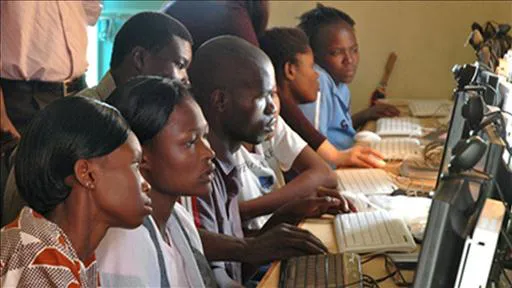
‘Microwork’ Gives Digital Jobs to World’s Poor
Leila Janah wants to eradicate poverty by offering digital work to the world’s poor. The founder of Samasource works with companies such as Google to match small digital jobs with women and youth around the world. The WSJ’s Deborah Kan interviews Ms. Janah on how she’s making a difference.
/ Fighting Poverty, and Critics By JOE NOCERA Jeffrey Sachs is trying to help villages in Africa, but is his work making a difference?
/ It’s Not Only Mothers and Children By THE EDITORIAL BOARD Anti-poverty programs unfairly shortchange childless adults.
/ Making Low Wages Livable What can be done to improve the living standards of workers at the bottom of the pay scale?
An innovative lender gives low income families without access to bank loans money to buy their own homes.
/ Washington Memo: 50 Years Later, War on Poverty Is a Mixed Bag
https://freetochoose.net/broadcasts/unlikely_heroes/index.php
To learn more about Measuring Poverty and the History of Poverty Measurement, visit: www.census.gov/how/infographics/poverty_measure-how.html and www.census.gov/how/infographics/poverty_measure-history.html.
/de soto – http://www.povertycure.org/voices/hernando-de-soto/

Three Myths on the World’s Poor
Opinion: A Black Conservative’s War on Poverty
o Twitter
o Facebook
o Email
o Comments
By CHRISTOPHER BLATTMAN
Help the poor by giving them money. They won’t waste it.
/ Poverty, Fairness and the Troublesome Business of Drawing a Line
This week’s Outlook column in The Wall Street Journal looks at a proposed revision to India’s official poverty line, the latest in a long series of attempts by expert committees to decide how to count the country’s poor. Redrawing the line is always controversial, raising an unsettling question: Is it even possible to measure poverty fairly?
————————————— – – – –
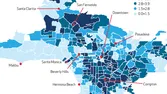
Study: Poor people with diabetes 10 times more likely to lose limb
Eryn Brown
… Interview Survey to estimate diabetes incidence for each ZIP Code … researchers identified nearly 8,000 diabetes-related amputations in 6 … amputation rate for people with diabetes in neighborhoods where more … have incomes below 200% of poverty, or $31,460 for a household …
————- – –
The Expanding World of Poverty Capitalism By THOMAS B. EDSALL Court costs, fees and fines are big business for private companies and local governments.
/ What Makes People Poor? By THOMAS B. EDSALL Before we can get serious about inequality, the left, the right and the center need to realize that they have a lot to learn from each other.
——————— – – –
/
The Way to Beat PovertyNYT Now
——————————— – – – –
————————— – – –
/ Saving in poor countries
Beyond cows
Coaxing does more to boost saving than compelling
Sep 20th 2014 | From the print edition

Close
Save this article
Click this to add articles to your Timekeeper reading list. Learn more »

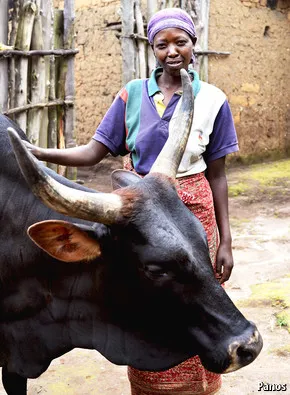 A cumbersome savings plan
ADULTS in developing countries are half as likely to have an account at a formal financial institution as those in the rich world. Only 18% of people in the Middle East and north Africa do, [ag: what about rest of world?] compared with 89% in high-income countries. Economists would like the world’s poorest to save more. That would help them to pay for big or unexpected expenses, such as school fees or medical treatment. It would also boost investment and thus accelerate economic growth.
But getting people to save is hard. One reason is the economic version of myopia: the failure to give adequate weight to future benefits over immediate pleasures. Most people are myopic, but for those in grinding poverty, the self-discipline required to save is greater [ag: a] and the consequences of failure worse.
In this section
Beyond cows
Leaving dead presidents in peace
Related topics
Malawi
Uganda
Kenya
For many, the answer is to tie up money in livestock, which can be sold if necessary, or to join a rotating savings and credit association (ROSCA), which pools members’ savings and disburses them to those in need. But these mechanisms are far from perfect. A survey in Uganda found that 99% of people using informal savings schemes had at some point lost some of their savings. Livestock get sick and die. f
Hence the growing enthusiasm for “commitment-savings accounts” (CSAs), which attempt to tie people’s hands to prevent myopic spending. Those who open an account typically cannot withdraw funds until a certain date, or until they have deposited a certain amount.
CSAs have a surprisingly big effect. In one experiment in the Philippines, those offered a CSA boosted their savings by 82% relative to a control group in just a year. In Malawi, farmers who were offered CSAs saw their savings rise prior to the planting season. That allowed them to buy 48% more fertiliser and seed than farmers who were not offered a CSA.
But there is a big problem: few people seem to want CSAs. New research in Kenya finds that only 19% of households had one, whereas 78% saved via a ROSCA. Studies in South Africa and Malawi find similarly low take-up. The stringency of many CSAs may be at fault. One account, offered by a Kenyan bank, ties up money for at least six months, with no withdrawals allowed. Under the rules of other CSAs, savers who fail to meet their targets see their balances gradually dwindle, as punitive fees kick in.
“People in poverty often need access to their cash at short notice, whether for a medical emergency or to take advantage of a business opportunity,” says Nava Ashraf of Harvard University. Recent research suggests that people prefer more forgiving CSAs. In one experiment Ugandan students were offered two types of saving account: one that could only be used to pay for education and another that was intended for the same purpose but could be put to other uses if need be. Students deposited significantly more money into the account with laxer rules. A study in Kenya found that demand for CSAs rises if the funds can be used for emergencies. Another paper, which looked at Filipino migrants, found that labelling their remittances “for education”, with no further strings, boosts them by 15%. Sending the remittances directly to the school added only a further 2%.
From the print edition: Finance and economics
inShare218 
/A Debt Collector’s Day By JAKE HALPERN Poor people, pitted against poorer people, to benefit the rich.
/ Zero to 789, in 26 Months rweLending circles are being seen as a promising tool used to help low-income Americans build credit records.
/ Heritage Foundation: America’s poor actually live pretty durn well!
Michael Hiltzik
… the flaws in this analysis, last pointed out by the Center for American Progress in 2011, is that all these appliances and devices put together don’t represent usable family resources. A family could sell its used microwave for maybe $45, for example …
/ —————————————- – – – – –

Asia Steps Up Efforts to Reach the ‘Unbanked’
Governments from China to India are experimenting with novel ways to widen access to financial services, from using mobile technology for transfers to allowing retail stores to take deposits in remote areas.
o Calls Grow for a New Microloans Model
o The Financial Inclusion Challenge | Video
———————- – – –
Edsall: How Poor Are the Poor? NYT Now
When Taxes Aren’t a Drag By LAURA TACH and KATHRYN EDIN
Low-wage workers with kids know that tax season brings a huge boost.
An Atlas of Upward Mobility Shows Paths Out of Poverty
By DAVID LEONHARDT, AMANDA COX and CLAIRE CAIN MILLER
A decades-old effort found that moving poor families to better neighborhoods did little to help them. A new look at the data suggests the opposite.
———————————————- – – – –

Food Deserts: Giving the Poor Easy Access to Healthy Food Doesn’t Mean They’ll Buy It –
Fixes: Upward Mobility for the World’s DestituteNYT Now

By TINA ROSENBERG
Lack of skills and assets traps the ultrapoor in poverty for generations. Now organizations offer them a jump-start.
———————————– – – – –
o 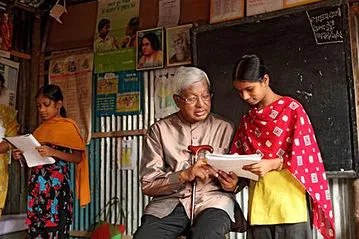
Meet the Man Who Helped Lift Millions Out of Poverty [not yunus]
What Do the Poor Need? Try Asking Them

A Houston anti-poverty program tries something radical: Ask people what they want, then give it to them.
————— – –
Why Poor Children Can’t Be Picky Eaters By CAITLIN DANIEL
The hidden cost of getting kids to try different foods.
—————————– – – – – –
o 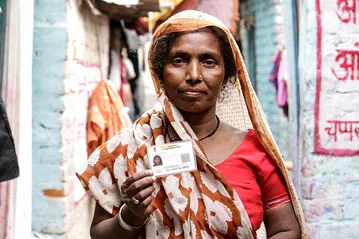
Experts Raise Concerns About India’s Direct Benefits Program
[ag: this vs the working poor]
—————————————————– – – – –
o 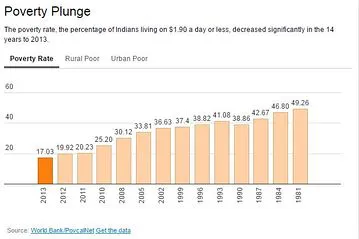
India’s Growth Is Helping Reduce the Number of Poor in South Asia, World Bank Says
Dream on – http://pbsinternational.org/programs/dream-on/ on tv. Half of miss……..is obese thus premature babies which cost us more…
Detroit has tons of abandoned bldgs. Squatters live in em. Part of downtown if reviving. Robots making caddilacs in the city [ due to unions, I say ] 2 tiered wages – new hires, hired at half [ag: due to unions]. One was a c grad with a b.a. No mention of auto fac…..in the south. Outsourcing
/ the dust bowl on pbs – 2 hrs? http://www.bing.com/videos/search?q=the+dust+bowl+pbs&qs=PF&cvid=9bf085b772c14dc388ff7d313d4c1077&pq=the+dust+bowl+pbs&ru=%2fsearch%3fq%3dthe%2bdust%2bbowl%2bpbs%26form%3dEDGTCT%26qs%3dPF%26cvid%3d9bf085b772c14dc388ff7d313d4c1077%26pq%3dthe%2bdust%2bbowl%2bpbs&view=detail&mmscn=vwrc&mid=AA85D53C06A7A1DC71CDAA85D53C06A7A1DC71CD&FORM=WRVORC but there must be a shorter one. the wpa was the most controversial. Was the biggest employer – 8 mil jobs, which kept some from starving.
Search the dust bowl. There was a resettlement agency. = homesteading in reverse.
Calif or bust. Did some walk, pulling carts?
Flic:? The plow that broke the plains. Blamed the dust bowl on tractors. Dust pnemonia. No mention of pri. Okie-ville. If you’re down, they push you down. Whose names are unknown = bk?
Cops would stop em at the border. didn’t bath much. Kids didn’t want to be around em at sch.
/ Editorial: New York’s Unequal Justice for the Poor
—————————– – – – –
/ India Considers Fighting Poverty With a Universal Basic Income
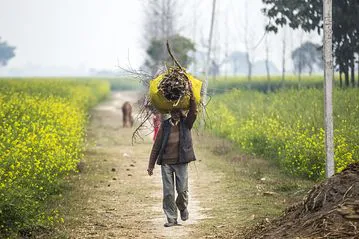
India is looking at a radical idea for reducing poverty: free money for everyone—no strings attached.
———================== = = =
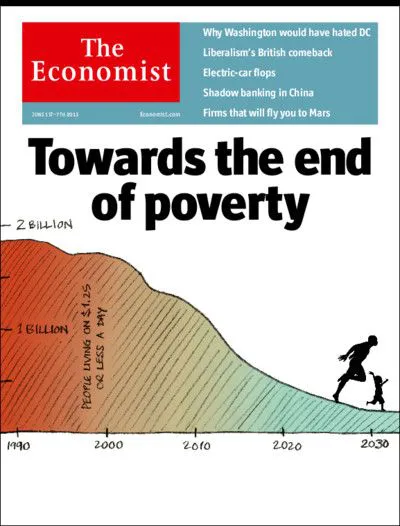
——————————————————————————— – – – –
Source: Rio’s $700 million athletes village was turned into luxury condos but is now reportedly ‘shuttered’ and 93% vacant leftover from Olympics
/ Single Mothers Are Not the Problem
By DAVID BRADY, RYAN M. FINNIGAN and SABINE HÜBGEN
Shortsighted social policies are what keep families in poverty.
/ Poor People Deserve Better Than Food in a Box By BOBBI DEMPSEY I know all about how people who use SNAP benefits are humiliated. A Trump proposal will make it worse. 2/l8
/ graphs – https://www.bing.com/images/search?q=Diseases+of+Poverty&FORM=IRIBEP
https://www.bing.com/images/search?q=street+urchins&FORM=HDRSC2
————————— – – – –
This contradicts yunus – http://www.copenhagenconsensus.com/rajasthan-priorities/poverty?mc_cid=fb812694c9&mc_eid=8ab2149344
Americans Want to Believe Jobs Solve Poverty, but They Don’t
/ https://www.bing.com/search?q=the+poor+house&FORM=HDRSC1
/start of good one in economist: probably a dup. too much trouble – https://www.economist.com/special-report/2019/09/26/the-best-way-to-eradicate-poverty-in-america-is-to-focus-on-children
/ looks very good – https://www.bing.com/search?q=leila+janah+bio&FORM=HDRSC1 she created tons of jobs in poor countries
/ / telephone wires in rio – Bing images
/ serra pelada – https://www.bing.com/search?q=serra+pelada&FORM=HDRSC1
The hell of Serra Pelada mines, 1980s – Rare Historical Photos
/better shots:
———————————————————– – –
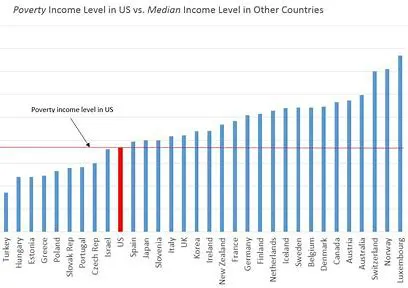
The Poor in the US Are Richer than the Middle Class in Much of Europe | Mises Wire
——————————————————- – –
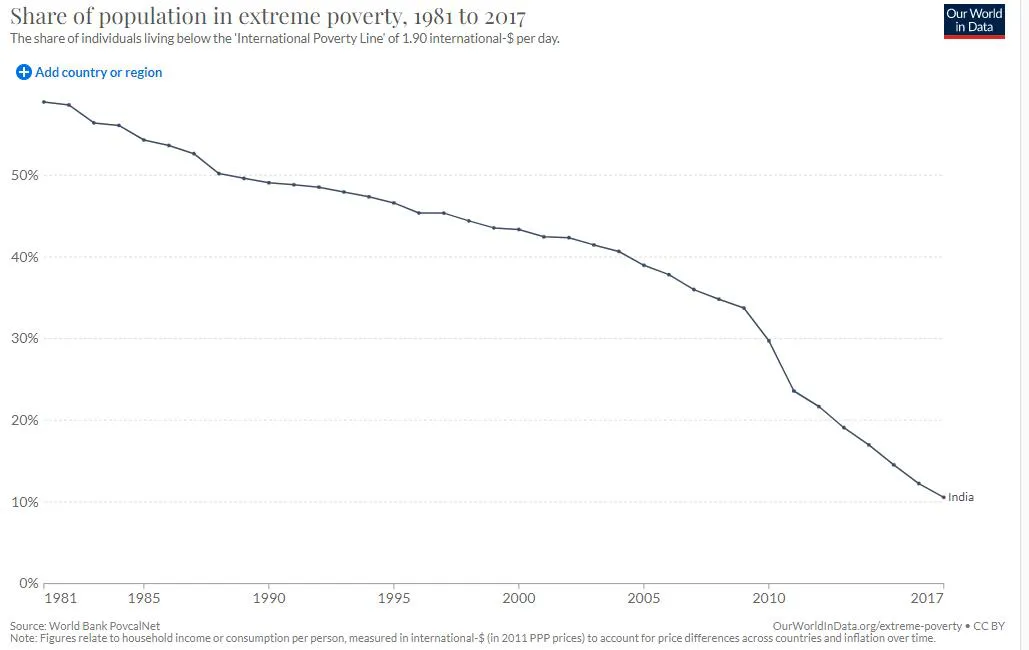
Pov5
IN AMERICA
Unmasking the Poor
By BOB HERBERT
|
|
|||||||
|
|
|||||||
|
|
|
|
|
||||
|
|
|||||||
|
|
|||||||
|
|
|
|
|
||||
|
|
|||||||


he poor are pretty well hidden from everyone except each other in the United States. You won’t find them in the same neighborhoods or the same schools as the well-to-do. They’re not on television, except for the local crime-casts. And they’ve vanished from the nation’s political discussion.
Hiding the poor has been quite a trick, because there are still millions upon millions of them out here. And despite all the rosy scenarios we’ve been fed — the end of welfare as we know it, rising tides lifting everybody’s yachts — they’re not doing very well at all.
This has been made clear in a new report from the Economic Policy Institute in Washington and in Barbara Ehrenreich’s latest book, “Nickel and Dimed.”
Ms. Ehrenreich spent the better part of two years trying to survive on jobs that paid $6 or $7 an hour. It wasn’t pretty. She worked in Florida, Maine and Minnesota in jobs that included waitress, hotel maid, cleaning woman, nursing-home aide and Wal-Mart sales clerk.
She tried valiantly. She lived in a trailer park in Key West, Fla., and stayed, briefly, in a hideous motel room in Minnesota that was “pretty much open to anyone’s view or to anything that might drift in from the highway.”
She ate cereal, chopped meat, kidney beans and noodles. And she listened to the ghastly stories that are common to poverty, like that of the roofer who lost his job because he missed too much time from work. It seems he had cut his foot and he “couldn’t afford the prescribed antibiotic.”
Ms. Ehrenreich did just about everything she could, but she was unable to make ends meet. “In Portland, Maine, I came closest to achieving a decent fit between income and expenses,” she wrote, “but only because I worked seven days a week.” And even in Portland, there was no margin for car trouble, a new pair of shoes, the loss of the few free meals she got at work, or any unexpected expense.
The only honest conclusion you can reach after reading Ms. Ehrenreich’s book is that you can’t make it in America on $6 or $7 an hour. Not if you’re only working one job. And if you have children, you can’t even come close to making it.
The biggest problem is housing. Affordable housing has gone the way of the double-feature movie and 30- cents-a-gallon gas. It is not uncommon for poor people to spend more than half their meager monthly incomes on housing.
“There are no secret economies that nourish the poor,” Ms. Ehrenreich wrote. “On the contrary there are a host of special costs. If you can’t put up the two months’ rent you need to secure an apartment, you end up paying through the nose for a room by the week. If you have only a room, with a hot plate at best, you can’t save by cooking up huge lentil stews that can be frozen for the week ahead. You eat fast food or the hot dogs and Styrofoam cups of soup that can be microwaved at a convenience store.”
These kinds of economic struggles are much more widespread than most Americans realize. And they are by no means limited to the people we tend to categorize as poor. The report by the Economic Policy Institute, released last week at a briefing attended by Ms. Ehrenreich, flies in the face of the happy talk we’ve heard for so long about how well American families are doing. Many families, according to the report, earn too little to cover “basic necessities like food, housing, health care and child care.”
The report said that over the course of a year, nearly a third of poor and working-class families with children under 12 — many with two parents and incomes above the official poverty line — faced at least one “critical hardship, such as missing meals, being evicted from their housing, having their utilities disconnected, doubling up on housing, or not having access to needed medical care.”
These struggling families are not easily stereotyped. Many are white. Many are headed by workers with a high school education or better. Many of the parents are over the age of 30.
In the absence of policy changes designed to strengthen the social safety net and significantly boost wages, they will continue to struggle, and at times suffer. Because, as Heather Boushey, the lead author of the study, commented, “Work alone doesn’t ensure a decent standard of living.” Ny times 7/3l/0l
/ Pov6
September 4, 2001
Documenting the Bowery, or at Least Its Remnants
By DOREEN CARVAJAL
|
|
|||||||
|
The New-York Historical Society An organ grinder on the Bowery in the 1930’s. |
|||||||
|
|
|||||||
|
|
|
The Lure of the Roof Is More Than Just Tar Beach (September 4, 2001) |
|
|
|||
|
Top of Form
|
|||||||
|
|
|||||||
|
|
|
|
|
|
|||
|
|
|
Find additional information by selecting from the following topics. |
|
|
|||
|
|
|
|
|
|
|||

|
|
|
|
Manhattan (New York) |
|
|
|
|
|
|
Smith, Nathan |
|
|
|
|
|
|
Motion Pictures |
|
|


Bottom of Form
Frances Roberts for The New York Times
Nathan Smith, manager of the Sunshine Hotel on the Bowery.
or a neighborhood long scorned as the capital of dissipation, the Bowery and its dwindling flophouses and $10-a-night cubicles are finally getting history’s respect and a measure of reverence for the lives of men on the margin.
Call it Bowery nostalgia. Uptown, the New- York Historical Society is glowing pink with a 1930’s neon sign at a gallery entrance that spells out “LIQUOR STORE.” It is the 197-year-old museum’s welcome of sorts for visitors to its new flophouse exhibition of haunting photographs of contemporary and ancient Bowery denizens, oral histories in raspy voices and a reconstruction of a cell-like Sunshine Hotel room furnished with television and a rose-colored bed.
Downtown, a grassroots group on a pinched Bowery budget is fashioning a mobile flophouse museum gingerly extracted in plywood pieces from the Palace Hotel. The group, Place in History, intends to transport the collapsible 4- by-6-foot museum by van and park it in lower Manhattan sometime in early October with the grandiose title of the “Bowery Hall of Fame.”
Then there’s a newly issued paperback devoted to flophouse culture, which, along with the historical society exhibition, draws some material and inspiration from a 1998 National Public Radio documentary. A feature-length historical documentary about the Bowery neighborhood is also in preparation, financed by Mixed Greens and directed by Scott Elliot. And the filmmaker Robert Sharpe is displaying photographs in a second exhibition at The Christian Herald’s Gallery, which features homeless men from the Bowery Mission posed inside ornately carved gilt frames.
The Bowery’s seamy underside has long provoked fascination — wealthy 19th-century New Yorkers were drawn to guided “slumming tours” like thirsty customers to rummy bars. And plans are under way to revive Bowery sightseeing. Why the resurgent interest in a topic museum officials call difficult history — the saga of America’s most notorious skid row?
“Because the Bowery is no more,” said Nathan Smith, a 15-year Bowery resident who answers the telephone at the flophouse he manages in a smoky voice: Sunshiiiinnne! “You’re talking to the Sunshine Hotel, which was one of 200 hotels, and now there’s only six left. The Bowery doesn’t technically exist anymore. Everybody is rebuilding.”
The fabled mile-long Bowery, which was originally an Indian trail used by Dutch settlers, borders Little Italy to the east and runs from Chatham Square north to Cooper Square. Since the late 1900’s, this was the land of barbershops and bars, tattoo shops and cheap hotels for men, politely referred to as lodging houses. Today only a few of the old-time flops survive, with optimistic names that conjure up images of balmy Florida sojourns: the Sunshine and the Palace, the Providence and the Prince.
And so it is these hotels — where a prison-size cubicle with a bed, bare lightbulb and chickenwire roof costs $10 a night — that curators, historians and artists are studying like some endangered species.
But there is nothing romantic about the contemporary portrayals of the lives of men who have lived and died in this neighborhood.
The New-York Historical Society show introduces visitors to an insular commmunity of hopelessly optimistic flophouse lodgers through photographic portraits by Harvey Wang and oral histories collected by the radio producers David Isay and Stacy Abramson.
There are also photographs by late-19th-century photographers like Jacob Riis and Richard Hoe Laurence. But the core of the exhibition comes from Mr. Wang and the radio producers who created earlier National Public Radio documentaries and a hardcover and new paperback version of “Flophouse: Life on the Bowery.”
Such introductions can be emotionally jarring, almost like being forced into an intimate conversation with a stranger at a bar. The voices blend humor and pain in stories of lost opportunities and bed bugs, lingering ambitions and ravioli feasts spooned from a can. But at the end, it is clear that many have not survived to savor even this fleeting moment of historical celebrity. A 22-minute audio tour captures the machine-gun Brooklyn cadences of Bobby Connors, a lean 30ish bridge worker, who is pictured standing on the edge of a rooftop. He describes working while drunk and losing his job after falling into a net from the Williamsburg bridge. He takes up residence in the Bowery where he unabashedly describes his assorted addictions but insists, “I’m optimistic about getting it together.”
That hope evaporates with a simple caption beside Connors’s photograph. It lists his date of death in October 1999 from a drug overdose. There are similar epitaphs for other flophouse residents like Anthony Coppola, the occupant of the Sunshine Hotel’s Room 4B, who is shown bare chested, his stomach sagging against a window. In his radio interview, he confesses to “a little bit of a weight problem.” He died in August 1999 at 425 pounds from complications of diabetes.
Tourists wandering through the gallery are confronted with a recording of jumbled men’s voices, the banter of a flophouse lobby. A coffee- stained vending machine — circa 1970 from the Prince Hotel — advertises freshly brewed java and is strategically placed near a careful reconstruction of Tony Bell’s cramped cubicle in the Sunshine Hotel.
“When people’s stories are told with respect and dignity there has to be some good that comes out of it,” said Mr. Isay, whose radio interviews in the Bowery led to the books and the society’s exhibition. “The flophouses are mom and pop businesses that represent an old New York. They are places that are filled with characters — ordinary, interesting people who found a place where they can do their thing. Certainly, every time a flophouse closes in the future I will be sad, because some bit of New York will have closed its doors.”
The historical society considered using some Bowery residents as volunteer docents, but ultimately decided to offer a panel discussion featuring the radio producers and some of the men reading their stories.
– – – –
|
Page 2 of 2) The society is also planning Bowery neighborhood tours with Big Onion Walking Tours. Museum officials say they have been surprised by the number of parents who have brought their children to the exhibition, which is on view through Nov. 4. The museum term for this type of edgy exhibition is difficult history, a category that encompasses the historical society’s earlier photographic exhibition about Southern lynchings. “We were taking a huge risk with the lynching show, and what we discovered is that people want an unmediated experience with history, warts and all,” Jan Ramirez, the museum’s director, said. “And they don’t want to be insulated by taking the bitter chapters out. God knows New York is about making it and also about failing.” ———
On the downtown side, there’s a certain element of uneasiness about the meticulous examination of the Bowery. This was, after all, a neighborhood that historically attracted uptown visitors on “slumming” tours in search of a voyeuristic peek at the underside. One of the most fabled tour operators was Chuck Connors, an impresario who during the 19th century shepherded paying visitors to the Bowery like the crown prince of Sweden and friends of the steel magnate Henry Clay Frick. Connors created a fake opium den and hired people to pose as bums and prostitutes, said Seth Kamil, the founder of Big Onion Walking tours and a doctoral candidate in history at Columbia University, who guides visitors. “It’s a surprisingly popular tour,” said Mr. Kamil, who observed, though, that some tourists “are disappointed that there aren’t people living in the street anymore.” He added, “They say, `Where are the Bowery bums?’ ” His tour stops by the site of an erstwhile bar called McGuirk’s Suicide Hall, but he doesn’t steer groups inside the flophouses “because we want to limit the voyeurism,” he said, adding, “I want to limit the idea of, `We’re coming to see how you live.’ “ Place in History, a grassroots historical organization with a $10,000 budget for a mobile museum, also said its volunteers have tried to be sensitive with its “Bowery Initiative,” even studying “the sources of the Bowery’s persistent appeal to the city’s cultural demimonde.” It took pains to pry a plywood cubicle from the Prince Hotel that was used for a storage closet rather than housing, said Rosten Woo, a volunteer. The cubicle will be painted with murals and lacquered inside with artifacts like tickets for evening stays at the Prince Hotel along with maps and redevelopment plans. Volunteer docents will be on hand for the Lower Manhattan tour. “We’re trying to infuse a sense of history into community planning discussions,” said Paul Parkhill, the co- director of Place in History, who is coordinating the initiative. “What happens when a skid row disappears? Does it create a vacuum? Where do people go? Is there a need for this?” From his front row seat as a desk clerk and manager at the Sunshine Hotel, Nathan Smith has lived through the evolution of the Bowery and watched as some flophouses like one called the White House have tried to transform themselves into youth hostels or others like the Providence have reached out to new residents, catering to immigrants with signs in English and Mandarin. With his signature voice and sardonic observations, Mr. Smith narrates the audio tour for the historical society’s photographic exhibition. He knows many of the men enshrined in it. He recently wrote about residents like Vincent Gigante, who confided how his pet birds are his life in the “dead zone” of a flophouse. “Vinny and his birds are gone,” Mr. Smith wrote. “The guy on the tape who says he doesn’t want to die in the hotel was found sitting up in bed, dead. Yeah, they’re all gone. But there are some success stories, like a former porter becoming a social worker and car owner.” In his own case, Mr. Smith is fatalistic. He moved into the Sunshine Hotel and, like many residents, didn’t expect to stay long. He has lingered 15 years. But now he’s wondering what future is left — for him and the hotel where he lives in cubicle 38A. A while back, Mr. Smith said his doctors delivered a blow. “I got lung cancer,” he said. “I’ll walk around till I’m dead. I’m not afraid of dying.” He added: “The way we’re going here I wouldn’t give the Sunshine a year. They’re up in arms because of the fact that I have lung cancer and they can’t find anybody to replace me.” <<Previous | 1 | 2 |
|||||||
|
|
Pov6
September 4, 2001
Documenting the Bowery, or at Least Its Remnants
By DOREEN CARVAJAL
or a neighborhood long scorned as the capital of dissipation, the Bowery and its dwindling flophouses and $10-a-night cubicles are finally getting history’s respect and a measure of reverence for the lives of men on the margin.
Call it Bowery nostalgia. Uptown, the New- York Historical Society is glowing pink with a 1930’s neon sign at a gallery entrance that spells out “LIQUOR STORE.” It is the 197-year-old museum’s welcome of sorts for visitors to its new flophouse exhibition of haunting photographs of contemporary and ancient Bowery denizens, oral histories in raspy voices and a reconstruction of a cell-like Sunshine Hotel room furnished with television and a rose-colored bed.
Downtown, a grassroots group on a pinched Bowery budget is fashioning a mobile flophouse museum gingerly extracted in plywood pieces from the Palace Hotel. The group, Place in History, intends to transport the collapsible 4- by-6-foot museum by van and park it in lower Manhattan sometime in early October with the grandiose title of the “Bowery Hall of Fame.”
Then there’s a newly issued paperback devoted to flophouse culture, which, along with the historical society exhibition, draws some material and inspiration from a 1998 National Public Radio documentary. A feature-length historical documentary about the Bowery neighborhood is also in preparation, financed by Mixed Greens and directed by Scott Elliot. And the filmmaker Robert Sharpe is displaying photographs in a second exhibition at The Christian Herald’s Gallery, which features homeless men from the Bowery Mission posed inside ornately carved gilt frames.
The Bowery’s seamy underside has long provoked fascination — wealthy 19th-century New Yorkers were drawn to guided “slumming tours” like thirsty customers to rummy bars. And plans are under way to revive Bowery sightseeing. Why the resurgent interest in a topic museum officials call difficult history — the saga of America’s most notorious skid row?
“Because the Bowery is no more,” said Nathan Smith, a 15-year Bowery resident who answers the telephone at the flophouse he manages in a smoky voice: Sunshiiiinnne! “You’re talking to the Sunshine Hotel, which was one of 200 hotels, and now there’s only six left. The Bowery doesn’t technically exist anymore. Everybody is rebuilding.”
The fabled mile-long Bowery, which was originally an Indian trail used by Dutch settlers, borders Little Italy to the east and runs from Chatham Square north to Cooper Square. Since the late 1900’s, this was the land of barbershops and bars, tattoo shops and cheap hotels for men, politely referred to as lodging houses. Today only a few of the old-time flops survive, with optimistic names that conjure up images of balmy Florida sojourns: the Sunshine and the Palace, the Providence and the Prince.
And so it is these hotels — where a prison-size cubicle with a bed, bare lightbulb and chickenwire roof costs $10 a night — that curators, historians and artists are studying like some endangered species.
But there is nothing romantic about the contemporary portrayals of the lives of men who have lived and died in this neighborhood.
The New-York Historical Society show introduces visitors to an insular commmunity of hopelessly optimistic flophouse lodgers through photographic portraits by Harvey Wang and oral histories collected by the radio producers David Isay and Stacy Abramson.
There are also photographs by late-19th-century photographers like Jacob Riis and Richard Hoe Laurence. But the core of the exhibition comes from Mr. Wang and the radio producers who created earlier National Public Radio documentaries and a hardcover and new paperback version of “Flophouse: Life on the Bowery.”
Such introductions can be emotionally jarring, almost like being forced into an intimate conversation with a stranger at a bar. The voices blend humor and pain in stories of lost opportunities and bed bugs, lingering ambitions and ravioli feasts spooned from a can. But at the end, it is clear that many have not survived to savor even this fleeting moment of historical celebrity. A 22-minute audio tour captures the machine-gun Brooklyn cadences of Bobby Connors, a lean 30ish bridge worker, who is pictured standing on the edge of a rooftop. He describes working while drunk and losing his job after falling into a net from the Williamsburg bridge. He takes up residence in the Bowery where he unabashedly describes his assorted addictions but insists, “I’m optimistic about getting it together.”
That hope evaporates with a simple caption beside Connors’s photograph. It lists his date of death in October 1999 from a drug overdose. There are similar epitaphs for other flophouse residents like Anthony Coppola, the occupant of the Sunshine Hotel’s Room 4B, who is shown bare chested, his stomach sagging against a window. In his radio interview, he confesses to “a little bit of a weight problem.” He died in August 1999 at 425 pounds from complications of diabetes.
Tourists wandering through the gallery are confronted with a recording of jumbled men’s voices, the banter of a flophouse lobby. A coffee- stained vending machine — circa 1970 from the Prince Hotel — advertises freshly brewed java and is strategically placed near a careful reconstruction of Tony Bell’s cramped cubicle in the Sunshine Hotel.
“When people’s stories are told with respect and dignity there has to be some good that comes out of it,” said Mr. Isay, whose radio interviews in the Bowery led to the books and the society’s exhibition. “The flophouses are mom and pop businesses that represent an old New York. They are places that are filled with characters — ordinary, interesting people who found a place where they can do their thing. Certainly, every time a flophouse closes in the future I will be sad, because some bit of New York will have closed its doors.”
The historical society considered using some Bowery residents as volunteer docents, but ultimately decided to offer a panel discussion featuring the radio producers and some of the men reading their stories.
– – – –
|
Page 2 of 2) The society is also planning Bowery neighborhood tours with Big Onion Walking Tours. Museum officials say they have been surprised by the number of parents who have brought their children to the exhibition, which is on view through Nov. 4. The museum term for this type of edgy exhibition is difficult history, a category that encompasses the historical society’s earlier photographic exhibition about Southern lynchings. “We were taking a huge risk with the lynching show, and what we discovered is that people want an unmediated experience with history, warts and all,” Jan Ramirez, the museum’s director, said. “And they don’t want to be insulated by taking the bitter chapters out. God knows New York is about making it and also about failing.” On the downtown side, there’s a certain element of uneasiness about the meticulous examination of the Bowery. This was, after all, a neighborhood that historically attracted uptown visitors on “slumming” tours in search of a voyeuristic peek at the underside. One of the most fabled tour operators was Chuck Connors, an impresario who during the 19th century shepherded paying visitors to the Bowery like the crown prince of Sweden and friends of the steel magnate Henry Clay Frick. Connors created a fake opium den and hired people to pose as bums and prostitutes, said Seth Kamil, the founder of Big Onion Walking tours and a doctoral candidate in history at Columbia University, who guides visitors. “It’s a surprisingly popular tour,” said Mr. Kamil, who observed, though, that some tourists “are disappointed that there aren’t people living in the street anymore.” He added, “They say, `Where are the Bowery bums?’ ” His tour stops by the site of an erstwhile bar called McGuirk’s Suicide Hall, but he doesn’t steer groups inside the flophouses “because we want to limit the voyeurism,” he said, adding, “I want to limit the idea of, `We’re coming to see how you live.’ “ Place in History, a grassroots historical organization with a $10,000 budget for a mobile museum, also said its volunteers have tried to be sensitive with its “Bowery Initiative,” even studying “the sources of the Bowery’s persistent appeal to the city’s cultural demimonde.” It took pains to pry a plywood cubicle from the Prince Hotel that was used for a storage closet rather than housing, said Rosten Woo, a volunteer. The cubicle will be painted with murals and lacquered inside with artifacts like tickets for evening stays at the Prince Hotel along with maps and redevelopment plans. Volunteer docents will be on hand for the Lower Manhattan tour. “We’re trying to infuse a sense of history into community planning discussions,” said Paul Parkhill, the co- director of Place in History, who is coordinating the initiative. “What happens when a skid row disappears? Does it create a vacuum? Where do people go? Is there a need for this?” From his front row seat as a desk clerk and manager at the Sunshine Hotel, Nathan Smith has lived through the evolution of the Bowery and watched as some flophouses like one called the White House have tried to transform themselves into youth hostels or others like the Providence have reached out to new residents, catering to immigrants with signs in English and Mandarin. With his signature voice and sardonic observations, Mr. Smith narrates the audio tour for the historical society’s photographic exhibition. He knows many of the men enshrined in it. He recently wrote about residents like Vincent Gigante, who confided how his pet birds are his life in the “dead zone” of a flophouse. “Vinny and his birds are gone,” Mr. Smith wrote. “The guy on the tape who says he doesn’t want to die in the hotel was found sitting up in bed, dead. Yeah, they’re all gone. But there are some success stories, like a former porter becoming a social worker and car owner.” In his own case, Mr. Smith is fatalistic. He moved into the Sunshine Hotel and, like many residents, didn’t expect to stay long. He has lingered 15 years. But now he’s wondering what future is left — for him and the hotel where he lives in cubicle 38A. A while back, Mr. Smith said his doctors delivered a blow. “I got lung cancer,” he said. “I’ll walk around till I’m dead. I’m not afraid of dying.” He added: “The way we’re going here I wouldn’t give the Sunshine a year. They’re up in arms because of the fact that I have lung cancer and they can’t find anybody to replace me.” <<Previous | 1 | 2 |
|||||||
|
Pov8 Special report: Poverty in America . but maybe not in the same order as the articls Poverty in AmericaThe best way to eradicate poverty in America is to focus on children This removes the divisive, partisan debate about culpability, says Idrees Kahloon
Print edition | Special report Sep 26th 2019 ELDERLY RESIDENTS of Inez, the tiny seat of Martin County, Kentucky, deep in the heart of Appalachia, can still vividly remember the day the president came to town. Fifty-five years ago, while stooping on a porch, Lyndon Johnson spoke at length to Tom Fletcher (pictured), a white labourer with no job, little education and eight children. “I have called for a national war on poverty,” Johnson announced immediately afterwards. “Our objective: total victory.” That declaration transformed Fletcher and Martin County into the unwitting faces of the nation’s battle, often to the chagrin of local residents who resented the frequent pilgrimages of journalists and photographers. The story never changed much: Fletcher continued to draw disability cheques for decades and never became self-sufficient before his death in 2004. His family continued to struggle with addiction and incarceration. Today Martin County remains deeply poor—30% of residents live below the official poverty line (an income of less than $25,750 a year for a family of four). [019] Infrastructure is shoddy. The roads up the stunning forested mountains that once thundered with the extraction of coal now lie quiet, cracked to the point of corrugation. Problems with pollution because of leaky pipes mean that some parts of the county are without running water for days. “Our water comes out orange, blue and with dirt chunks in it,” says BarbiAnn Maynard, a resident agitating for repairs. She and her family have not drunk the water from their taps since 2000; it is suitable only for flushing toilets. Some residents gather drinking water from local springs or collect rainwater in inflatable paddling pools. The ongoing poverty is not for lack of intervention. The federal government has spent trillions of dollars over the past 55 years. Programmes have helped many. But they also remain fixated on the problems of the past, largely the elderly and the working poor, leaving behind non-working adults and children. As a result, America does a worse job than its peers of helping the needy of today. By the official poverty measure, there were 40m poor Americans in 2017, or 12% of the population. This threshold is extremely low: for a family of four, it amounts to $17.64 per person per day. About 18.5m people have only half that amount and are mired in deep poverty. Children are the likeliest age group to experience poverty—there are nearly 13m of them today, or 17.5% of all American children. In international comparisons, that makes America a true outlier. When assessed on poverty relative to other countries (the share of families making less than 50% of the national median income after taxes and transfers), America is among the worst-performing in the OECD club of mostly rich countries (see chart). Despite its higher level of income, that is not because it starts with a very large share of poor people before supports kick in—it is just that the safety net does not do as much work as elsewhere. On this relative-poverty scale, more than a fifth of American children remain poor after government benefits, compared with 3.6% of Finnish children.
Child poverty often leads to adult poverty and all of its problems: psychological distress, exposure to crime and lost productivity. The National Academies of Sciences, Engineering and Medicine, in a new 600-page study on the subject, estimate that child poverty costs America between $800bn and $1.1trn annually because of lost earnings and greater chances of criminality and poor health. How can one of the richest countries in the world have so many poor people, and what can be done about it? This special report will aim to answer these questions. It will show how poverty is shifting geographically from cities to suburbs and examine the continuing influence of race. It will consider philanthropy and private enterprise. And it will conclude by arguing that heftier anti-poverty spending on children is the best way to make a difference. For those who disparage the trillions of dollars spent on safety-net programmes as a well-intentioned but quixotic endeavour, the case of Martin County would seem a clear cautionary tale. “We waged a war on poverty, and poverty won,” Ronald Reagan lamented while president. That fatalism remains alive and well in American politics—from both the right, which often sees poverty as an inescapable problem of character and choice that is impervious to government intervention, and much of the left, which increasingly sees it as an inescapable consequence of predatory capitalism. 000 Both strains of pessimism are simplistic and incorrect. Now, as then, solutions do not adhere neatly to liberal or conservative agendas. The left has, in the past, overemphasised the ability of the government to achieve change. The right, mistrustful of state intervention and too convinced that a free market will automatically bring universal well-being, has done little creative thinking. 000 Because of this, the politics of poverty have become stuck. America is bogged down in the interminable exercise of separating the deserving poor from the undeserving. Treating the poor as responsible for their predicament is callous; treating them as victims of social structures and bad circumstances robs them of agency and dignity. Fair-minded people can find themselves anywhere in between. Moreover, settling the debate over personal responsibility is also impossible, 000 at least to the satisfaction of the most committed ideologues. A person who is convicted of a violent felony—a blameworthy choice—could face years of penury, but their childhood in a poor, segregated neighbourhood with little support from school or family—unlucky circumstances—are likely to have contributed to that action. 000
The partisan debate is focused on whether able-bodied, working-age adults should receive cash handouts. Yet such adults are a minority of the poor population today. Only a small number of them report unemployment or voluntary non-participation in the labour force. Straightforward cash welfare for non-working mothers—the battleground of the Clinton-era debate—is now only a small part of the safety net compared with in-kind programmes (like food stamps or Medicaid, the government health-insurance programme for the poor) and tax credits that boost the wages of the working poor. The main conduits of direct cash are disability payments and Social Security for the elderly which, by definition, do not go to able-bodied adults. 000 Some see the continued existence of deprivation in America as a reason to shrink the safety net, believing it to have been ineffective. Yet poverty persists today not because of the failure of the net, but in spite of its widespread impact. The correct way to evaluate the success of anti-poverty programmes is counterfactually. The question is not whether poverty still exists, but how much worse it would be without government action. Aaa Answering that is made harder by the arcane way in which America measures poverty. The official level relies on pre-tax income, disregarding aid from safety-net programmes and differences in living expenses, making improvements difficult to register. When a better tool is used—the supplemental poverty measurement (SPM), which takes these deficiencies into account—the effect of the expanded safety net becomes clear (see article). In 1967 safety-net taxes and transfers barely dented poverty: 26.4% of Americans were poor before, and 25% remained poor after. Without a safety net, nearly the same proportion of Americans, 24.6%, would be poor today as were 50 years ago. Yet because of greatly expanded anti-poverty programmes, such as food stamps and the earned-income tax credit, which tops up the wages of low-paid Americans, only 13.9% are poor after taxes and transfers. The elderly were once among the poorest groups—and still would be were it not for the old-age cash and health benefits provided by Social Security and the Medicare programme. Now, they do about as well as working-age adults. Eastern Kentucky exemplifies the evolving nature of poverty in America since Johnson declared his war. Compared with the rest of the country, poverty there remains high. But in absolute terms, the share of poor residents has dropped by nearly half since 1960. When John F. Kennedy campaigned for the presidency in West Virginia, he was horrified not by the state of the roads but by the emaciated people. Out-and-out hunger is much rarer today. However, new social pathologies have sprung up: obesity, joblessness, disability and addiction. 000 wow Each new social problem compounds the others. Individual choice and social structure co-mingle, yielding a Gordian knot of pathology difficult for policymakers to cut. The national economy has evolved to one that prizes education, leaving low-skilled workers behind. Deindustrialisation and incarceration have particularly decimated the prospects for black men. 000 Poor families of all races have become increasingly unstable as a result. Rates of non-marriage and births out of wedlock have risen among this population, leading to many more single-mother families—41% of children in such households live below the poverty line. Drug use, particularly of opioids, has grown exponentially, fracturing families even more. “I became a mother at 72 again,” says Debbie Crum, who has lived nearly all her life in Martin County. “My great-nephew and his girlfriend had the baby. But they were hooked on drugs. The family had to go all the way back to me before they could find someone who could take care of the baby, who could pass the background check and drug test.” Ms Crum is a loving carer, but not all children are so lucky. The Bureau of Economic Analysis publishes detailed data on sources of income, public and private. In some counties of Kentucky, federal transfers—through food stamps and disability and old-age benefits—account for 36% of all income. Without them, crises like joblessness and drug addiction would be far worse. Hospitals, schools and local government are often the largest providers of stable jobs. Medicaid, which was expanded in Kentucky through Obamacare, pays for substance-abuse treatment in parts of America hit hardest by the opioid epidemic. The existence of poverty does not undermine the American dream, but the persistence of it does. The safety net looks stuck in time, even though the problem of poverty has evolved. And now there is a new danger. Because of rising income inequality and housing costs, poverty is moving out of cities and into suburbs, where it is less visible. Poor white and Hispanic Americans are much more likely to live in such places. Combating this looming problem is not at the heart of any political agenda. That is unfortunate and self-defeating. A wealth of economic and sociological studies show that poor children who grow up in districts of concentrated poverty have profoundly worse life outcomes—their incomes sag, their health deteriorates and their family lives turn dysfunctional. Aaa The job of the safety net is to arrest this cycle. If this generation of poor children is to do better than the one before, the net will need to become stronger still.■
Out of order?: The official way America calculates poverty is deeply flawed ep 26th 2019 FOR LYNDON JOHNSON to wage a successful war on poverty, he first needed to define it. The brainy work was done by Mollie Orshansky, a statistician for the Social Security Administration, who developed the first federal poverty line in 1963. Ms Orshansky’s method was plausible enough for the times. From a survey conducted in 1955, she calculated that families would typically spend a third of their household budgets on food. So she computed the cost of bare-essentials food plans for families of varying sizes and multiplied these thresholds by a factor of three. These numbers, after simple annual adjustments for inflation, are the modern poverty lines used by federal government. Times have changed. Globalisation and advances in agriculture mean that modern households now spend only one-eighth of their incomes on food. Better data are available. They show that housing and child care—not food—are the biggest constraints on the household budgets of poor people. The majority of American renters who make less than $30,000 now spend more than half of their income on housing. Among poor families with children, those with such severe rent burdens tend to reduce the amounts spent on other necessities like food, transport and health care. And deciding who counts as poor is not merely a matter of statistical arcana. Eligibility for safety-net programmes, which disburse trillions of dollars, is determined by the federal poverty level. Its deficiencies also fuel the perception that safety-net programmes have had no positive effect. America’s antiquated poverty line presents several problems. The most significant is 1 that income is calculated before taxes and transfers, meaning that the poverty-reducing effects of the earned-income tax credit ($63bn annually) or food stamps ($68bn) is ignored. Progress against poverty goes undercounted as a result. There are two commonly cited measures of American poverty more sophisticated than the official one—the supplemental poverty measure (SPM), which takes benefits and cost of living into account, and the consumption poverty measure, based on expenditure instead of income, developed by two economists, Bruce Meyer and James Sullivan. Both of them show sharp and sustained declines over the past half-century upon accounting for safety-net programmes (see chart).
Chart above is unclear
2 Another problem is that the poverty line is set far too low. Most developed countries do not use only measures of absolute poverty, as America does. They also employ relative poverty measures. In Britain, for instance, families with incomes below 60% of median income are classified as poor. In America the median income for a family of four in 2017 was $94,876—yet the poverty threshold was just $24,600, or 26% of median income. Because income growth has outstripped inflation, the divergence has increased over time. In 1975, for example, the poverty level was as much as 40% of the median income for a family of four. Government programmes try to take this inadequacy into account, albeit inconsistently. 3 A third issue is that there is no accounting for variation in the cost of living—the poverty line in San Francisco is the same as in rural Louisiana. That scrambles the perception of rich states and poor states. A favourite saying in poor states like Kentucky or Alabama is “Thank God for Mississippi”—the state that finishes last on poverty indices. Yet when measures that take the cost of living into account are used, like the SPM, it turns out that California is at the bottom of the rankings. Despite the progressive state’s more generous safety net, the out-of-control housing costs push more people into destitution than anywhere else. This deficiency in the official poverty statistics is exploited by some right-wing politicians. Paul Ryan, a Republican former Speaker of the House, justified his proposal in 2016 for modifying safety-net programmes—largely by adding work requirements—by noting that “Americans are no better off today than they were before the war on poverty began in 1964.” That might be right by the official statistics but, when poverty is properly measured, it is plain wrong.
The best way to eradicate poverty in America is to focus on children this the lst one way? above American poverty is moving from the cities to the suburbs FOR MANY, the stereotypical image of American poverty still resembles the infamous Cabrini-Green Homes, a housing estate completed in 1962 near the heart of Chicago. It became overrun by gangs, drugs and violence. City police, in effect, ceded control. This popular conception of poverty remains largely urban, black and ghettoised. But the stereotype is outdated. The Cabrini-Green estate, which once housed 15,000 people, is no more. The city finished demolishing it in 2011. The new neighbourhood is peaceful, with low-slung apartments, a new school, playgrounds and green space aplenty, alongside wine shops and cross-fit gymnasiums for the millennial crowd. In 1981 Jane Byrne, then the city’s mayor, moved into a Cabrini-Green building on 1160 North Sedgwick Street to draw attention to high crime rates—only to turn tail and flee a mere three weeks later. Today that address is an attractive brick building overlooking an upmarket bakery and a Starbucks coffee shop. To see the changing geography of American poverty, go instead to Harvey, a small suburban town of 26,000 just 20 miles (32 km) south of Chicago. Despite its proximity to a large city, median household income is an abysmal $24,343. After mismanagement and missed bond payments, the city’s finances are in freefall. One in four flats now sits vacant. Nearly 36% of its residents are classified as poor, higher than in many of the poorest counties in eastern Kentucky and the rest of Appalachia. Though Harvey was never rich, that is a drastic increase from the 22% poverty rate in 2000. And as politicians, journalists and sociologists continue to focus attention on the well-known urban ghettos on the city’s south and west sides, few are taking note of the worsening plight of places like Harvey or nearby Dolton, where concentrated poverty is now just as bad. Top of Form
Bottom of Form After the demographic changes over the past decade, there are now more poor people in Chicago’s southern suburbs than in the city itself. The same is true for the rest of America: a poor person is now much likelier to be found in the suburbs than in the big cities. According to the census taken in 2000, 10.5m, or 31%, of all poor people lived in the suburbs of America’s largest cities. The most recent estimates from the Census Bureau show that the number of poor people living in those suburbs has exploded to 16.3m, an increase of 56%. Unlike urban poverty, which has long been associated with destitute blacks, suburban poverty is more pronounced among poor whites and Hispanics.
The dire fortunes of Harvey illustrate the urgent problem of modern poverty in America. It is not growing nationwide, but it is evolving into something more virulent. The poor are increasingly clustered together outside newly thriving central cities, and thus out of sight. Being poor is difficult enough, but opportunities dwindle if you live in a district of concentrated poverty (where 20% of neighbours live below the poverty line) or of extreme poverty (where 40% fall below the threshold). Where you grow up affects the trajectory of your life. Rising housing costs and income inequality have made the problem worse. The number of Americans living in concentrated poverty has increased by 57% since 2000, according to Elizabeth Kneebone of the University of California, Berkeley. Because of the growth of concentrated poverty in suburbs and small cities, a majority of poor Americans now live in these distressed neighbourhoods. Plot the rate of almost any social dysfunction—addiction, crime, infant mortality, joblessness or mental illness aaa —and you invariably reproduce the same map. The cumulative effect of these overlapping disadvantages is worse than any individual one; concentrated poverty is more damaging than mere poverty. The clearest evidence comes from three economists—Raj Chetty, Nathaniel Hendren and Lawrence Katz of Harvard University—who analysed a randomised experiment in which some poor families were given housing vouchers to move out of impoverished districts ??? into lower-poverty ones. ??? For children who moved to better neighbourhoods while young, the researchers found massive effects on an array of long-term life outcomes. College attendance rates increased by 16.5%; annual incomes as adults were 31% larger; women were 26% less likely to become single mothers. ??? Often, the effect crops up in unexpected ways. A study of black children in Chicago by Rob Sampson, Patrick Sharkey and Stephen Raudenbush, three sociologists, estimated the negative effect on vocabulary and verbal ability from growing up in the city’s most troubled areas as equivalent to missing a year of school. Mr Sharkey has found that the harms accumulate. Two consecutive generations in poor neighbourhoods cause the measured intelligence of children to drop by eight or nine IQ points. For a child of average intelligence, the drop is equivalent to moving from the 50th percentile to the 28th. ??? [what about 3rd world?] A more corrosive consequence of concentrated poverty, though harder to measure, is on feelings of hopelessness and despondency. [Vs ims] Poverty is more than just physical deprivation. It is also psychologically debilitating—breeding constant anxiety about the near future, and inuring people to daily traumas, of hunger or violence or addiction. The temporary cognitive load for adults is daunting: scientists have measured it as equivalent to shaving off 13 IQ points. Half the children in Cleveland live in poverty Outside cities, poverty is more difficult to deal with because social services are harder to provide. Big cities—even quite poor ones such as Baltimore and Detroit—are still able to operate the large bureaucracies needed to help the poor. As a result, urban counties spend ten times as much per person on support for poor residents as suburban ones, according to Scott Allard of the University of Washington. The small towns that struggle are less able to help their residents. Their finances are in bad shape. They have barely enough money to cover essential services like policing and street-sweeping, let alone operate job-training programmes or compete for complicated federal grants. Public transport is rare outside big cities, and the costs of maintaining a car are too high for many. Take Cleveland, Ohio, one of America’s poorest cities. Though nearby Detroit is often thought of as even poorer, half the children in Cleveland live in poverty, the highest rate of any large city in the country. In the city’s central district, where public housing for poor, black residents is still concentrated, the child-poverty rates are estimated at 80%. “It’s the same recurring story,” says Shanda Davis, a pastor and local activist in Cleveland’s Tremont neighbourhood. “We have children who are displaced ???, mothers who aren’t making enough, fathers who are walking away from their own home life.” Ms Davis, a kindly, soft-spoken woman, endured many of the horrors of a poor and unstable upbringing: an alcoholic mother, molestation while still a girl, dropping out of high school, getting pregnant while young and domestic violence afterwards. Somehow she pulled through. Her humble operation now dispenses food, clothes and love to locals. “We pull out of our cabinets whatever we have. The scripture says to give what you have, and it becomes more than enough,” she says. Despite her efforts, the troubles remain. Drug-dealing is common in the neighbourhood. At least there are still some institutions that can help. The Sisters of Charity Health System, which runs a nearby hospital, has also set up a foundation hoping to break the cycle of intergenerational poverty in the neighbourhood. Like Pittsburgh, the city of Cleveland has the cultural and financial assets to get itself out of a rut; it has a world-class hospital, a major research university, an international airport and a few corporate headquarters. Things are worse in small cities nearby. Youngstown, once a booming centre of steel production with a peak population of 170,000, is now a hollowed-out town of 65,000. Bruce Springsteen wrote a song about its decline. The poverty rate is 37%, higher than in Cleveland. Reviving it will be hard. “Unlike Cleveland, Youngstown has no assets. It’s experienced extreme depopulation. There weren’t any elite institutions there,” says Aaron Renn of the Manhattan Institute, a think-tank. As in most distressed places in America, some residents still work to turn things around. Ian Beniston runs the Youngstown Neighbourhood Development Corporation with a small staff and volunteers. They clear rubbish from lawns, rehabilitate abandoned properties and pester slumlords. “It’s basic stuff,” he admits. “But the most radical thing we can do as young people is stay in cities like this.” 000 For Democrats and Republicans alike, priorities have shifted away from saving persistently poor places in favour of more middle-class concerns like income inequality and lack of social mobility. President Donald Trump invokes the poverty in Baltimore only as a cudgel against his political opponents. This makes little sense, however, since ignoring the compounded disadvantages of poverty condemns today’s poor children to becoming poor adults. And it is all made more difficult by the problems of race. ■
Poverty in America continues to affect people of colour most THE RAW sewage from Pamela Rush’s toilet travels through a straight plastic pipe directly into the backyard of her dilapidated mobile home. It smells badly in hot weather. Mosquitoes swarm and the children are forbidden from playing there. But when it rains, the stuff pools and it is unavoidable. Because the soil in Lowndes County, Alabama, where Ms Rush lives, sits atop a relatively impermeable base of limestone, a proper public sanitation system for the sparsely populated place would be expensive. Sanitation is left to private systems, which poor residents like Ms Rush cannot afford. Foul-smelling flooded lawns are a common sight. They are also the reason that hookworm—a parasitic disease transmitted largely by walking barefoot on open sewage—has been detected among the residents there. It is a disease most often encountered in developing countries. Yet decades after it was thought to be eradicated, it can be found in America, again. Lowndes County is part of the Black Belt—the swathe of land named for its fertile topsoil which produced vast amounts of cotton on the back of slave labour and, later, sharecropping, and where emancipated black workers farmed rented land. Despite all the wealth that was extracted from the fields, those who remain there today have little; the median household income is a mere $29,785 and the official poverty rate is 30%. Three-quarters of residents are black, and they are nearly eight times as likely to be poor as whites in the county. Across America, black people remain disproportionately poor. More than 20% live in poverty, twice the rate of whites. After a moderate amount of progress was erased by the Great Recession, median black household wealth nationwide is one-tenth that of white households, just as it was 50 years ago. [left out latinos]
Top of Form Bottom of Form The mobile house in which Ms Rush lives today has mouldy cupboards, an unusable bathtub and holes plugged with many ingenious patches. Her income is meagre—$770 a month in disability benefit, $129 for each of her two children in child support. Her ten-year-old daughter has health problems that require a visit to a specialist in Birmingham 100 miles away every three months—a difficult journey without a car. In one county in South Dakota, life expectancy is lower than in Sudan While on a tour of the region, Philip Alston, the UN special rapporteur on extreme poverty and human rights, remarked that he had never seen such conditions in the rich world. But it is seldom a concern of candidates for political office. Since the days of Lyndon Johnson and Robert Kennedy, poverty alleviation has hardly been at the centre of either party’s political campaigns. Part of that is because of the brutal maths of vote-getting. As income declines, so does the propensity to turn out at the ballot box. The problem is more than black and white, however. About 22% of Hispanics live in poverty. Yet, though many of them are poor when they immigrate to America, successive generations are likely to be less so. A study of tax-returns data showed that poor Hispanics, especially men, have much higher mobility than poor blacks. Asians, too, have a better record of moving up. Though pockets of poverty remain—among those born in Bangladesh and Cambodia, for example—rates are the lowest of any race, at 11.9%. Native Americans fare the worst. On some reservations, the estimated poverty rate is 52%, and 60% among children. In one county in South Dakota, life expectancy is lower than in Sudan. Working out what issues are caused by history and what are a result of current policies also contributes to the analytical paralysis of policymakers. The yawning gap in poverty levels of blacks and whites partly results from the centuries of discrimination faced by black Americans before the civil-rights era. Macroeconomic shifts unrelated to race, like deindustrialisation, have also damaged black families and livelihoods. Different prisms Some modern conservatives are putting forward solutions to poverty that go beyond public-funding cuts and private charity. These still tend to be studiously race-neutral. Oren Cass of the Manhattan Institute has pitched more substantial wage subsidies as the heart of a new conservative anti-poverty agenda. After reforms in 1996 ???, the safety net has already become more centred on “workfare” (such as the earned-income tax credit) than welfare. But many Republicans continue to see welfare as a poverty trap wrought from overreliance on the safety net, however patchy. Looking at the same issues, progressives within the Democratic Party arrive at a very different set of answers. The failure is not personal, but of public policy, because of slavery, mass incarceration or redlining that denied mortgages to residents of minority neighbourhoods. This has led to the more left-wing members of the party to call for reparations to black people. Yet reparations are also a political third rail. Even today’s crop of Democratic presidential candidates, who have been drifting left in almost every other respect, have shied away from endorsing the idea, though some have pledged to appoint a committee to study the issue. The clearest explanation for this comes from Martin Gilens of Princeton University, author of “Why Americans Hate Welfare”. It found that overly racialised attitudes—the idea that white money was going to non-white people—prevented widespread support of means-tested programmes. “In large measure, Americans hate welfare because they view it as a programme that rewards the undeserving poor,” Mr Gilens writes. Implicit benefits for minorities are difficult enough to create and maintain. An explicitly race-based programme such as reparations would attract even more condemnation—and one sure to fail without a Democratic president and supermajorities in Congress. In all likelihood, the reduction of racial disparities in poverty will have to be done through race-neutral means. As policymakers grapple with how to do that, enterprise and philanthropy are trying to fill the gap. ■
How much can enterprise and philanthropy help alleviate American poverty? /HARLEM IS A neighbourhood in upper Manhattan that was once a byword for poverty, crime and urban failure. It was a place where, as recently as 1980, black men had a lower life expectancy than in Bangladesh. Large parts of it look different today. Life expectancy has soared, and the neighbourhood has improved dramatically. Although a considerable share of children there—35%—remain poor, their life chances still look much better than a generation earlier. That is in no small part because of the efforts of the Harlem Children’s Zone (HCZ), a non-profit group which has “adopted 100 blocks” and set itself the goal of breaking the intergenerational chain of poverty by providing good parenting advice, healthy food and education. New parents who attend the zone’s Baby College learn about proper nutrition and reading habits for their infants. Older children can attend free, full-day pre-kindergarten and some go on to attend the HCZ network of charter schools. Their impressive initial results are seen as a national model. . Top of Form Bottom of Form The zone serves 14,000 children and 14,000 adults at a cost of just $4,600 per person per year (raised from a mix of public and private sources). That is not a large sum of money, points out Anne Williams-Isom, the zone’s boss. “We spend $167,000 on an inmate in Rikers [jail]. We find the money to scale that and we find the money to replicate all of that,” she adds. “I’m telling you if you gave me half of that for a third-grader, I could do what I needed to do to give them and their family what they needed.” Every little helps Philanthropy such as this helpfully complements public efforts, filling holes in the American safety net. Two major anti-poverty programmes for new mothers—the Supplemental Nutrition Assistance Programme (SNAP), better known as food stamps, and Women, Infants and Children (WIC)—are in-kind services that do not cover the cost of nappies [diapers], for example. Many nurseries will not accept care of young children unless parents provide them, says Ann Marie Mathis, who runs a charity called Twice as Nice Mother & Child that distributes nappies in Illinois. This gap is plugged by charities like hers, which distributes 350,000 nappies a year. Food banks, ranging from factory-style operations to small outfits run out of a church cupboard, remain in high demand as a supplement to food-stamps benefits, which average $1.40 per meal. In 2017, data from the Census Bureau’s annual survey on food security showed that at least 15.9m Americans reported using food banks that year—an increase of 65% since 2002. Because only people with low incomes are asked, actual use may be higher. The largest food-bank network in the country, Feeding America, estimates that it helps 46m people at least once a year. Philanthropic efforts also tap into the quintessentially American tendency, noted 200 years ago by Alexis de Tocqueville, a French writer, of people to provide for their neighbours through private associations and charity. However, charity alone cannot substitute for a public safety net. In 2018, all of American charitable giving—not just to anti-poverty organisations—amounted to $428bn. This is no small amount, but adds up to just two-thirds of the current cost of Medicaid, the health-insurance programme for the poor. Add in other large programmes—Medicare, Social Security, the earned-income tax credit, food stamps and housing assistance—and the sum looks small. It could be argued that public profligacy has crowded out private philanthropy. But, at around 2.1% of GDP, charitable giving has stayed roughly the same for 40 years. Though the problem of poverty in America provokes deep disagreement, nearly every thinker on the subject agrees that the ideal exit is stable, well-paid employment and not permanent dependence on public support. Working-age adults are a bare majority of the poor population because of the over-representation of children. Of those, about one-fifth are disabled. Among the able-bodied, a majority already work or attend school full time—the problem is that they work too few hours or their wages are too low. For this group, the next step is not securing a job, but a better one. For low-skilled workers with few educational qualifications, even in current tight labour-market conditions, chances for advancement are limited. Another problem is that persistently poor places also have weak private sectors [out of fear?] that lack such jobs. @@@ In the main town of Pine Ridge, a Native American reservation in South Dakota—by some measures, the poorest place in the country—the private sector hardly extends beyond a few, cash-only petrol stations. The few good jobs that do exist are often publicly funded—in local government offices, schoolhouses, hospitals or prisons. Policymakers have long wanted to use public dollars to jump-start private investment in poor areas, but the results of such programmes have consistently disappointed. Most follow-up assessments for “enterprise zones”, created in the 1980s to provide tax credits for businesses in high-poverty areas, have found no employment growth or poverty reduction, yet higher house prices. “Opportunity zones”, the latest iteration of a place-based policy signed into law by the Trump administration, seem destined for a similar fate. There is little oversight over which zones qualify for tax credits, and no plan to track results systematically. Planned projects include a gastro-tourist spot in Portland, Maine, and the construction of a glassy new office building in Miami. The anti-poverty results of such investments may be minimal. Federally funded retraining programmes for displaced workers also seem to have achieved little, though some economists argue that is because they have not been properly financed. Federal programmes paid for by the Workforce Investment Act, in place from 1998 to 2014, seemed actually to reduce the earnings of displaced adult workers. Its predecessor, the Job Training Partnership Act, had similarly weak returns. The current version, the Workforce Innovation and Opportunity Act, has even less funding and is the same basic model. The mixed results reflect a general trend in poverty research: as people get older, it becomes harder to discern which policies are best. It also becomes more expensive to fix. Private efforts—whether philanthropy or more effective retraining—are most helpful when they show innovative approaches to poverty reduction that can then be scaled up with public dollars. This can help sidestep one problem of relying on charity alone: well-endowed foundations focusing on the plight of cities, not small towns. While Barack Obama was president, the Department of Education began a “Promise Neighbourhood” programme that sought to replicate HCZ-style zones in places like eastern Kentucky. But measuring the ultimate success of these initiatives requires decades of tracking. In the meantime, poverty prevention among children is almost certainly cheaper than rehabilitation. ■ ???
Poverty in America has long-lasting, destructive consequences on children EVEN CRITICS who think that poverty results from a defective character concede that poor children, all 13m of them in America today, are not to blame for their plight. But as soon as they reach the age of 18, many of those children will become poor adults who will then be unceremoniously deemed culpable for their predicament. By the official statistics, nearly one in six American children is poor. By the SPM, which takes benefits and cost of living into account, things look only a bit better: just over one in six is poor. They are concentrated in clusters across every state in America. They are found in depressed areas like Cleveland, where half of children live below the federal poverty line, rural South Dakota and central Appalachia. They are also found among immense prosperity—the children living in the Bronx or of the service workers who drive three hours each way to do menial jobs in San Francisco. This American tragedy is an ignored one. Poor children neither vote nor hire lobbyists. It is also morally senseless, punishing children for the sins or misfortunes of their parents. It is economically pointless, too. Poor children who grow up to be poor adults have not just reduced incomes, but shorter lives and a higher risk of criminality. 000 The safety net, although important, does less to blunt poverty in children than in adults. Bottom of Form It was not always this way. When Michael Harrington wrote “The Other America” in 1962—a seminal study which helped spark Lyndon Johnson’s war on poverty—the elderly, hobbled by medical and housing costs, were the poorest age group in the country. “Fifty per cent of the elderly exist below minimum standards of decency,” he wrote. Today, the problem has been inverted. With the advent of universal programmes like Medicare, the health-insurance scheme for the elderly, and Social Security, the public-pension programme, there is no age group better served. According to the SPM, 48% of elderly Americans would have been poor without the safety net. After taxes and transfers, that figure is down to 14%. What America has done for its elderly, it can also do for its children, with less complication and cost. The primary lever is reorienting public safety-net spending around poor children. It is important to spend so that poor adults do not go hungry, homeless or untreated for illness. But while it is hard for a person reliant on food stamps at the age of 40 to achieve self-sufficiency aaa, opportunities still abound for the poor child receiving free lunches at school. Everyone learns together The second imperative is for integration. Increasingly, poor children are segregated, living and attending school with others like them. A bifurcated society is more than just damaging democratically. Living in concentrated poverty worsens outcomes in future health, criminality, employment and happiness. Severely reducing or eliminating child poverty through the simplest means imaginable—unrestricted cash transfers—can seem starry-eyed until one studies the details. David Grusky of Stanford University says that the state of California, which has the highest share of poor people after accounting for taxes, transfers and cost of living, could end deep child poverty with targeted cash transfers that amount to a mere $2.8bn per year. This is “insane”, he adds. It is a quarter of the sum the state spends on prisons. Targeted anti-poverty programmes in America usually attract a backlash from voters who think the money goes to other people’s children. But even a universal child credit—a small amount of cash given for each child each month—“probably comes close to cutting child poverty in half just on its own,” says Jane Waldfogel, a professor of social work at Columbia University. Most of America’s peer countries already have a universal benefit scheme. After Canada fully implemented its programme, which offers higher benefits to poorer families, the number of children living in poverty fell by a third in just two years. If a similar programme—giving $400 per month for all young children and $340 for older ones—were implemented in America, it would indeed reduce child poverty by more than half. It would cost around $300bn a year, less than the grandiose proposals pitched in the Democratic presidential primary, such as a universal basic income and free college. 000
A slightly less generous proposal along these lines has already been made by Michael Bennet and Sherrod Brown, two Democratic senators, though public enthusiasm for it has been muted. The likely benefits are not mere conjecture. When economists examine the long-term outcomes for children who received more generous benefits, whether in food assistance, tax credits or access to health insurance, they find big long-term improvements in health, as well as higher university attendance and higher incomes. But it is not enough to deal with poverty atomistically—to reduce individual suffering through a more robust safety net. It must also be dealt with spatially and collectively, meaning that it must be deconcentrated. Although housing benefits are allocated sporadically in America (only a quarter of those who qualify actually receive them because the benefit is not an entitlement, and funds are limited), there is little encouragement for families to move towards good neighbourhoods. ??? Moving everyone to opportunity is not a scalable solution, but could happen more often. The same applies to schools. Rucker Johnson of the University of California, Berkeley, has produced compelling research showing clear benefits for black children who attended integrated schools, not segregated ones. Five years in desegregated schools boosted incomes by 30% later on in life; exposure to integrated elementary schools reduces the chance of incarceration by 22 percentage points. [what are points?] Unfortunately, the national trends in income segregation between the rich and the poor are heading in the opposite direction—increasing 15% from 1990 to 2010, and 40% within large school districts. The same is true of where American families live. The idea that safety-net programmes function as a poverty trap—or, in the words of Paul Ryan, a former House Speaker, as “a hammock that lulls able-bodied people to lives of dependency and complacency”—remains. Additional income will incentivise people to work less. But it is hard to imagine rational people giving up work for the meagre sums offered for disability ($1,234 per month on average), food stamps ($126 per month) and Medicaid (which cannot be cashed out). hard There are important ways in which liberals, particularly vocal white urban ones, also misunderstand the path to alleviating poverty. One cause of school segregation within American metropolitan areas is the intentional gerrymandering caused by school-district lines. This elicits only muted fury from the people who often preach the virtues of diversity in other arenas. “Neighbourhood schools” drive neighbourhood effects—both the beneficial ones of posh parts and the harmful ones experienced in America’s growing ghettos and barrios. The same people are strong critics of charter schools, which are publicly funded but privately run, for allegedly destabilising traditional state schools (and their associated teachers’ unions). For generations, poor, minority children have received inadequate education from their segregated traditional school districts. Although charter schools have similar results when evaluated nationally, they perform much better in the kind of struggling urban districts—such as New Orleans, Newark and Boston—where there are more poor children who need help. Among dedicated Democratic voters, 58% of blacks and 52% of Hispanics—the groups who benefit most from them—support charters, against just 26% of whites. There is also a longstanding reluctance among liberals to discuss the impact of family structure on child poverty. Much of this stems from the explosive reception to the Moynihan report—a study published in 1965 that sought to explain the roots of black poverty by analysing out-of-wedlock births—and the stigmatising argument that it seemed to imply. When Daniel Patrick Moynihan wrote his report, around a quarter of black children were born out of wedlock. [why?] Today that share is 70% for black children, more than 50% of Hispanic children and almost 30% for whites—all concentrated among poorly educated mothers. ??? The official poverty rate for the children of single mothers is 39%, compared with 8% for those living with married parents. [possible flaw here] The reluctance to acknowledge that children in stable, two-parent households do better may seem understandable. Such statistics can be marshalled to stigmatise single mothers, and to then argue for benefit cuts. [ something missing ] Some suggest that marriage promotion is a worthy avenue, but it is difficult to imagine bureaucrats successfully steering social norms. What should matter for policymakers is not attempting to apportion blame, but starting to chart a course out of the problem. ■
Progress is possible in America’s ongoing war on poverty / AS A POOR American it is easy to feel ignored. “We’re forgotten and because we’re poor, people think we’re unimportant,” laments BarbiAnn Maynard, the woman agitating for clean water in eastern Kentucky, as she sits in her favourite contemplation spot—a boulder atop a reclaimed coal mine that offers a spectacular vista of the mountains. Before Rosazlia Grillier became an activist for COFI, a community group campaigning for school reform in Chicago, she lived in a poor area, with little hope. She had young children, not much income and was sick with cancer. “I had literally given up hope on anything. It was really a deep depression,” she says. Both women are steel-willed and committed to improving their communities. But even they are not immune to the creeping spells of despondency that poverty brings aaa —a psychological dimension to suffering that is not captured by the statistics. Disrupting the intergenerational transmission of poverty requires a programme of serious public policy, which first requires public attention. This does not exist at present in America. That is partially because the poor do not vote. But much more it is because the debate gets bogged down in the futile attempt to separate the deserving poor from the undeserving. According to the American National Election Studies, voters on all sides feel more warmly towards “poor people” than towards “people on welfare”. Bottom of Form The consequences of inaction are clear. Poverty, unfortunately, is an inheritable condition. 000 For some, like the black descendants of slaves in the South and those in the forcibly segregated inner cities, the ancestry can be drawn to previous government policies. ??? The same is true of Native Americans. Aaa Others, like recently immigrated ??? Hispanics and rural whites, are left behind because the economy rewards high levels of education and clusters in cities. Given these trends, the poor children of every race are likely to become the next generation of poor adults. The national shame 000 of such penury will endure. This is not just the fault of the federal government and the unwillingness of conservatives to believe that government intervention can help. The driving force behind income segregation and the worsening concentration of poverty is rising house prices, which are pushing the poor together, concentrating disadvantage in the suburbs and small towns least equipped to deal with it. The problem is most acute in America’s most thriving cities—the ones governed by unabashed liberals—driven by poor housing supply blocked by local control over zoning. Rent can consume as much as half the income of the poorest residents. The housing assistance that might buffer some of these trends is underfunded relative to need. Competition drives rents up, particularly around good schools. Homelessness—perhaps the most extreme form of poverty—is a symptom, surging in high-cost cities. In 2018 New York estimated its homeless population to be over 79,000, or 48% more than in 2010. It spends $3.2bn on homeless services each year. California now accounts for one in four homeless Americans. What is needed is recognition that the anti-poverty programmes have indeed helped the poor as intended—a point that is obscured by the inadequacies of the official poverty accounting. Unencumbered by such fatalism, a new war on poverty would be most effective if centred on children. That is partly because of politics, since aiding poor children avoids the paralysing debate over culpability. But it is also a question of simple cost-benefit analysis. Earlier intervention boosts earnings (and thus tax revenue) and reduces spending on prisons and anti-poverty programmes. Research by Nathaniel Hendren and Ben Sprung-Keyser of Harvard University, assessing the return on public investment in various government schemes, finds that the benefits of programmes targeting poor children yield returns many times higher than those targeting poor adults. Simple measures like a universal cash allowance for children and enabling poor families to move to opportunity ??? would be relatively inexpensive national goals. The war on poverty has improved countless American lives, but there is much that still needs to be done. Amid the other controversies in a nation sorely divided, many are struggling to live out their own version of the American Dream because of forces beyond their control. It may need another half-century before victory can be declared in the war on poverty begun by Lyndon Johnson, but that is surely no reason to stop trying. ■ /finally got em all, but maybe out of order. L0/l9
Print edition | Special report
|